Community

Art Debates

Post your controversial arts industry take or debate topic and let's hash it out as a community!

Posts

Screen display or screenless tablet — which makes you a better artist?

The pen-display camp swears by drawing exactly where you look, citing the natural hand-eye flow and precision for detail work. The screenless faithful counter that looking up at a monitor builds better spatial skills, saves your neck, costs a fraction of the price, and lasts forever with zero screen maintenance. I go back and forth on this myself — I love the immediacy of a display, but I've watched plenty of pros stay lightning-fast on a $60 Wacom pad.

(The comment badges will show your vote… choose wisely 😈)

Tap an option to voteEnds in 6 days
Posted 1d ago in Art Debates
6
Boxes are overrated as a universal starting point

I have been grinding boxes for months. Drawabox style, rotating them, drawing them in perspective until my hand cramps. And I genuinely think that work has helped me understand 3D space on a flat page. But here is my hot take: if boxes are the ONLY primitive you practice, you end up forcing boxy construction onto everything, and organic subjects start to feel stiff.

I noticed this in my own sketchbook last week. I was trying to construct a cat from boxes and it looked like a robot cat. The second I let myself start with a tapered, curved envelope shape instead of a rigid box, the whole gesture came alive. The contour had flow. It actually looked like something that could breathe.

Boxes teach you to think in three dimensions, and that matters. But I think we sometimes treat them as the foundation when really they are one tool in a bigger kit. Cylinders that taper, egg shapes, bean shapes, those deserve just as much drilling time, especially if you want to draw anything that bends or squishes.

Change my mind! Do you think boxes alone are enough to build on, or did you hit a wall with organic forms the way I did?

Posted 4d ago in Art Debates
3

Gesture drawing isn't vague. It's the most concrete thing I practice.

I keep hearing people call gesture drawing "touchy feely" or "too abstract to be useful," and honestly I think that's backwards. Gesture is the skeleton key to every other fundamental.

When I started doing timed gesture sets, my drawings were stiff little contour tracings. I thought looseness was something you either had or you didn't. Turns out it's a skill like any other. Drawing from the shoulder instead of the wrist, finding the longest line of action before any detail, letting the pencil move fast enough that my brain couldn't micromanage every mark. All of that was learnable. None of it was magic.

The shift clicked when I stopped treating gesture as a warmup to throw away and started treating it as the actual point. My longer studies got better because the underlying movement was already there before I tightened anything up. The construction sat on top of something alive instead of something rigid.

I genuinely believe gesture practice does more for stiff, timid linework than any amount of careful rendering ever will. Change my mind. What's your experience with it, love it or skip it?

Posted 4d ago in Art Debates
5

Do you watermark your photos?

Some swear a visible logo protects your work and builds your brand when images get shared. Others say it ruins the viewing experience and makes you look less professional — that great work should speak for itself. I've gone back and forth on this myself, honestly. Where do you land?

(The comment badges will show your vote… choose wisely 😈)

Tap an option to voteEnds in 2 days
Posted 5d ago in Art Debates
38

A highlight is just decoration until it connects two things

Hot take: the difference between a reflected light that feels alive and one that feels like clip art is whether it creates a relationship between two parts of the image.

I notice this even in my sketchbook work. When I drag a line of light across a form, it only starts to breathe when it bridges something, like connecting a shoulder to the background, or pulling the viewer's eye from one plane to another. The moment that streak of light exists just to say "look, shiny," it goes flat. It becomes surface decoration.

This applies way beyond painting. In a simple graphite study, a well placed reflected light on the underside of a jaw can tie a whole head to its environment. It implies the world outside the drawing. That tiny tonal shift does more emotional work than a perfectly rendered highlight sitting in isolation ever could.

I think we get so caught up in whether we nailed the value or the shape of a light path that we forget to ask what it's connecting. The magic isn't in the accuracy. It's in the bridge it builds.

Anyone feel differently? I'd genuinely love to hear what makes light feel poetic versus decorative in your own work.

Posted 6d ago in Art Debates
5

A page of solid studies can still feel like a mess

Every single sketch on the page might have decent construction, clean contour, even some nice weight in the line. And somehow the whole spread looks like a junk drawer.

I hit this recently flipping through one of my sketchbooks. Individual heads, hands, gesture poses, all fine on their own. But there was no visual thread holding the page together. No hierarchy, no flow from one drawing to the next. It was just stuff placed wherever my pen landed. The moment I started thinking about the page itself as a composition, grouping studies by size, leaving deliberate breathing room, letting one drawing anchor the spread, everything started reading better. Not because the drawings improved, but because the underlying structure gave them a reason to coexist.

I think this applies way beyond sketchbook pages. A piece can have beautiful individual passages and still feel chaotic if there's no unifying framework underneath. Local fixes keep you polishing details while the real problem is organizational.

Curious if anyone else has caught themselves endlessly refining parts when the actual issue was the bigger compositional skeleton. Change my mind if you think strong enough individual elements can carry a piece without that framework.

Posted 6d ago in Art Debates
5

Your values do the heavy lifting, so why play it safe with color?

Here is my hot take: if your value structure is solid, you can go absolutely wild with color and the piece will still read. Change my mind.

I spend most of my time in graphite and ballpoint, so value is basically my entire world. When I do pick up color (brush pen, the occasional marker study), I notice something interesting. As long as I nail the light and dark relationships first, I can swap in unexpected hues and nothing falls apart. A face lit from the side still reads as a face whether the shadow is raw umber or a deep violet. The structure carries it.

So why do so many of us default to safe, local color? I think it comes down to not trusting our own value plans. We haven't separated the two jobs in our heads: values organize the image, color sets the mood. Once you realize those are independent levers, it feels like a permission slip to experiment.

Obviously I am still figuring this out myself, but every time I let a weird hue into a study, the result is more alive than the "correct" version. Has anyone else found that trusting their values let them loosen up with color?

Posted 1w ago in Art Debates
12

Overplanning a shoot makes the final image better, not worse

Every frame I care about started with homework. Scouting the location at different hours, watching how fog rolls through a corridor at 6am versus 7, knowing which bench catches the last ambient light before everything flattens out. That kind of preparation doesn't kill spontaneity. It builds the floor you stand on when something unexpected happens.

When I already know the geometry of a place, I'm free to react to what the weather or the light hands me. The best version of "Veiled Tower" happened because I'd been to that spot three times before and already ruled out every obvious angle. So when the mist broke in a way I hadn't seen, I didn't waste time finding my footing. I just shot.

I think the fear of overplanning is really a fear of doing the boring work. Director's commentaries confirm this over and over: the scenes that feel effortless on screen are backed by obsessive prep. Structure is what lets you notice the accident worth keeping.

Tell me I'm wrong. Does all that scouting and planning ever box you in instead of opening things up?

Posted 1w ago in Art Debates
5

Exclusive gallery representation or keep your options open?

The exclusivity camp says a committed gallery will invest more in your career—better shows, stronger collector network, real momentum. The freedom camp says locking into one gallery limits your reach, your income streams, and your ability to say yes when other opportunities come calling. I go back and forth on this myself; it probably depends on the gallery and where you are in your practice.

(The comment badges will show your vote… choose wisely 😈)

185 votesPoll closed
Posted 1w ago in Art Debates
28

Originality is overrated. Your version is the point.

Every building I've ever photographed has been photographed before. Every corner café, every brick facade, every alley in every European city. Thousands of times, by thousands of people, some of them far more talented than me. If "it's been done" were a valid reason to stop, I would have packed up years ago.

The thing is, two photographers can stand on the same sidewalk, point at the same building, and come back with completely different images. One notices the geometry of the fire escape against the sky. The other sees the shadow line cutting the facade in half. The subject isn't the work. The decisions are the work. What you frame, what you leave out, what you wait for.

I think the fear of repeating what someone else already made is mostly a trap. It sounds like artistic integrity, but it's really just a way to talk yourself out of making things. The honest version is: your eye is different, your timing is different, your obsessions are different. That's enough.

Change my mind. Has anyone here actually abandoned a project because it felt too similar to someone else's, and been glad they did?

Posted 1w ago in Art Debates
3

Labeling your work 'visual storytelling' is just photography with a press kit

Every time I hear someone rebrand their personal project as "visual storytelling" instead of photography, I wonder what actually changed besides the vocabulary. The image is either doing the work or it isn't.

I shoot weathered corridors and flea market textures. I never sit down and decide whether a particular series is "storytelling" or "photography." The wall with forty years of paint layers tells its own story without me assigning it a narrative framework. When I start thinking too hard about which label fits, I notice I stop looking at what's actually in front of me.

Maybe the distinction matters more for people who construct scenes from scratch, building something the way a painter builds a canvas. But for those of us who find and frame what already exists, the split feels artificial. The label doesn't make the work deeper. Attention does.

I could be wrong. If the storytelling framing genuinely changes how you shoot or edit, I want to hear how. Does the label actually shift your process, or just how you talk about it afterward?

Posted 1w ago in Art Debates
3

A camera that flatters you is lying to you

Most gear now is designed to hand you a pleasant image before you even think about what you wanted to say. And I think that's quietly doing more damage than bad technique ever did.

I shoot film, so my version of this is different, but the principle holds. Every emulsion has a personality. Velvia will romanticize a sunset whether it deserves it or not. Portra smooths skin tones into something almost too kind. The difference is you pick your film knowing that bias going in. With a lot of digital processing now, the camera decides for you, even in formats that are supposed to be "raw." You end up editing an image the machine already interpreted, and you might not even notice.

I spent a few years thinking my compositions were stronger than they were because the rendering was doing heavy lifting. Once I started scanning my own negatives with a flat profile, I realized how many of those shots had nothing going on besides a flattering color curve.

Creative control isn't just about manual settings. It's about whether the starting point is honest enough for you to actually see what you captured. A tool that makes everything look good is a tool that makes it harder to get better.

Curious if anyone else has caught themselves coasting on their gear's taste instead of their own. Would love to hear how that realization landed.

Posted 1w ago in Art Debates
6

Updating your creative software the day it drops is a trap

Every time a big Photoshop or Procreate update lands I watch half my timeline rush to install it, and honestly I think that impulse has cost me more hours than any bad drawing habit I've ever had.

I learned this the hard way. A tablet driver update once turned my pressure curve into a binary on/off switch right before a deadline. Took me a full evening of rolling back and troubleshooting to get my brush response feeling normal again. Since then I treat auto updates on anything creative, drivers included, like I treat the urge to zoom in and render pores on a thumbnail. Just because you can doesn't mean you should.

My rule now is simple: if my current setup lets me hit the values and silhouettes I need without friction, I leave it alone. I'll wait a few weeks, read what broke for other people, then decide. A working pipeline matters more than a new feature I didn't ask for.

Change my mind. Are any of you day one updaters who've never been burned?

Posted 1w ago in Art Debates
6

Hey everyone! I’m getting ready for my segment at the Art Storefronts Q4 Summit next week, and I'm curious what you think... If I could take a deep dive into any topic, which would you be most excited to learn more about?

Looking forward to seeing what you choose!

Tap an option to vote
Posted 1w ago in Art Debates (edited)
2

Nobody outside this craft has ever asked me about my ISO

Most of the strongest images I've made came down to where I stood and what I left out of the frame. Not what number was dialed into the camera.

I shoot black and white almost exclusively, and early on I burned entire sessions chasing the "cleanest" file. Testing exposures, bracketing, pixel peeping grain structure at 200%. Meanwhile the fog was lifting, the light on that empty parking structure was shifting from something heavy and cinematic to something flat and forgettable. I was optimizing for a problem nobody but me would ever see.

Technical settings are a floor, not a ceiling. Once you're in a workable range, the returns collapse fast. But finding the angle where the negative space actually holds weight, where the silence in the composition does the storytelling, that's the part with no upper limit. I think about it like director's commentary on a great film: nobody talks about the codec they shot on. They talk about why the camera was placed there.

I'm not saying craft doesn't matter. But I'd bet most of us have lost a better photograph because we were adjusting settings instead of moving our feet. Change my mind.

Posted 2w ago in Art Debates
5

If the idea that art is in the eye of the beholder is true…the concept of art is not really debatable. A better discussion might center on the question: why are the doors of artistic creation and interpretation wide open? Just sayin’…

Posted 2w ago in Art Debates
1

Letting the camera handle the math isn't lazy, it's editorial

Every frame I care about comes down to geometry, light direction, and timing. Not whether I picked ISO 400 or ISO 640. I shoot aperture priority with auto ISO for almost all of my architectural work now, and I think anyone who insists on full manual for every shot is spending decision energy on the wrong layer of the process.

The camera is genuinely better at computing correct exposure on the fly than I am. What it cannot do is notice that a fire escape's shadow is about to bisect a limestone facade at exactly the right angle, or that the light on a corner cafe window has about ninety seconds left before it goes flat. Those are the decisions that make or break the frame. I'd rather be fully present for those.

I know some photographers feel like automation means giving up authorship. I'd argue the opposite. Choosing what to automate is itself a creative decision. You're saying: this variable doesn't carry the composition, so I'm freeing my attention for the ones that do.

Tell me I'm wrong. Does full manual actually give you something in the final image, or does it just feel more intentional?

Posted 2w ago in Art Debates
8
Critique requestCritique window closed

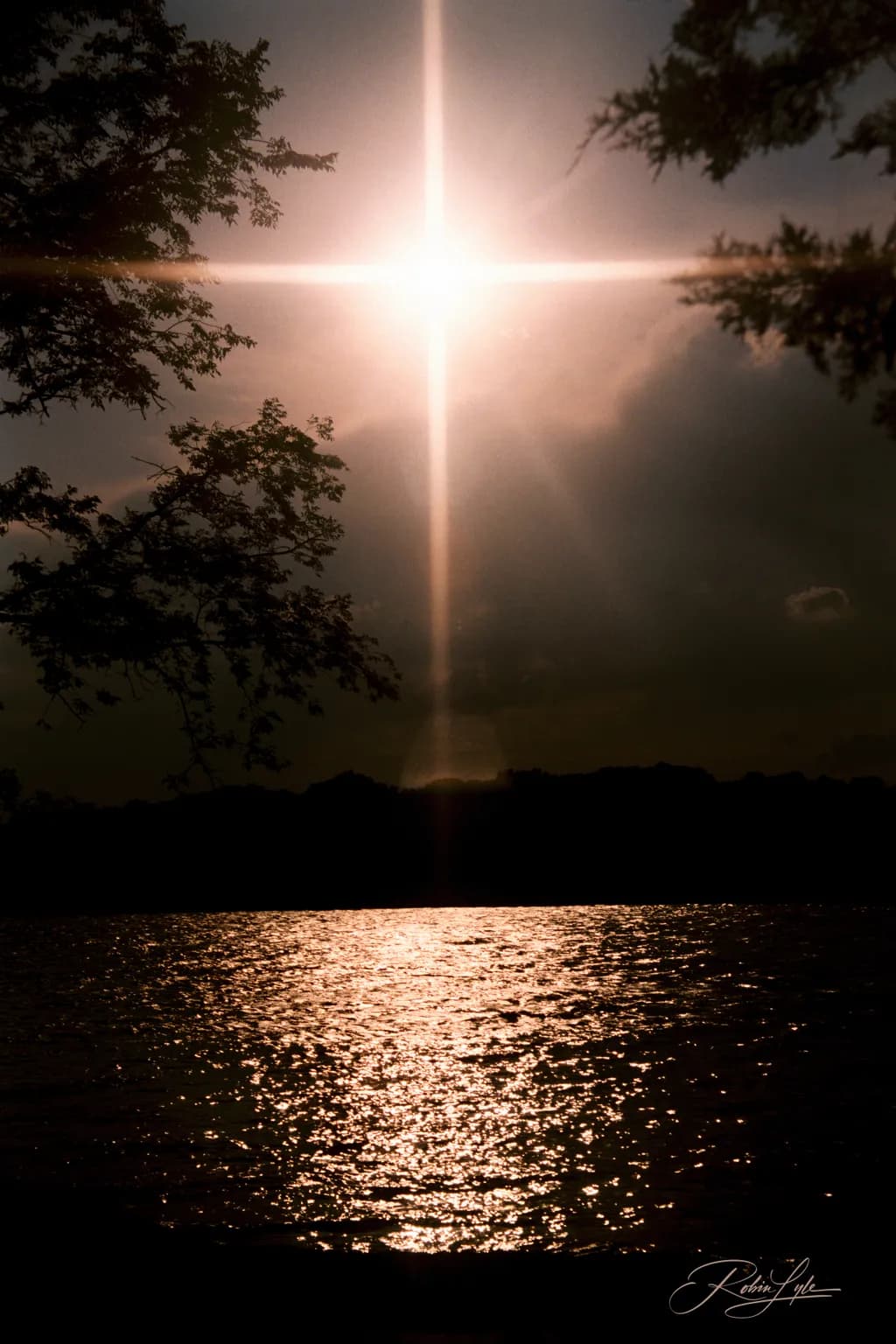
The Light of the World

Post image 1
Film · 20 x 30 canvasFinished piece

What I was going for

This is a FILM image. It was taken before AI, with no Photoshop enhancements or corrections— straight off the camera, using only a candlelight star filter. Would people believe that this image is not AI or Photoshop enhanced, and would it hinder the marketing of it? What were your thoughts when you first viewed it?

Wants feedback onMarketabilityTechniqueConcept
1 critique
Posted 2w ago in Art Debates
2