Community

Kunstnachrichten

Bleiben Sie auf dem Laufenden mit den neuesten Ereignissen in der Kunstwelt – Ausstellungen, Trends, Künstlernachrichten und kulturelle Momente, die es wert sind, bekannt zu werden.

Übersetzt aus English

Beiträge

vor 3Std.

Der globale Kunstmarkt ist zurück: Was der Art Basel/UBS-Bericht 2026 für unabhängige Künstler bedeutet

Übersetzt aus English
Beitragsbild 1

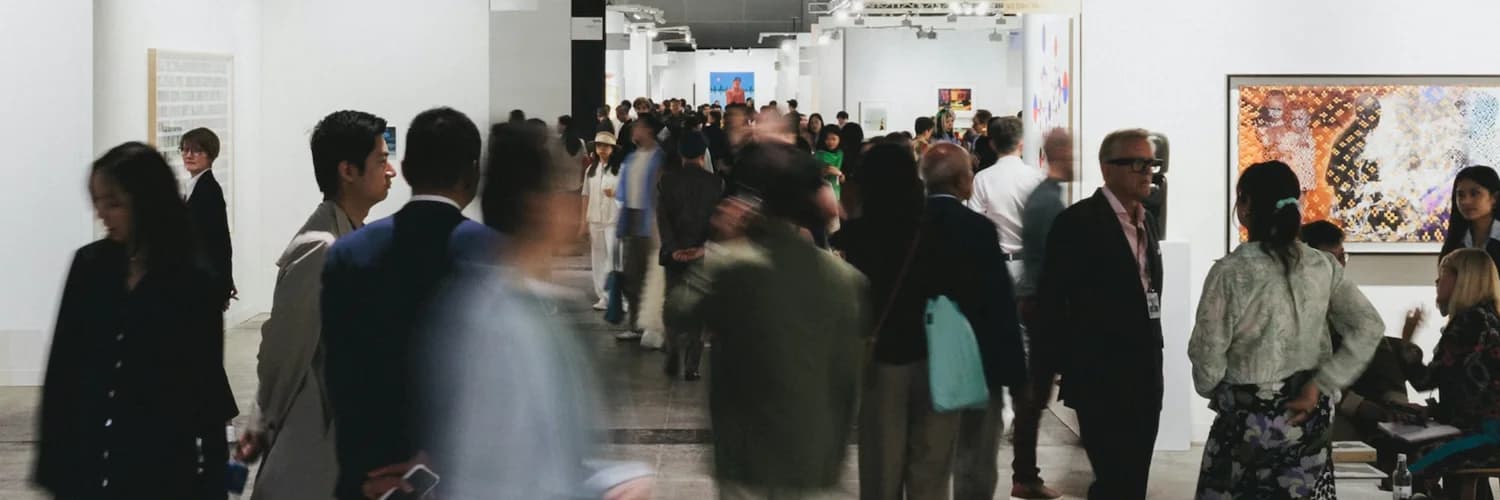
Der globale Kunstmarkt wuchs im Jahr 2025 um 4 % — das erste Wachstum nach drei Jahren — und erreichte geschätzte 59,6 Milliarden US-Dollar an Gesamthandelswert. Das ist die Überschrift des kürzlich veröffentlichten Art Basel- und UBS-Kunstmarktberichts 2026 und das bisher ermutigendste Signal für die Branche seit Beginn der Post-Pandemie-Korrektur. Aber was bedeutet das eigentlich für arbeitende Künstler, die nicht bei Christie's verkaufen?

Was die Zahlen wirklich aussagen

Die Erholung wurde hauptsächlich durch einen Anstieg der öffentlichen Auktionserlöse in den USA und eine verstärkte Aktivität der Sammler in den Vereinigten Staaten angetrieben, die immer noch der weltgrößte Kunstmarkt sind. Das Wachstum in China und Großbritannien war hingegen moderater. Die Schweiz und Österreich verzeichneten Zuwächse von 13 % im Jahresvergleich, während Deutschland um 10 % sank. Die Autorin des Berichts, Clare McAndrew von Arts Economics, bezeichnete 2025 als „eine willkommene Kehrtwende“ — wies jedoch vorsichtig darauf hin, dass sich der Markt immer noch in einem volatilen geopolitischen Umfeld bewegt, insbesondere im Hinblick auf grenzüberschreitenden Handel und US-Zölle.

Vielleicht der wichtigste praktische Datenpunkt für arbeitende Künstler: 43 % der Händler erwarten jetzt, dass ihr Umsatz im Jahr 2026 steigen wird, im Vergleich zu nur 33 % im Vorjahr. Das ist eine bedeutende Stimmungsänderung, die sich meist nach außen auswirkt — wenn Händler optimistisch sind, gehen sie eher Risiken bei aufstrebenden Künstlern ein.

Das Zoll-Problem, das keiner anspricht

Der Bericht hebt eine echte Sorge hervor, die in der Künstlergemeinschaften zu wenig Beachtung findet: die zunehmende Komplexität bei grenzüberschreitenden Transaktionen durch US-Zölle. Der Kunstmarkt ist stark auf internationale Zirkulation angewiesen — Werke reisen zwischen Kunstmessen, Galerien und Sammlern über Grenzen hinweg. Eine Tendenz zum Protektionismus und rein inländischen Verkäufen könnte langfristige Risiken für das gesamte Ökosystem bedeuten, einschließlich der Künstler im Mittelfeld, die auf internationale Sichtbarkeit angewiesen sind, um ihre Karrieren aufzubauen.

Was das für dich bedeutet, wenn du nicht bei Auktionen verkaufst

Die zunehmende Zuversicht der Händler ist eine gute Nachricht, aber sie führt nicht automatisch zu mehr Verkäufen für unabhängige Künstler. Was sie signalisiert, ist, dass die allgemeine Sammlerbereitschaft zurückkehrt — und in diesem Umfeld verbessern sich meist Galerie-Beziehungen, Bewerbungen für Kunstmessen und Online-Verkäufe. Wenn du bisher gezögert hast, dich für Ausstellungen zu bewerben oder Galerien anzusprechen, deutet die Datenlage auf eine bessere Zeit hin.

Der vollständige Art Basel- und UBS-Kunstmarktbericht 2026 ist zum Download verfügbar unter theartmarket.artbasel.com.

0

Art Basel Hong Kong 2026: What the Results Mean for Working Artists

Beitragsbild 1

Art Basel Hong Kong 2026 just wrapped up, and the results offer a fascinating snapshot of where the global art market is heading — knowledge that can help every working artist understand the landscape they're selling into.

A Market Finding Its New Rhythm

Art Basel Hong Kong 2026 drew 91,500 visitors and delivered a week of steady, considered sales — a sign that the Asian art market is maturing rather than booming. The fair's director Angelle Siyang-Le described Hong Kong as "a place for people to gather and build connections in difficult times," and that spirit of resilience was palpable throughout the week.

What Sold and at What Price

No single work topped $5 million, but blue-chip galleries reported solid results. David Zwirner placed a Liu Ye painting for $3.8 million and a Marlene Dumas for $3.5 million. Hauser & Wirth sold a Louise Bourgeois sculpture for $2.2 million and a George Condo painting for $2.3 million. White Cube reported around £4 million in first-day sales. Meanwhile, smaller galleries selling works below $50,000 were notably upbeat — a healthy sign for mid-career and emerging artists.

The Asian Market Is Growing Up

Local collectors are stepping back from speculative buying and taking a more considered approach. "Collectors are considered and taking their time," said Dawn Zhu, Asia director of Thaddaeus Ropac. New institutions are opening across mainland China — including the Suzhou Museum of Contemporary Art launching later in 2026 — creating fresh demand for serious contemporary work. Hong Kong also secured a five-year exclusive agreement with Art Basel, cementing its role as Asia's premier art hub.

What This Means for Working Artists

The shift from speculative frenzy to thoughtful collecting is actually good news for artists who make work with depth and intention. Collectors are buying what they love, not just what they expect to flip. The growing institutional infrastructure in Asia — state museums, private foundations, and new galleries — represents a genuine expansion of the global audience for art. If you've been considering whether your work could find an audience beyond your home market, the signals from Hong Kong suggest the appetite is real and growing.

A Resilient Art World

Despite geopolitical turbulence, the art world continues to gather, trade, and celebrate creativity. The optimism at Art Basel Hong Kong 2026 was earned, not manufactured — and that's the kind of market every artist can build toward. Keep making work that matters. The collectors are paying attention.

0

Venice Biennale 2026 Reveals Its Full Lineup — and It's the Most Global Yet

Beitragsbild 1

The lineup for the 61st Venice Biennale has been announced — and it's one of the most globally diverse rosters the world's oldest art exhibition has ever assembled.

Titled "In Minor Keys," the 2026 edition opens May 9 and runs through November 22 at the Venice Arsenale and Giardini. Curated by Koyo Kouoh, executive director of the San Francisco Museum of Modern Art, the show will feature 111 invited participants — individual artists, collaborative duos, collectives, and artist-led organizations spanning Salvador, Dakar, San Juan, Beirut, Nairobi, Nashville, Paris, and beyond.

Why "In Minor Keys"?

The title signals a shift in how we think about what art is and who gets to make it. Kouoh built the lineup around what she calls a "relational geography" — a map of resonances and affinities between practices that are geographically far apart but spiritually connected. Artists from Puerto Rico, the Democratic Republic of Congo, South Africa, and Pakistan stand alongside those from New York, London, and Paris — not as a token gesture toward diversity, but as the central premise of the entire show.

Names worth knowing

The roster includes Laurie Anderson, Wangechi Mutu, Nick Cave (the artist, not the musician), Torkwase Dyson, and Guadalupe Maravilla — as well as the late Marcel Duchamp and several artists who've passed in recent years, whose work will be featured posthumously. There are also emerging voices like Mohammed Z. Rahman (b. 1997, London) and Adebunmi Gbadebo, bringing fresh generational energy to the proceedings.

What this means for working artists

The Venice Biennale sets the tone for the global art conversation for the next two years. When Kouoh centers artists from Salvador and Dakar alongside those from New York and London, it's a signal — to collectors, gallerists, critics, and institutions — about where attention should be directed.

For independent artists watching from the sidelines: this is a reminder that the art world's definition of "important work" is widening. The kinds of stories, materials, and communities that Kouoh is elevating are the same ones many of you are engaged with every day.

The Biennale opens to the public May 9, 2026. If you're planning a trip to Venice or following the coverage, this one is worth your attention.

Sources: La Biennale di Venezia (labiennale.org)

0

They'd Never Painted a Mural Before. Now They're Covering Denver in Art.

Beitragsbild 1

Andreas Kremer had never painted a mural in his life when he got the call.

His employer — Denver snowboard company Never Summer — wanted a mural on a forty-foot shipping container in front of their factory. He said yes, called his friend Reina Luna, and the two of them showed up to figure it out together.

"We were like, 'Well, if it looks really bad, we could just paint it solid,'" Luna recalls.

It didn't look bad. It looked great. And that moment in early 2024 is what started Bright Space Murals.

Building Community, One Wall at a Time

By January 2026, Bright Space has painted schools, restaurants, businesses, and even the X Games in Salt Lake City. But the projects that seem to mean the most to Kremer and Luna are the ones where the community does the painting alongside them.

At Denver's PREP Academy, they handed the design entirely to the students. "We asked the kids, 'What do you guys want to see? Because this is your legacy,'" says Luna. The result: butterflies, blooming flowers, the Colorado State Capitol — and the message "You Can Do More Than You Imagine" in purple letters at the top.

A yearbook filled with signatures from everyone who worked on it sits in the bottom left corner of the mural. Because why wouldn't it?

100 Feet of Handprints

At George Washington High School, they painted a 100-foot mural featuring mountains, wildlife, and Denver landmarks. The centerpiece is a grand tree — its leaves made entirely of Kremer and Luna's handprints, printed manually over 200 times in different colors.

That's not efficiency. That's love for the work.

Why It Matters

Kremer's mission is simple: "I want to bring more art into the community, but also bring the community into the art."

Luna puts it even more plainly: "Even if you're not into art or don't think about art, it'll set your mind free."

In a world that can feel heavy, there's something genuinely good about two people who quit their jobs to paint walls and make strangers smile.

You can see their work and watch time-lapses on YouTube at Andreas Does Art, or visit brightspacemurals.com.

1

A High Schooler Who Paints Hope Into the Places That Need It Most

Beitragsbild 1

Sometimes art doesn't just decorate a wall — it tells someone they matter.

That's the philosophy behind Color for a Cause (CFAC), a youth-led mural organization founded by Marcus Hulbig, a high school senior from Raleigh, NC. What started as a middle school passion for painting has grown into something that's quietly changing the spaces where people heal.

A Mural for Those Who Need It Most

Marcus's latest project was for Project FIGHT, a program supporting survivors of human trafficking. The design he created isn't flashy — it's intentional. A field of flowers stretching toward distant mountains, with a sunrise emerging behind them.

"The sun rising behind the mountains symbolizes hope and fresh starts," Marcus explains. "Our goal was to create something meaningful without being overwhelming."

For residents in that space — people working through some of the hardest experiences imaginable — that imagery isn't decoration. It's a daily reminder that there's something on the other side.

Art That Belongs to Everyone

What makes CFAC stand out isn't just Marcus's talent — it's the process. He recruits high school volunteers to help design and paint each mural, creating genuine ownership over the finished piece.

"I enjoy spending time with fellow student artists and meeting new people at each location," he says. "The painting process is always fun when everyone — including the organization we're working with — takes part in the design."

Color for a Cause has now completed murals for AMI Kids, the Durham VA Health Care System, multiple schools, and several other nonprofits across Wake County.

The Real Value of Art

Marcus has a simple philosophy that probably resonates with a lot of artists in this community:

"I've always believed the value of an art piece isn't in how it looks, but in how we react to it. Good art should spark conversation and bring people together."

He's still in high school. And he's already figured out what most of us spend careers chasing.

You can follow Color for a Cause at colorforacause.org — and if you're ever in Raleigh, keep an eye on the walls.

3

How to Use Pinterest to Drive Traffic to Your Art Shop

Beitragsbild 1

Pinterest gets ignored by most artists in favor of Instagram, TikTok, or whatever platform is currently having a moment. That's a mistake. Pinterest operates on a completely different logic — and for artists selling work, it's one of the most valuable platforms there is.

Pinterest is a search engine, not a social feed. When someone pins your work, it doesn't disappear in 24 hours. It sits in search results and gets rediscovered for months or years. A single well-tagged pin can drive traffic to your shop long after you posted it.

The buyer mindset is already there. People come to Pinterest in planning mode — decorating a home, designing a nursery, choosing art for a living room. They're not passively consuming content; they're actively looking for things to buy or save for later. That's a fundamentally different audience than someone scrolling Instagram between lunch and a meeting.

How to set it up properly. Create a business account. Enable Rich Pins so your product info syncs automatically from your website. Organize boards by theme, mood, or color — not just by series name. "Calm blue coastal art" will be searched. "Series 3: Littoral Studies" will not.

Pin consistently and strategically. Each pin should link directly to a product page or a relevant page on your website — not just your homepage. Include keywords in your descriptions naturally: what the work depicts, the mood, the colors, the ideal room setting.

Think about lifestyle, not just artwork. Boards that show your work in context — in living rooms, above sofas, in dining rooms — perform better than white-background product shots. Collectors are imagining your work in their homes. Make it easy for them.

Pinterest won't go viral for you overnight. But it builds quietly, compounds over time, and sends buyers with intent. That's worth more than likes.

1

Why You Need a Studio Visit Policy

Beitragsbild 1

If you're inviting people into your studio, you need to decide in advance what that visit actually is — because "studio visit" means something different to a collector, a gallerist, a journalist, and a fellow artist. Getting clear on this saves you from a lot of awkward conversations.

The collector studio visit. This is a sales environment, even if it feels casual. Your space should tell a coherent story about your practice: work in progress, finished pieces, reference materials. Have a price list ready — not pushy, just available. Collectors often want to feel like insiders; showing them work before it's publicly available is a real offering.

The gallerist or curator visit. This is more like an interview. They want to understand how your practice develops, not just see finished work. Have documentation of past series, be ready to talk about your process and where your work is going. Curators especially want to understand the ideas, not just the objects.

Setting expectations beforehand. "I'd love to have you come by — I'll have some new work to show you and we can spend about an hour" is a complete sentence. Don't leave the format undefined. People are more comfortable in a space when they know what to expect.

What to think about logistically. Is your studio in a state that reflects the version of yourself you want to present? That doesn't mean spotless — a working studio has a certain energy. But it does mean intentional. Know where the light is good. Know which pieces you want people to look at first.

When to say no. Not every request deserves a yes. Your time and your creative space have value. An open-ended "can I come by sometime?" from someone you don't know well is fine to decline gracefully.

A studio visit, done well, is one of the most powerful selling tools an artist has. It creates intimacy that no gallery can replicate.

1

How to Sell Art at a Farmers Market or Local Fair

Beitragsbild 1

Farmers markets and local fairs are underrated as art sales channels. The overhead is low, the foot traffic is real, and you're selling directly to people in buying mode — which is a completely different energy than someone scrolling Instagram.

Set up for browsing, not displaying. A table flat on the ground is a graveyard for art. Use vertical displays — easels, grid panels, wire racks — so work is at eye level and easy to flip through. The goal is to invite people to engage physically with the work, not just look from a distance.

Have a clear price range. Your booth should have something at every level: prints or small originals under $50 that feel like impulse buys, mid-range work at $150–$400, and one or two statement pieces that anchor the space visually. People who can't afford the big piece often buy the small one as a way of connecting with you.

Bring cards, not just art. Most people at a local market aren't ready to buy that day. They're gathering information. A postcard with your website and social handles is something they'll keep. A QR code to your online shop even better. Some of your best sales come two weeks after the market.

Learn to start conversations. "What kind of art do you have in your home?" works better than "Can I help you?" The first invites connection. The second sounds like a retail transaction. People buy art from artists they feel something for — your job at a market is to be a person, not a salesperson.

Repeat attendance builds loyalty. One market is an experiment. Five markets in the same location is a customer base. Regulars return, they bring friends, they buy again. Show up consistently and you become part of the fabric of the market.

It's not glamorous. But it works — and it keeps you close to the people who actually buy art.

0

The Artist's Guide to Residencies: Are They Worth It?

Beitragsbild 1

Artist residencies get talked about like they're the holy grail of creative development. Sometimes they are. Sometimes they're three weeks of isolation with bad Wi-Fi and a shared kitchen that smells like paint thinner. Knowing the difference matters.

What a residency actually gives you. At its best, a residency gives you time — uninterrupted, protected time to make work with no other obligations. That alone can be transformative if your daily life is crowded with distractions. Many also offer community: other artists to think alongside, critique your work, or just make you feel less alone in what you're doing.

The résumé question. Yes, prestigious residencies (Yaddo, MacDowell, Skowhegan, MASS MoCA) carry weight in the art world. They signal to galleries, curators, and grant committees that your peers have vouched for you. But there are hundreds of smaller residencies that offer real value without the prestige — and those are often more accessible.

Ask these questions before applying. What does the stipend cover, if anything? Is housing provided? Are you expected to produce work for an exhibition at the end? How much communal programming is required? Some residencies are glorified group houses where social obligations eat your studio time.

When they're worth it. A residency makes sense when you're at a transition point — starting a new body of work, recovering creative momentum, or needing distance from your regular environment to see your practice clearly.

When they're not. If you're in a productive groove at home, leaving that rhythm for an unknown environment is a gamble. Not every artist thrives away from their own space, tools, and routines.

Apply for the ones that match your actual needs right now — not the ones that look best on paper.

0

How to Find Your Ideal Collector (And Get in Front of Them)

Beitragsbild 1

Finding your ideal collector isn't about casting the widest net — it's about knowing exactly who you're looking for and showing up where they are.

Start with who already loves your work. Look at your existing buyers. What do they have in common? Age range, profession, aesthetic taste, where they live? Even two or three sales can reveal a pattern worth building on.

Think about your subject matter as a signal. If you paint coastal landscapes, your collector is probably someone who spends time near water — vacationers, second-home owners, people with beach houses. If your work is bold and contemporary, they might be young professionals furnishing a first serious home. Your subject is a map to your audience.

Go where they already gather. Interior designers and home stagers are powerful connectors — they buy for clients and return repeatedly. Local design showrooms, home tour events, and even Houzz or Architectural Digest reader communities are places where art buyers congregate without thinking of themselves as collectors yet.

Use your website strategically. Most artist websites are built for other artists, not collectors. Swap the portfolio-first layout for a story-first one: who you are, what you make, and why someone's home would feel better with your work in it. Add an easy path to purchase or inquiry.

Don't underestimate email. A collector who signed up for your list is already telling you they want to hear from you. A personal note — "I just finished something I think you'd love" — converts better than any ad. Build the list. Use it like you mean it.

The right collector isn't out there waiting to stumble across you. They're somewhere specific, doing something specific. Your job is to figure out where that is — and walk through the door.

0

The Case for Painting in a Series

Beitragsbild 1

A single great painting is a statement. A series of great paintings is a conversation.

Collectors, galleries, and press all respond better to bodies of work than to one-offs. A series signals intentionality — that you're exploring something, not just making things. It gives people a way in.

Practically, working in series also makes you a better artist. When you commit to a theme, a palette, a subject — you stop making decisions from scratch every time. You go deeper. The tenth painting in a series is almost always stronger than the first.

For marketing, a series gives you a natural story to tell. The process. The evolution. The question you're trying to answer.

If you've been jumping between styles and subjects, try this: pick one thread and follow it for 10 paintings. Don't overthink the concept. Just commit.

See what emerges when you stay in one place long enough to actually say something.

1

How to Talk About Your Art Without Feeling Weird

Beitragsbild 1

Most artists dread the question: 'So what do you paint?' The answer comes out fumbling, apologetic, or so abstract it means nothing.

Here's why it happens: we're too close to the work. And we're afraid of being judged.

But talking about your art is a skill, and like any skill, you can get better at it. Start here:

1. Practice one sentence. 'I paint large-scale abstract landscapes inspired by the high desert.' Simple, specific, visual.

2. Follow it with a story. The best conversations about art start with 'the reason I started making this was...'

3. Ask a question back. 'Do you have any art in your home?' People love talking about what they love.

You don't have to sound like a critic or an academic. The most effective thing you can say about your work is something true and personal.

Practice it at dinner parties, at gallery openings, in the checkout line. The more you say it, the more natural it becomes.

2

Why Every Artist Needs a Studio Sale

Beitragsbild 1

A studio sale isn't just about moving inventory. It's one of the most powerful relationship-building tools an artist has.

When collectors come to your space, they're not just buying a painting — they're buying into your world. They see the mess, the process, the half-finished experiments. That vulnerability builds trust in a way no gallery opening can replicate.

How to make it work:

- Invite your list first. Give them a 24-hour head start before opening to the public.

- Price honestly. This is a direct sale — no gallery commission. You can afford to be flexible without underselling yourself.

- Make it an event. Good lighting, something to drink, music at a volume that doesn't kill conversation.

- Capture emails. Everyone who walks in is a potential long-term collector.

You don't need a fancy space. You need work worth seeing and people worth meeting.

Plan one. Even a small one. You'll be surprised what it starts.

2

The Difference Between an Artist Who Sells and One Who Doesn't

Beitragsbild 1

Talent is not the differentiator. There are thousands of incredibly talented artists who never sell a single piece. And there are artists with modest technical skill who build thriving careers.

So what's the difference?

The artists who sell treat their practice like a business — not in a soulless way, but in an intentional one. They show up consistently. They communicate with their audience. They make it easy for people to buy. They price with confidence.

The artists who don't sell often wait. They wait until the work is good enough. They wait for someone to discover them. They wait for the 'right moment' to put themselves out there.

The work is never going to feel finished enough. You're never going to feel ready enough. The gap between 'making art' and 'having an art career' is the decision to close it.

Start showing up like the artist you want to become — before you feel like you've earned it.

1

How to Build an Email List as an Artist (And Why It Matters)

Beitragsbild 1

Every platform you post on can disappear, change its algorithm, or lock you out. Your email list is the one thing you actually own.

Building it doesn't require a massive following. It requires consistency and a reason to sign up. Here's how to start:

1. Offer something worth signing up for. A behind-the-scenes look at your process, a free wallpaper download, early access to new work.

2. Put the signup link everywhere. Your website footer, your Instagram bio, your email signature.

3. Send something real. Not just 'new work available' — share a story, a struggle, a moment from the studio. People subscribe to people, not catalogs.

Even 200 people who genuinely love your work is more valuable than 20,000 passive followers. When you release a new series, those 200 are the ones who buy.

Start building it today. The best time was two years ago. The second best time is now.

2

How to Photograph Your Art So It Actually Sells

Beitragsbild 1

Bad photography kills good art. You could have the most stunning piece in the world — and if the photo is blurry, yellow-toned, or cropped at an angle, no one will buy it online.

Here's a simple setup that works:

1. Natural light. Hang your work near a large window on an overcast day. Avoid direct sun — it creates harsh shadows and glare.

2. Straight-on shot. Your camera should be level with the center of the work. No perspective distortion.

3. Neutral background. White or off-white wall. Nothing competing for attention.

4. Color accuracy. Check the photo against the real piece. If the colors are off, adjust white balance before editing.

For detail shots: get close. Show texture, brushwork, the surface. Collectors buying online need to feel what they can't touch.

Invest a few hours in re-shooting your portfolio. Better photos mean more sales, more confidence, and work that looks as good online as it does in person.

1

The Power of a Small, Loyal Collector Base

Beitragsbild 1

You don't need thousands of collectors. You need ten great ones.

Ten collectors who love your work, tell their friends, come back for every series, and treat owning your art like a privilege — that's a sustainable career. Most successful mid-career artists built their business on fewer relationships than you'd think.

How do you build that kind of loyalty?

- Communicate personally. A handwritten note or a direct email goes further than a newsletter blast.

- Give them access. First looks at new work. Studio visits. A glimpse behind the process.

- Remember what they own. Reference their collection in conversation. Show them you're paying attention.

Collectors want to feel connected to the artist, not just the object. When you make that connection real, they become advocates. They mention you at dinner parties. They bring friends to your openings. They buy again.

Ten people like that can change your entire trajectory.

2

Why Your Art Deserves Better Than a Discount

Beitragsbild 1

It starts innocently. Someone asks if you can do 'a little better on the price.' You want the sale. You say yes. And then it becomes your normal.

Discounting your work doesn't just hurt your revenue — it sends a signal. It tells buyers that your prices aren't real. That the work isn't actually worth what you said it was. And it makes the next sale harder, not easier.

Here's what to do instead:

- Hold your price. Let the silence sit.

- Offer a payment plan if needed — same price, more flexibility.

- Add value instead of cutting cost. A certificate of authenticity, a studio visit, a personal note.

Your price reflects your value. Every time you lower it without reason, you're telling the world your work is worth less. The collectors you want — the ones who will champion your work for years — are the ones who pay full price because they believe in it.

Charge what it's worth. Then stand behind it.

2

How to Write an Artist Statement That People Actually Read

Beitragsbild 1

Most artist statements are unreadable. They're full of jargon, passive voice, and sentences that say nothing. 'My work explores the intersection of identity and space.' Okay — but what does that mean?

A great artist statement does three things:

1. It tells us who you are in plain language.

2. It explains what you make and why — without pretension.

3. It gives the reader something to hold onto.

Try this: write your statement as if you're explaining your work to a curious stranger at a dinner party. No buzzwords. No academic language. Just the real story.

Collectors, curators, and gallery owners read hundreds of these. The ones that stick are honest, specific, and human. 'I paint my grandmother's kitchen from memory' is more powerful than a paragraph about liminality.

Revise yours today. Read it out loud. If it sounds like a robot wrote it, start over.

2