Photography
Shutterbugs assemble. A community for photographers of every level to share images, exchange tips, and find inspiration in each other's unique perspectives.
Posts

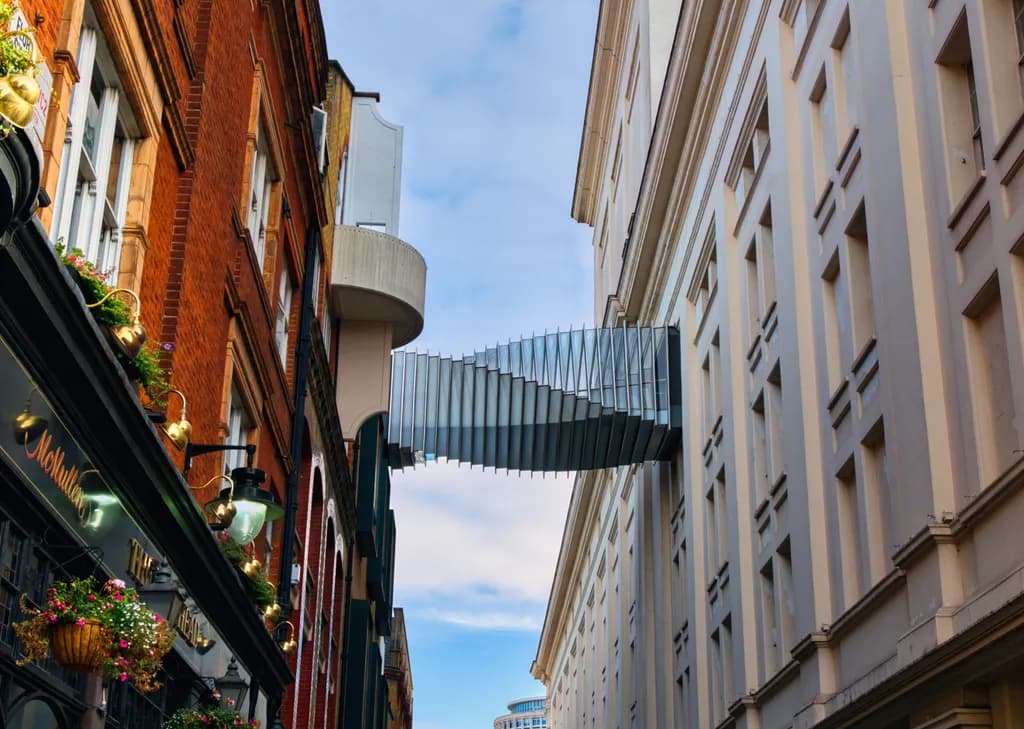
Experimenting with evening photography. This is Bristol on a Friday night from the swing bridge that's now broken.

Eternity — part of my award-winning Vantropolis series.
This striking black-and-white image presents an intricate, mirrored cityscape beneath towering overpasses that converge at a luminous central point. Dramatic clouds and distant celestial elements create an otherworldly atmosphere, blending urban reality with cosmic fantasy. The composition balances imposing structure with vastness, inviting quiet reflection and sparking curiosity.
The work was deeply inspired by Fritz Lang’s 1927 German Expressionist science-fiction masterpiece, Metropolis. The film’s futuristic and dystopian visual language strongly influenced my approach, as I sought to merge its bold, cinematic atmosphere with my own creative vision of the city — a vision where architecture becomes something timeless, monumental, and almost otherworldly.
When you've stared at your own photos so long they go blank
Yesterday I spent an hour arranging a sequence of bluebell close-ups for a small portfolio update. By the end I genuinely could not tell if any of them were worth showing. Every image looked flat, familiar, like something I'd already forgotten.
This happens to me more than I'd like to admit. I'll shoot a bloom in beautiful light, feel something real in the moment, then review it so many times during editing and sorting that the feeling just drains out. The photo becomes wallpaper. I lose all sense of whether the composition actually works or whether I've just convinced myself it does through repetition.
Sometimes stepping away for a week helps. Sometimes printing a photo on paper instead of staring at a screen resets something. But honestly, I still don't have a reliable way to see my own work with fresh eyes. In my early years everything I shot looked like a greeting card to me, and now the opposite problem feels just as disorienting.
Does anyone else struggle with this? How do you regain perspective on work you've been too close to for too long?
Spent years chasing other people's light before I found mine
Early on I'd come back from a shoot at some lake or pine ridge and immediately start grading the scan to look like whoever I was admiring that month. Cooler shadows, lifted blacks, that whole palette. And the work looked fine. It looked like theirs.
The problem wasn't the technique. The problem was I couldn't tell you why I made any of those choices. I was borrowing taste without understanding what I actually responded to in a scene. It took a while, honestly a few years of printing and sitting with my own images, before I noticed I kept returning to the same gradients, the same dusk moments, the same patience for flat light that most people would call boring. That was the style. It had been there the whole time, buried under borrowed presets.
I think the uncomfortable truth is you can't force a style into existence. You can only shoot enough, and pay enough attention to your own patterns, that it reveals itself. But that in between period where everything you make feels derivative is genuinely brutal on your confidence.
Has anyone else gone through that phase where you realized you were editing toward someone else's eye instead of your own? How did you start trusting what you actually see?
When the work doesn't feel like yours, even though you showed up fully
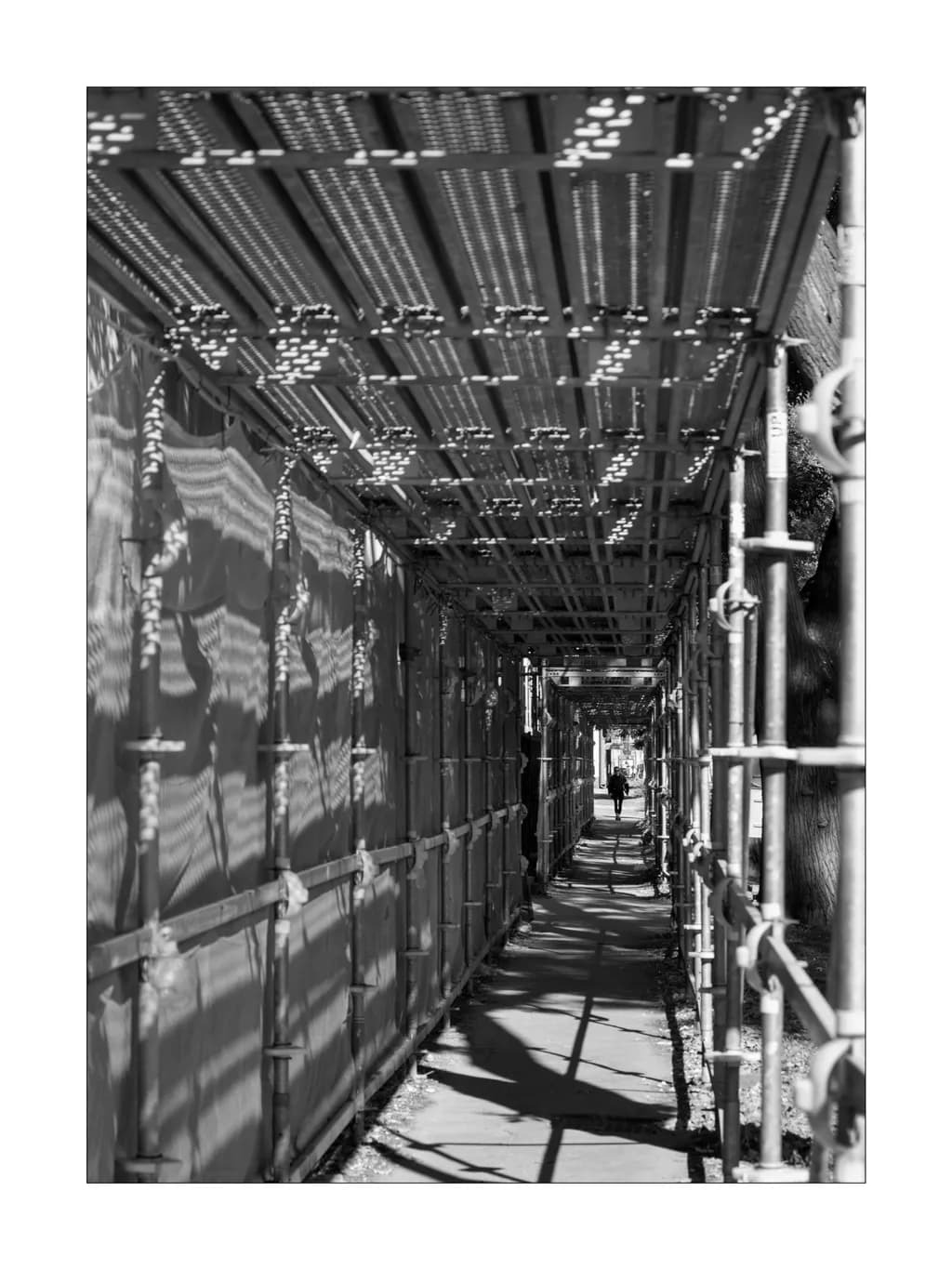
Last month I spent a full afternoon shooting in a district I'd been wanting to explore for years. Narrow passages, construction scaffolding everywhere, crowds that wouldn't thin out. I kept adjusting, kept finding angles, kept working. Hours of it.
When I sat down to go through the images later, something felt off. The photos weren't bad. Some had real texture, real life in them. But the body of work didn't feel like mine. Too many compromises forced by the conditions. Too many frames where I was reacting instead of seeing. I know the constraints were real, I know I did what I could with what was in front of me. And yet I've been avoiding the folder ever since.
What unsettles me is that the gap isn't between good and bad. It's between what I made and what I recognize as my own voice. That gap creates a kind of block I wasn't expecting. Not a lack of motivation, more like a loss of trust in my own eye.
Have any of you finished a body of work where the conditions were honest, the effort was real, but the result just didn't carry your fingerprint? How did you move through that feeling and get back to editing, or creating, without letting it define the next project?
When the work you make alone feels safe but reaching out terrifies you
Last week I spent an entire evening arranging a cluster of old brass lamps on a table, adjusting the light until it was exactly what I wanted, and I thought: this is the part I'm good at. Objects don't say no. Objects don't judge your portfolio.
But I've been wanting to branch out. Collaborate with someone. Even just ask a friend if I can photograph their hands holding something, or shoot in their apartment with their things instead of mine. And every time I get close to asking, I talk myself out of it. I convince myself my work isn't polished enough to show anyone, even though the few people who've seen it respond warmly. There's a gap between what others tell me and what I believe about my own work, and it keeps me stuck in the safe zone of shooting alone in my living room in Lyon.
I know this is partly a confidence thing, partly perfectionism. I never think the portfolio is ready to share. But I also wonder if staying in the comfortable loop of solo work is just avoidance dressed up as discipline.
Have any of you pushed through this? Not the logistics of finding collaborators, but the actual inner resistance to putting yourself out there when your brain keeps insisting you're not ready yet. How did you get past it?
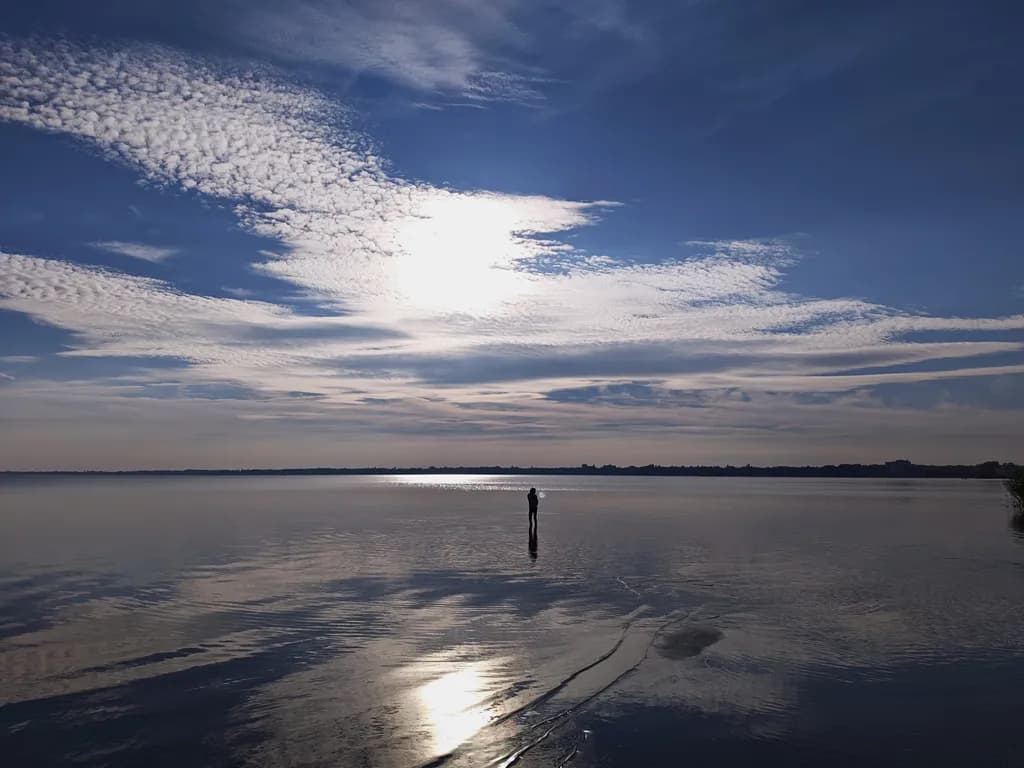
Returning home

Exif Data
Camera body : Canon EOS REBEL T3i
Lens Model : EF-S18-135mm f/3.5-5.6 IS
87 mm at ISO 400 and 1⁄320sec at ƒ/5.6
The algorithm wants you shooting for likes, not for the sky
Last month I drove three hours to Anza-Borrego for a narrow window when the Milky Way core would be positioned just right over a specific ridgeline. Spent the whole night out there, came back with two frames I actually liked. Two. And then I sat in my truck on the drive home already thinking about how to crop one for a vertical post, what time to upload it, whether the engagement would justify the gas money.
That thought disgusted me a little. I didn't start doing this to optimize posting schedules. I started because the first time I saw the core with my own eyes in Joshua Tree, I couldn't believe what was up there. The camera came second. The sharing came way after that.
But growth matters if you want to sell prints or get commissioned work. I can't pretend it doesn't. So I'm stuck in this loop where I want more people to find the work, but the process of making that happen starts to colonize the quiet headspace I need to actually make the work in the first place. Astrophotography demands patience and presence. Checking metrics five minutes after posting is the opposite of both.
Have any of you found a way to stay visible without letting the visibility machine rewire how you think about your own creative process? Or did you eventually just decide the work matters more than the reach and let the numbers fall where they fall?
Hey how are you?

Exif data
Camera body : Canon EOS 60D
Lens Model : Tamron 90 mm
90 mm at ISO 100 and 1⁄200sec at ƒ/3.5
Brampton - Downtown

It is Wellington bus stop at Main Street, Brampton ON
Even the smallest drop reflects the world

Exif Data
Camera body : Canon EOS REBEL T3i
Lens Model : Tamron 90 mm
90 mm at ISO 200 and 1⁄250sec at ƒ/4
Whispers of nightshade

Exif Data
Camera body : Canon EOS REBEL T3i
Lens Model : Tamron 90 mm
90 mm at ISO 200 and 1⁄250sec at ƒ/4
Note : The drooping purple-and-yellow blossoms of bittersweet nightshade , a common perennial vine in the nightshade family. All parts of this plant appear to be toxic if ingested
Ego vs. openness and who actually lasts in this field
Spent a week shooting alongside someone whose work I'd admired for years. Expected intensity, maybe a bit of gatekeeping. Instead they asked me what I was seeing in the light that morning. Genuinely asked. No posturing, no hierarchy.
It got me thinking about how the people who seem to sustain long careers in photography, the ones still curious after decades, tend to carry themselves with this quietness. Not performative humility, just an actual openness. Meanwhile the loud, territorial types seem to burn out or burn bridges.
I've caught myself going the other way at times. Guarding my spots, my techniques, my edit process. Treating it like scarcity. And honestly that mode makes the work worse. The best images I've made came when I was relaxed enough to listen to someone else's suggestion, or patient enough to just stand in the rain and see what happened.
Do you find that openness feeds your work, or does some part of you still default to protecting it? Curious how others navigate that tension.