
The Crucial Difference Between Using AI as a Tool and Using AI as the Artist
There is a massive, fundamental difference between using artificial intelligence as a utility and using it to generate a final creative product. It might seem like a subtle distinction to people outside the creative world, but it is actually the single most important observation we can make about the future of art and music.
When AI is Just a Means to an End
Think about how a software developer might use an AI coding assistant. The developer prompts the AI to help write a specific function or organize a database. In this scenario, the AI is incredibly useful. But here is the key: the code itself is not the final product. The final product is the application that the user interacts with. The AI is simply acting as a means to an end, speeding up the mundane parts of the process so the developer can focus on the bigger picture.
We see this in the art world too. If an artist uses an AI tool to help brainstorm a catchy title for their latest gallery show, or if a musician uses it to help write a descriptive bio for their website, they are using AI as a utility. It is a tool, no different than a spellchecker or a calculator. It helps with the administrative tasks that surround the art, but it does not touch the art itself.
When AI Becomes the Final Output
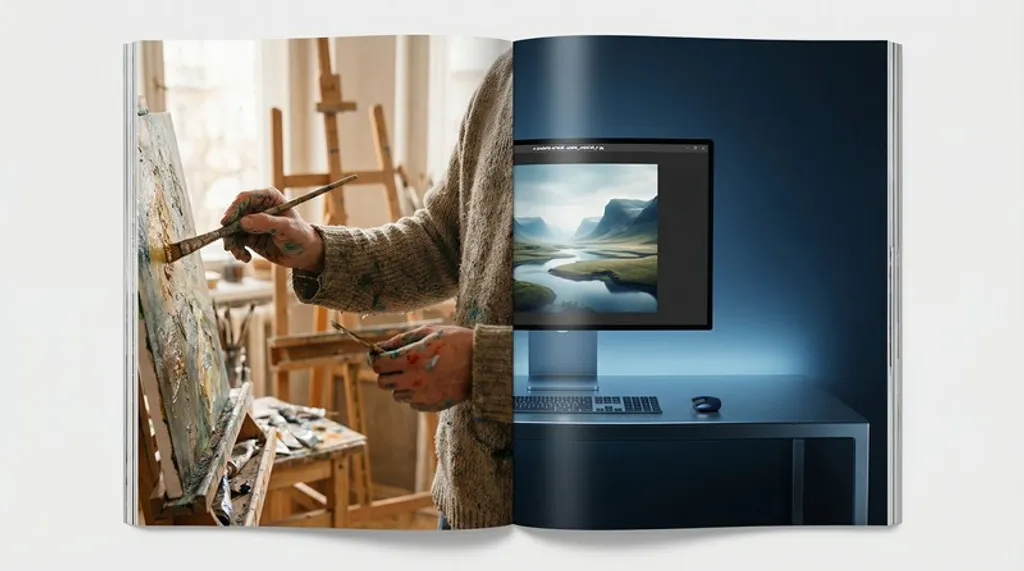
But everything changes the second AI is used to generate the final output. When an algorithm is prompted to create a finished painting, a completed photograph, or a fully produced song, it is no longer acting as a utility. It has become the artist.
Podcaster Lex Fridman recently articulated this exact distinction during a conversation about AI in music, and his insight was profound:
"I use it a lot more and more and more for programming. So for building stuff. And there the final output is not the code, the output is what the code creates. And there it's extremely useful, it doesn't matter if it's boring or not... But when the final output is the thing that AI creates, which it would be in music, then there's something about us that just like we know there is something boring about it." — Lex Fridman
And this is exactly where the problem lies. When AI is used to create the final output, all the soul of the artwork is instantly stripped away. A machine cannot draw from lived experience. It cannot pour heartbreak, joy, or vulnerability into a brushstroke or a melody. It can only mathematically average existing data to produce something that looks or sounds correct. It is a perfect simulation of art, completely devoid of the human struggle that makes art actually matter.
The Value is in the Human Struggle
When someone buys a piece of art or falls in love with a song, they are not just connecting with the final aesthetic. They are connecting with the human being who made it. They are celebrating the countless hours of practice, the frustrating mistakes, and the deliberate, deeply personal choices that went into the creation.
Using AI to help write an email is fine. But using AI to generate the art itself robs the audience of the human connection they are actually seeking. As artists, your greatest asset is your humanity. That is exactly what we are here to protect at ArtHelper. Let us make sure we never hand that over to an algorithm.
What are your thoughts on this distinction? Where do you personally draw the line between using technology as a helpful tool and letting it replace the creative process? Let us know in the comments below.
I think AI is wonderful for suggesting titles etc. and script for posting if I've run out of ideas. I love working on a real canvas with real paint however I also love working with digital filters on my photographs producing colors and texture I can't get any other way. I try to explain that the image although digital is all me and has nothing to do with AI. AI is great for words, not art.