
Giotto di Bondone died — 1337
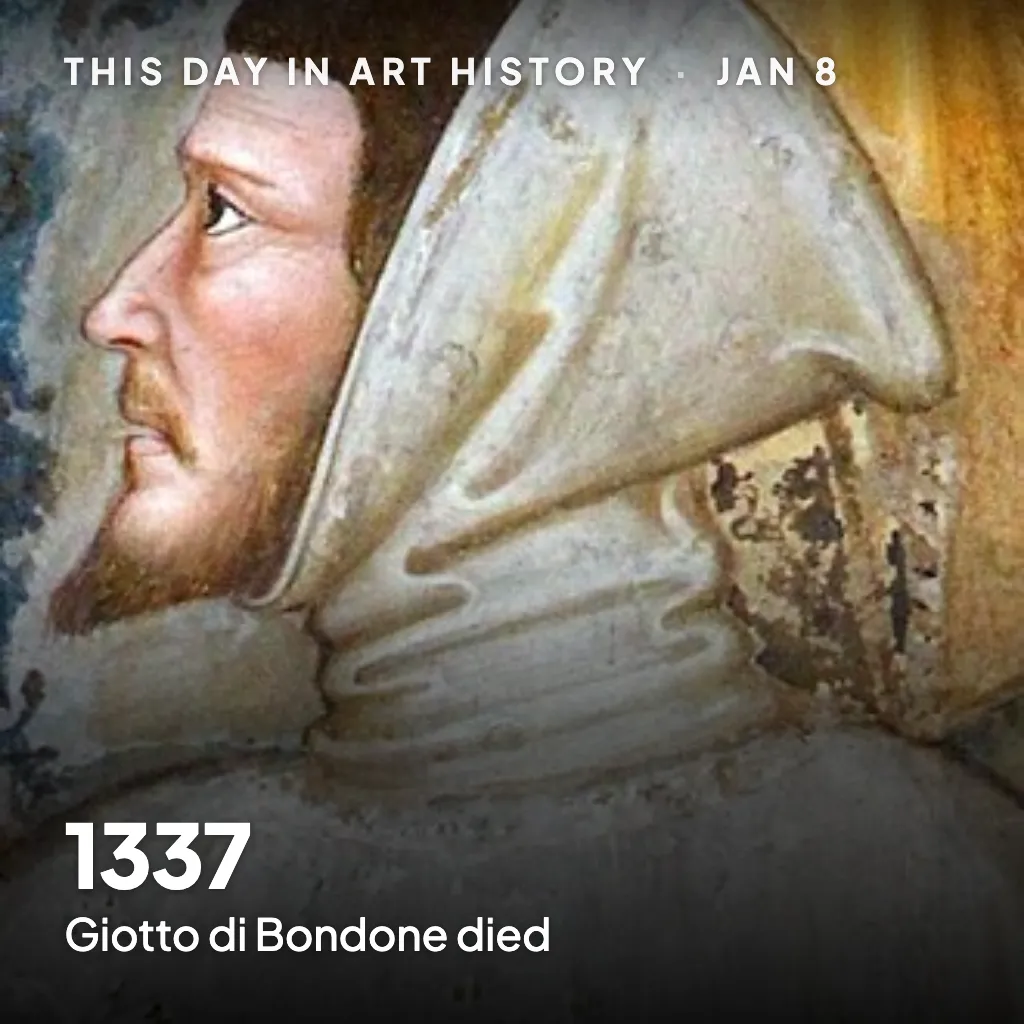
On January 8, 1337, Giotto di Bondone died in Florence, leaving behind a legacy that would reshape the trajectory of Western painting. He was in his seventies, already celebrated across Italy for frescoes that broke with the flat, stylized conventions of Byzantine art.
Giotto brought weight, volume, and human emotion to figures that had been treated as icons for centuries. His frescoes in the Scrovegni Chapel in Padua, completed around 1305, showed grief, tenderness, and drama in faces and gestures that felt unmistakably real. Contemporaries noticed. Dante praised him in the Divine Comedy. Vasari later called him the father of the Renaissance, the artist who revived painting after the "rude manner of the Greeks."
His influence reaches forward through six centuries: every painter who has tried to capture a convincing human presence on a flat surface is working in the tradition Giotto opened.