
Carolyn Hess pioneered colour-field studies — 1922
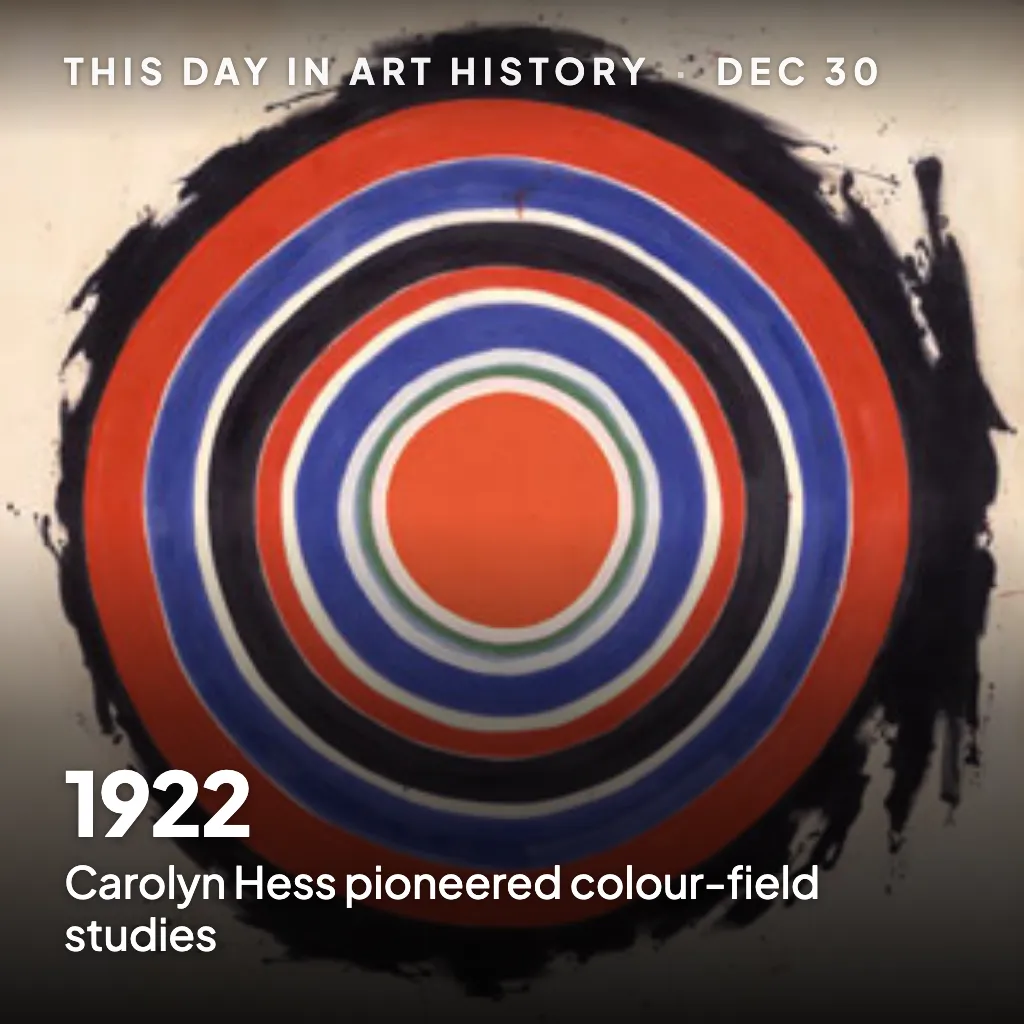
On DEC 30, 1922, artist Carolyn Hess began the explorations that would help define color-field painting, a movement centered on expansive areas of unmodulated color meant to envelop the viewer in pure visual experience.
Hess's approach stripped away representational detail and gestural brushwork, focusing instead on the emotional and spatial effects of color itself. Her canvases asked viewers to slow down, to sit with hue and light as subjects worthy of sustained attention. This work laid groundwork for the wave of color-field painters who would emerge in the 1950s and 60s, artists like Helen Frankenthaler and Morris Louis who explored staining, saturation, and the relationship between pigment and raw canvas.
For artists today working in any medium, Hess's legacy is a reminder that reduction can be a form of amplification, that restraint in one dimension opens space for depth in another.