Taylor SinopleStaff
Should AI-generated images be allowed in galleries and exhibitions?
Is a transparent AI disclosure near the image enough?
Or should AI art be banned completely from the global art stage?
5

Is a transparent AI disclosure near the image enough?
Or should AI art be banned completely from the global art stage?
I use a variety of free AI apps to generate a reference image. I then sketch it onto watercolor paper and paint it. Do you do something similar?
If so, do you classify the final painting as “human” created or AI art. I consider my work human created.
If I send my reference image to an AI checker it says AI. If I send a copy of my painting to the same site it says it is NOT AI.
Thought?
Nick
Using an AI image as a reference and then interpreting it and sketching and painting it is 100% human made art in my book. 🙂
What you describe is no different than using a photo as a reference. It is in no way AI if painted by the human hand.
I use the term 'AI-squared 'for this kind of work: Artistic Intelligence x Artificial Intelligence. It's a hybrid that's neither wholly one or the other; it is, I'd argue, sui generis. Could also call the work ai-genic: owing its genesis in part to AI.
Likewise, AI is only a starting recourse of me. I think apply my skill, talent and insight to create my art.
In the late 1990s most professional photographers thought using digital images was NOT photography. Now the vast majority of professional photographers use digital cameras.
If I gave a description of a landscape I saw, or a feeling I had, and asked a painter to depict it, I would not be able to claim that I created the resulting picture. This is the same when someone prompts an AI to produce an artwork. But this doesn't mean that the AI has not created art.
The Google AI informs me that: "A work of art is typically created to evoke an emotional or aesthetic response,..." and "..."art" is usually defined by its aesthetic or expressive purpose...". If we accept these criteria for defining art (and I do), then clearly, the output from any AI tasked with generating artwork qualifies as art, and the AI is the artist. If the author of the description (or prompt) claims they created the artwork, they are plagiarizing.
Just my two-penneth.
Apologies, I completely forgot to answer the OP's initial question. Yes, we should allow AI-generated art in galleries and exhibitions. Otherwise, we would be guilty of discrimination.
Disclosure helps, but it does not solve the core problem. Galleries exist to champion the human hand. Let them do that unapologetically.
Can AI generated art be shown as "art" at galleries or exhibitions? I think AI generated art is and should be in its own category. The person who develops a AI generated piece has to have a vision, clearly articulate the concept to AI, and ultimately determine if the creation fulfills his or her's vision for the finished product.
I think trying to pass AI-generated art off as people-made is fraudulent.
Galleries and exhibitions can have a variety of artwork. TBH some people do not care what created an interesting piece of work. I do not think that diminishes the art piece. If there are willing buyers, there will be willing sellers. I believe that the integrity of a show would best be preserved through categorization, transparency, and honesty.
Ponder this:
A photograph may be accepted as art, even though the subject is the capture of a scene on film or sensor. The “art” is the result of the photographer’s skill in timing, point of view, composition, choice of light, and crop, but the scene existed prior to the capture.
Tools from the AI palette may be used to modify a photo or even create an image that lives solely in the mind of the “artist.” Cursors replace brushes, pixels replace pigments. It is undeniably a new and different method of expression in imagery. But, is it no longer art?
No. Art holds emotion from the heart & soul of the artist… a machine has neither.
Well said..
art forms change — and I love some of the images produced by AI. The digital photo manipulation is a form of AI, different camera lenses on digital cameras are part aI now. labeling the “mediums” used is part of the creative process.. using new tools in making an image is part of the fun of exploring…. Being able to discuss the process is part of the conversation between collectors and artists…
A show specifying what images are being asked for display.. makes every show unique … if one has a trained eye and sensory awareness… the feeling of human or machine is read by the senses.
Have fun exploring and broadening your artistic tool box!! 🌊🥰
I’m not sure how much human thought goes into generating AI art. A lot of human thought went into creating AI. But it seems like you can ask AI to generate a certain picture, describe what you want, and it will do it. It’s very different from digitally created art, which totally involves an artist.
I could be wrong. But with AI Art, I think AI is doing a heavy lifting not the human. Therefore it should not be displayed in a venue with human art. It needs its own “gallery” somewhere.
But it isn’t a human doing the composition, palette, or producing that fine result. It is an incredibly sophisticated computer. It is not the same thing as digitally-created art where a human is using digital brushes to “paint”.
I am both a professional Graphic Artist/Designer with complicated art apps, a drawing tablet & drawing pen that has taken top honors internationally for my digital creations & a nationally recognized watercolorist. Two very different mediums but both took talent, years of art study, a critical knowledgeable eye, a brain that was born to be an Artist & a hand, (or toes) that is an extension of the Artists’ brain & eyes to create the end result, ART. Where as AI doesn’t really require even half that is needed to create an original creation that possesses emotion & originality. Simply apples & bacon, both food but not at all the same.
Exploring all tools is what an artist does!! Creating unique designs and compositions. Just have FUN
You are exactly the kind of artist I was referring to when I spoke of digital artists being a whole different ball of wax from AI. I’ve seen incredible digitally-created art and am often in awe of it. Digital creators as artists are, IMHO. every bit as valid as paintbrush, pencil, etc. artists are. They are creating the art using very sophisticated tools. That’s different from tell AI to create a painting for you and then sell it as your art.
As long as it is not judged next to against the human made art.
Read the vibrations and resonance and it is easy to feel the difference… photographers have been using machines since that genre began— what is a camera but a machine?
We are artists.. coherence is felt in the heart after the eyes send the images through the nervous system. Only then do we feel the Image… Coherence!!
I wish I could reply to https://www.arthelper.com/sarah-horton . The camera as a machine as a photographer's tool (or paintbrush) capture what we see, and hopefully feel, from where we stand (thinking of a quote by Ansel Adams I heard about), and when we stand there; both choices the artist consciously makes.
But AI is just someone stating a request to a bank of computers, asking them to create something.
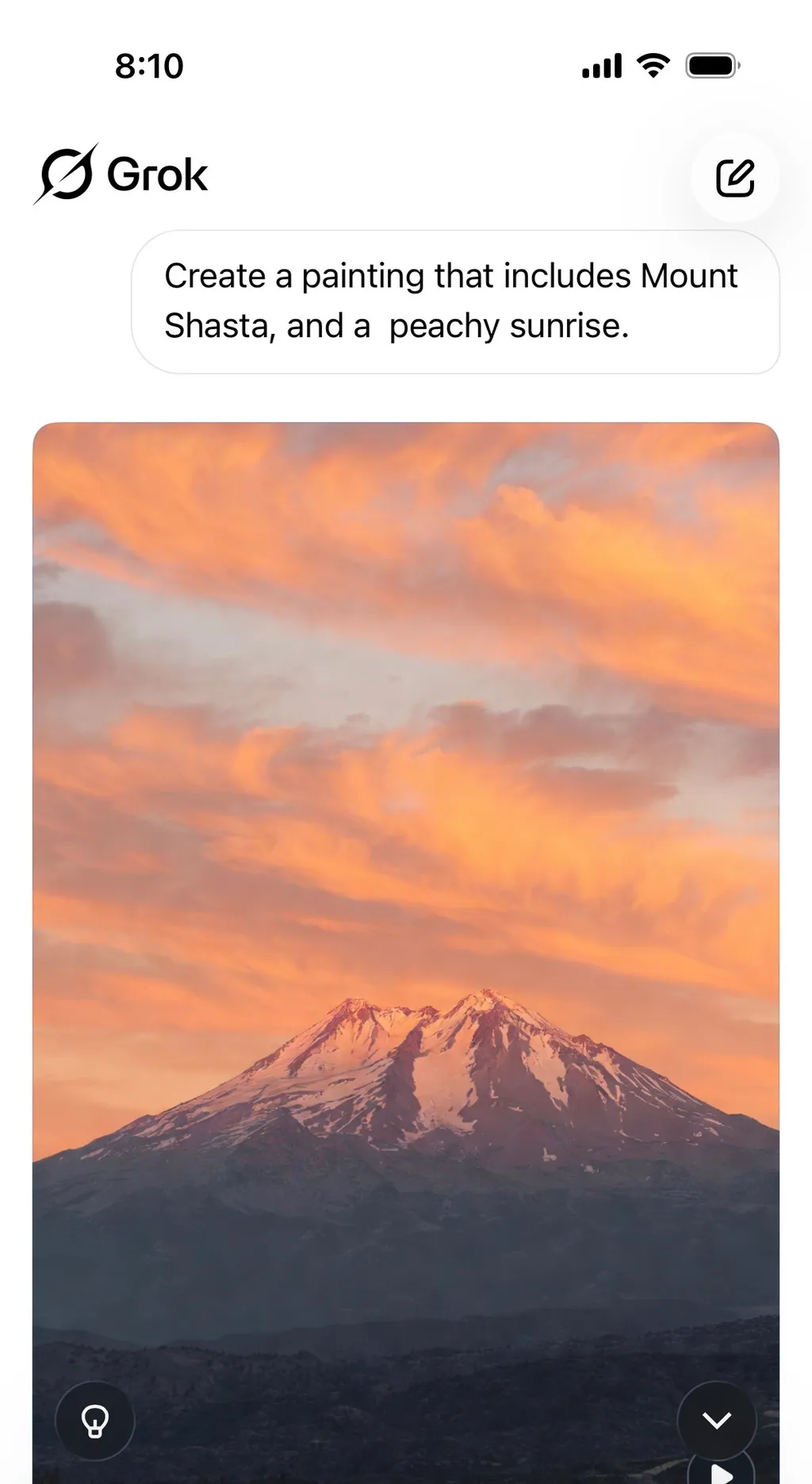
I asked Grok to produce a painting of Mt Shasta with a peachy sunrise. The result was beautiful. I just had the idea, and a total non-human created it. My conclusion—AI cheapens what we do, and art produced by AI shouldn’t be any where near human art displays.
I’m sorry, but with over 68 yrs of working as a professional Artist, I must disagree. There simply is no comparison between a real Artist & a machine.
Taylor your question taps into such an important conversation about how the art world is evolving and embracing new stories. It’s inspiring to see you sparking dialogue that honors the journey behind every creation, no matter how it comes to life.
Some food for thought about whether someone who types verbal instructions into an app on the computer… are they a visual artist?
Typing words into an app is not automatically art. If it were, then… Googling would be literature, ordering food would be culinary art and saying “take a picture” would make you a photographer.
Let’s say two people use the same AI tool… One types: “cool glowing wolf” and posts it immediately. The other spends hours shaping, refining, discarding, recomposing, color-tuning, upscaling, finishing.
Only one of them is really making something.
The tool didn’t decide that difference… The human did.
So, typing instructions alone doesn’t make someone a visual artist. But using tools intentionally… shaping results with vision, taste, and decision-making… absolutely can make someone a visual artist.
I’m not sure any one group gets to decide that… especially when every major shift in art started out being rejected.
But I think AI-generated images should absolutely be allowed in galleries… if they carry authorship, intention, and artistic presence.
Without that?… They don’t belong… but neither does weak traditional art.
There are valid concerns about training data. But rejecting finished work purely because of the tool is like rejecting photography because cameras “capture reality.”
A paintbrush can produce lifeless work.
A camera can produce lifeless work.
So can AI.
Please let's define 'AI-generated'.
Obviously if the image consists of one image that has been 100% AI-generated, we don't want any truck with it.
But what if the image consists of two or more AI-generated images combined in some way – composited, or layered? Every element is AI-generated, but the combination is not. Is that AI-generated?
Is the act of layering two AI-generated images (with transparency or layer blend mode) or compositing – e.g. masking one image over the other – sufficient to make the result human-made?
If not, how much human intervention on AI-generated images is need to turn the final product into something human-made?
Perhaps a definition of AI-generated is a work that is not 100% made by wit of artist?
(Sorry; four questions there.)
Many of the Dutch Masters used the Camera Obscura, which was a tool that helped them create the almost photorealistic paintings they were famous for. I am sure there were rival painters that complained that they were "cheating," however, we now consider them masterpieces. In the same way, we should view AI generated art as a tool to refine compositions for artists to express their ideas, for discovering different approaches and angles that are outside their comfort zone, and to speed up the overall workflow. If used responsibly, I believe this should be allowed. A common misconception is that AI does all the work. I have used AI and you would not believe how many iterations of an idea it takes to make things come out right. I use it to generate ideas, or to modify photo's that I have taken for better artistic effect. In my case, it is only a tool, but I understand the concerns that AI will kill the market for original artists.
Virtually all of the commercial editing tools that photographers use today make use of some form AI technology. Does this render their art form AI? In this case, I think not rather it is a modern tool used by certain artists like a brush or paint or chemicals used to develop film. We need to be clear how we are defining AI Art so as not to dismiss the artist creator and their talents.
I suggest anyone that’s curious about AI art do an experiment. Whether it’s ChatGPT or Grok or who knows what else, try instructing it to create a painting of a certain subject, a certain way. I asked Grok to produce a painting of Mt Shasta eith a peachy sunrise. The result was beautiful. That took zero human involvement, except for the people who developed Grok and my idea.
Very different from digitally-created art, and should be no where close to human-art galleries!
“Hi. I have participated in several juried exhibitions in Denmark with my AI artworks, and they have been well received. We live in a world where AI has already found its place — it’s not going away. Be open about how the artwork is created. Today, both digital and photographic works make use of software for editing in similar ways.”
And Mr Mortimer i certainly NEVER said in any way AI works should be in galleries. But, I did indicate if these works are classified as whatever and in a
separate show, room, gallery whatever and is clearly described as what it is , then who are we to say people can't buy a product they like. I dont like the competition of basically a machine made work, it's like buying an Elvis on
Velvet.
Its here and will have to be dealt with.
Mr. Mortimer,
In regards to your addressing me concerning AI created art should be allowed or that it is even art . I never said
It should be put in the same class as original art. I dont know what to call it.
I creat original works. Then in some cases I may use apps to boost a completed and original work. I display together and make any potential buyer aware of difference. This is described by each work. I even checked with Taylor and he said that was fine.
Photographers have been using apps. to
Improve their work for years.
I hope you weren't classifying my work as AI pieces.
Bear with me - this is a long stream of consciousness that goes bigger than the initial question. So if this is TLDR for you, it's ok, don't. 😉
We know that galleries are in business to make money. They provide what collectors are willing to buy. They seek out artists to fill the demand. Some are leaders (e.g. Sotheby's, Christie's) who can sway collectors to buy "unknown" or "emerging" artists and drive the public's taste/trends. (Ironic eh? since that was what the Impressionists rebelled against 100 years ago.) But there are few of those and they cater to the ultra-wealthy. What about the rest of us peons?
I've read an industry study that says the latest trend for public museums, the "ultimate" galleries (I'll add a link to the study when I find it again), have been catering to the public's increasing desire for "immersive art." Just look at the Color Factory (2017 est.). Remember the guys who crashed Eventbrite's site due to demand? Yeah, those guys: https://www.colorfactory.co/locations/new-york-city
Even the two Van Gogh Experience / Immersion Shows capitalized on this "art experience" trend with similar type shows now popping up all over e.g. https://horizonkheopsexperience.com.
There are also collectors who have giant digital screens in their homes, and change their screens to a different art work at will, randomized, or on a schedule to suit their moods.
All of this is to say that It's up to us to help educate the public about the value and benefits they derive from owning art that is human-made. It's up to us to give ammunition to galleries to use with their collectors and prospects to help make the case for HMA.
AI-generated art is not going away. Nor is digital art. Finding a way to co-exist, respectfully, and with a long-term view in mind is crucial. Let's not make enemies. I think the HMA movement ASF is leading is a wonderful beginning. Yet we need to do more to differentiate and educate gallery owners, collectors, the press, and the art-hungry public.
In the bigger view, there's a lot of industry noise HMA has to contend with: AI-generated art, immersive art, digital art. HMA is the incumbent. But we've taken that for granted. Now we're being challenged. Time to step it up.
No, art comes from human emotion and experience, speaks of the human condition. AI is a program developed by someone who then is getting paid from the sale. AI has all the information of every art style and can come up with some sort of image that encapsulates different styles which visually may be interesting but misses the whole point of what art is.
It should be banned from the global art stage as it's not only not created by hand but the pace of output is no comparison.
Transparency is the bare minimum — a label that says “AI-generated” should be non-negotiable if the work is displayed publicly. But whether it belongs in galleries alongside human-made art is a much harder question. The craft, the intention, and the years of skill development behind a human work carry a meaning that prompt engineering simply does not replicate yet. That said, curators should be free to show whatever they find compelling — audiences are smart enough to make their own judgments when given honest context.
AI should never be in art galleries! It is an amoral entity and has no soul or emotion which spawns art. It has never lived and experienced what real true artists have. Leave AI into designing scientific skematics and to utilize solutions for other applications, never art!
I saw this site pop into my IG feed a while ago, and it's been on my mind. They claim to be hand drawn pet portraits, it sure looks like AI to me. And I don't know about you all, but I couldn't afford to do a commission at those prices.
[comment deleted]
[comment deleted]
But it isn't you who painted or photographed the art--- you typed it into being. While I think that is an accomplishment, it would be more impressive if your hand on the paintbrush created strokes to draw such emotional connection out of the art piece. Maybe it's apple to oranges comparison.
It’s more like asking if les thought bacon comparison. Both an image to enjoy but only one is true art.
[comment deleted]
This thought reminds me of today's generation who like "retro" things... vinyl records, phonographs, vintage clothing. In 50 years maybe after people tire of a flooded market with easy-to-produce-but-meaningless AI-generated art pieces; the old will become new again.
Crazy not so crazy.
I agree. A human artist sometimes works their whole life to develop and hone their artistic talent. As artists we already deal with a lot of competition, we don't need to compete with a computer in the art world!
Also remember, A.I. machinations can not be copyrighted.
I totally agree! AI generated art is "not" authentic art.