Virginie Bergar | VB-Arts
Artiste visuel
Virginie Bergar | VB-Arts est un artiste de Painting basé à Eure-et-Loir. Connu pour Vibrant, Portrait.
Artiste de couleur & âme—portraits, abstractions, profondeur et lumière courageuse. Je peins la résilience dans la beauté. ✨🎨💜
Traduit depuis English
Eure-et-Loir, France
Inscrit le octobre 2025





Abstract, abstract realism, and figurative—one conversation

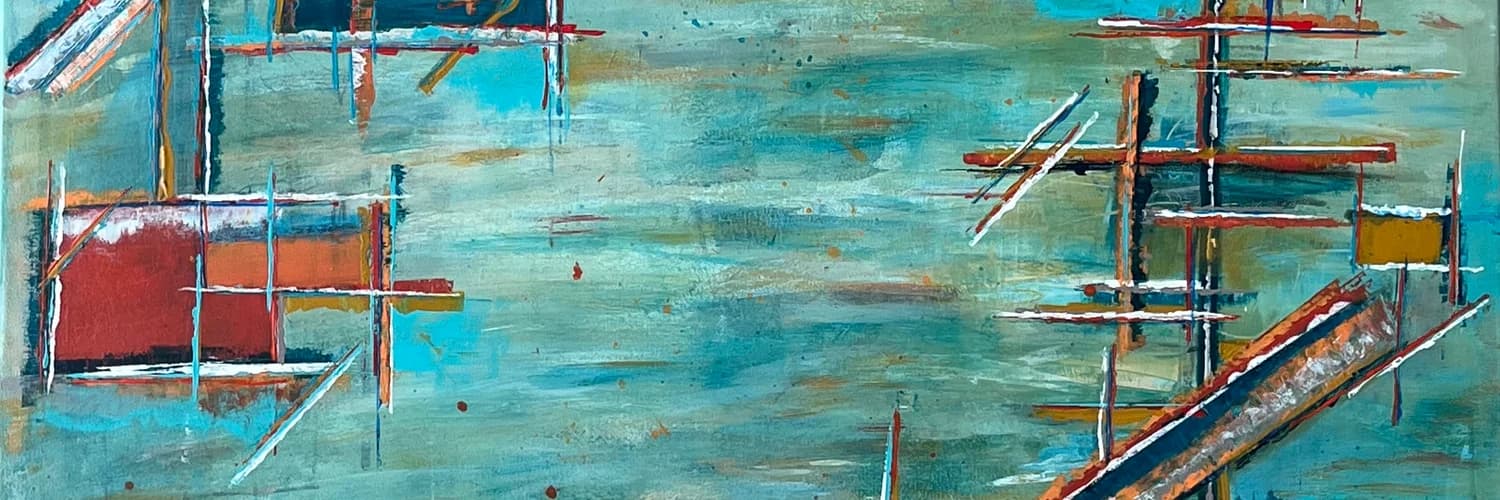
I don’t keep strict borders between categories; I live on their thresholds. The abstract works begin with mood and proportion and often resolve into architectures of color—balanced, spare, and calm even when the palette is vibrant. The abstract-realist works use the human figure (often the feminine) as a compass while letting edges dissolve into fields and marks: realism held lightly enough to breathe. And the figurative works—portraits, animals, landscapes—carry the dignity of subjects I meet with reverence. They are not illustrations; they are conversations where I am quiet long enough to hear what the subject wants the painting to keep.

Sometimes a portrait is the most abstract thing in the room—reduced to planes and pulses. Sometimes an abstract canvas is the most figurative thing I make that week—because the light reads as weather and the violet holds the ache of a memory you recognize without a name. For me, these modes are not separate. They are three dialects of the same language: attention.

Series focus: Fragments d’elle – Portraits of women who rise
In Fragments d’elle, I give the floor to women who carry paradox without apology: strength with softness, mystery with clarity, resilience with rest. Some portraits tilt toward abstract realism—eyebrows as single strokes, skin as layered fields, hair as a constellation of gestures—while others lean into figurative specificity: the lift of the chin that says, “I’m here.” I am less interested in likeness than in presence: the exact distance between the sitter’s gaze and her horizon of becoming.

I often write a few lines for each portrait—a private note of intention—so that the painting remembers where it wanted to go. Viewers sometimes tell me they feel “met” by these faces. That is the highest honor I can imagine: not to impress, but to accompany.

Abstract works: what stays, what leaves
The abstract canvases are my practice of subtraction. I build a painting around the one thing that must remain—an open field, a seam of light, a chord between violet and beige—and remove anything that competes with it. I let imperfect edges show; they carry human time. Pieces like True Hope and Symphonie Colorée came from seasons when I was learning to trust brightness again, to paint light without irony. The Coup de Cœur mentions those works received in 2025 felt like a quiet handshake from peers: yes, simple can be strong; yes, grace can be contemporary.

Figurative—animals and landscapes: witness and weather
Figurative works outside of portraiture start with gesture. Animals carry stories in how they occupy space; landscapes carry stories in how light and weather keep arriving. In Sous la lumière, la grâce !, I tried to let the animal remain sovereign—un-humanized—while still receiving it with tenderness. The Coup de Cœur mention affirmed for me that quiet dignity can register powerfully, even in a field crowded with spectacle.

Land and sea pieces—especially those born of time near ports—use hard edges and stacked color to suggest industry without losing lyricism. I like when a viewer feels both the weight of cranes and the lift of sky, the pragmatic and the poetic held together.

keep a studio practice that alternates focused series work with study cycles. In study cycles I test edges, push new limited palettes, and make small abstract notes that later seed larger pieces. In series periods I tighten the frame and move steadily—several canvases at once—so that decisions echo across the body of work.

On teaching and attention

My teaching—especially in mindful drawing and meditative mark-making—keeps my painter’s eye honest. It reminds me that the heart of technique is attention. I return to the same questions with students and with my own canvases: Where is the breath? What can I remove? What must stay? That shared discipline of noticing has made my paintings less performative and more hospitable. I want people to feel welcome in front of them—to feel, very simply, that the painting is on their side.

What the juried mentions mean to me
I value juried contexts because they put my work into a conversation bigger than my own studio. The Coup de Cœur distinctions and the 6th-place ranking at Art4Competition mark moments when peers and organizers said, “We see what you’re trying to do.” They are not endpoints, but waypoints: signs that restraint can carry, that a quiet chord of color can move a jury as surely as a roar. These mentions live alongside the deeper witness I seek in exhibitions and in the homes where collectors place the work: does the painting keep giving, months later? Does it help the room breathe?

What I hope the work does:
I hope the paintings offer a place to rest without going numb; a place where beauty does not avoid difficulty but metabolizes it into coherence. I hope collectors feel both steadied and slightly more awake in the presence of these surfaces. I hope viewers who meet
Version originale