PhotosbyTWP
Artista Visual
PhotosbyTWP é um artista de Black and White baseado em Twin Falls, Idaho. Conhecido por Nature, Seascape.
Where the wild world slows down — fine art nature photography printed for your walls.
Traduzido de English
Twin Falls, Idaho, United States
Entrou em janeiro de 2026

Photos By TWP  ·  Twin Falls, Idaho  ·  photosbytwp.com
Triina Turula & Tom Ingram

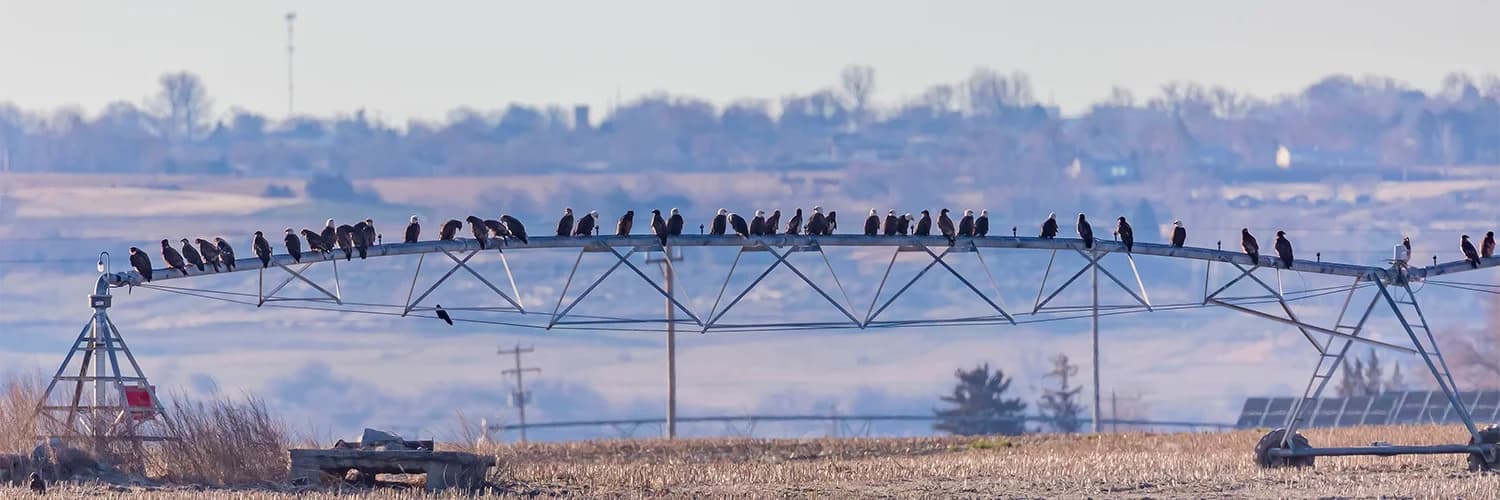
The photographs of Triina Turula and Tom Ingram are records of genuine encounter — often made at dawn, in the marginal hours when the world has not yet composed itself for the day. They document a sustained, decades-long attention to the natural world: its behavior, its color, its refusal to hold still. The work is neither manipulated nor staged. What appears in the frame is what was present that morning, in that place.

THEMES
The central preoccupation of the work is presence — the kind of radical presence that wild animals and unmanaged landscapes demand of those willing to wait for them. Birds are the primary subject: mid-song, mid-flight, or in the composed stillness that precedes action. The collection’s named series each trace a specific register of this attention. Wings at the Window turns to garden-scale intimacy — hummingbirds, warblers, tanagers. Forest Sentinels moves into the pines and cottonwoods with owls and raptors. Among the Quiet Giants attends to the large mammals of the American West: moose, elk, and deer at the unhurried pace their size demands. The Restless Shore reaches furthest — into open water where Tom has photographed manta rays and sharks, closing a circle that stretches back fifty years to his earliest underwater work.

A secondary but increasingly prominent thread is the inhabited landscape: the Snake River Plain, the Sawtooths, autumn hay fields, basalt canyon walls. The Ingrams deliberately retain evidence of human presence — a weathered barn, a dirt road, their own vehicle at a trailhead. This is a considered ethical stance: they argue, quietly but consistently, that the case for protecting wild land is best made by showing that people belong in it.

There is also a persistent strain of humor — a warbler in mid-dishevelment, a moose caught in an undignified moment — that keeps the collection from tipping into reverence. The Ingrams are not making icons. They are making portraits.

PRACTICE & MATERIALS
Tom’s technical formation is rigorous. He learned to read light underwater in the early 1970s using fully mechanical Nikonos underwater cameras — no automation — requiring precise manual judgment on every frame. He taught underwater photography at the college level through the 1980s. That discipline carried into his telephoto work, now extending to 800mm lenses. The Restless Shore closes a fifty-year circle: expeditions to Mexico and Australia produced images of manta rays and sharks made with the same patience built beneath the surface decades ago.

Triina’s contribution operates at an earlier stage: she finds the subjects. Her ability to locate wildlife others walk past — an owl motionless in a cottonwood canopy, a bittern invisible at the reed line — is the foundational act on which many images in the collection depend. Her brief photographic training informs a patient, unhurried approach: she waits for the right expression, the right posture, the right light.

Post-processing is done in Adobe Photoshop with Topaz DeNoise and Sharpen for low-light work. No AI generation, no compositing of elements present in the scene. Prints are produced on archival materials, sized for wall installation.

INFLUENCES & CONTEXT
The work sits within the tradition of American nature photography — indebted to the naturalism of Eliot Porter and the field practice of Arthur Morris — while maintaining a tonal distance from the sublime of Ansel Adams. Where Adams elevated landscape into monuments, the Ingrams tend toward the intimate: a single bird in real habitat, at a real hour of day. Tom’s underwater background connects the work to scientific imaging tradition, prioritizing accuracy over aestheticization — a sensibility formed in environments where guesswork was not possible.

WHAT THE AUDIENCE WILL EXPERIENCE
Viewers encounter these photographs as a form of slowed attention. Birds at close range, landscapes at first light, large mammals in unhurried repose, open-water creatures caught in unguarded behavior — each produces the specific sensation of having been given access to a moment that would have disappeared without witness. This is the feeling of being trusted with a private thing.

Installed as archival prints, the work rewards sustained looking. Detail invisible at a distance — the filaments of a feather, the exact quality of early light on water — becomes legible on approach. The collection suits residential, hospitality, and institutional spaces where work is seen repeatedly; it accumulates meaning rather than exhausting it.

For collectors, the work offers something increasingly rare: images made without artificial enhancement, by photographers who understand both the technical demands of the field and the ethical ones — who believe that showing the world as it actually is, remains a form of argument for its preservation.
Mostrando original