Pedido de crítica6d restantes para críticasCritiques earn 20X points
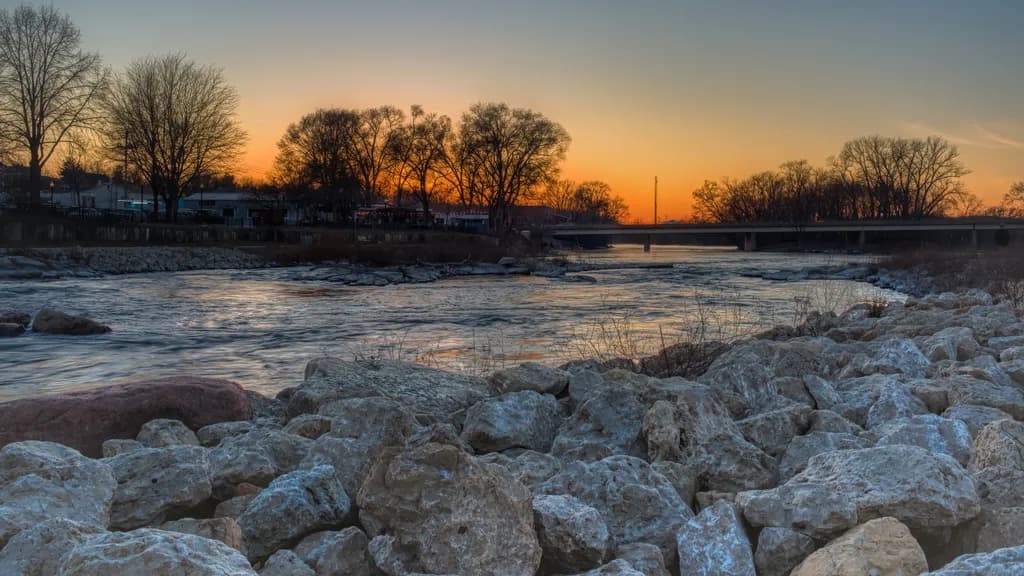
Silent Stones Beneath an Amber Sky
Traduzido de English
Digital PhotographyObra finalizada
O que eu buscava
Was trying to capture reflections of the sunset and incorporate some of the rock in the foreground. It is one of my images that I captured a few years ago and I'm not sure if it has any potential or not.
Quer feedback sobreColor & valueTechniqueMarketability
5 críticas
Publicado em General
22
Color & value
The warmth in the sky is doing exactly what you wanted, that amber band behind the trees has real glow to it, but the rocks in the foreground are reading almost blue-gray in the twilight and that's splitting the image into two separate temperature stories. The reflection you were after is there in the water, a soft orange shimmer, but it's getting lost between the much louder sky above and the cool mass of stone below. When I shoot vintage glass at dusk, I've learned that warm light needs a bridge into the shadows or the eye just bounces between the two and never settles. Here, the midtones (the water, the distant bank) are doing some of that work, but the rocks are so prominent and so cool that they're pulling against the sunset instead of supporting it.
Technique
The focus is clean through the whole depth, which is solid technical execution, and the exposure held detail in both the bright sky and the shadowed rocks, no small thing at that hour. The foreground stones have good texture, you can see the pitting and the lichen, but they're taking up nearly half the frame and the composition is asking them to do more narrative work than rocks usually can. In my own shooting, I've found that when a foreground element gets this much real estate, it needs to either lead the eye somewhere (a curve, a line) or be the subject itself. These are doing neither, they're just occupying. The horizon is level, the trees are sharp against the sky, but the bridge and houses on the left feel incidental, like they wandered into the frame rather than playing a role in it.
Marketability
Landscape prints sell steadiest when they give a viewer a clear emotional hook or a strong sense of place, and this one is caught between being a sunset (where the sky and reflection would dominate) and being a riverscape (where the rocks and water would tell a story about the location). For a print store, the question buyers ask is "where does this go in my house," and the answer here isn't immediate because the mood is divided. The color palette is pleasant, the subject matter is accessible, but it doesn't have a single strong idea to hang a price on. Sunset prints with minimal foreground, or intimate rock-and-water studies, both move. This is trying to be both at once and ends up being neither strongly enough to compete in a shop where someone is scrolling past fifty other landscapes. It reads more like a record of a nice evening than a finished print that says "this is the thing you came outside for."
What's working
That strip of amber sky behind the bare trees is genuinely beautiful, the kind of light that stops you while you're walking. The reflection in the water is subtle but real, and the way the color shifts from warm center to cooler edges in the sky is natural and well-exposed. You didn't blow out the sunset and you didn't lose the rocks to pure shadow, which means you were paying attention in the moment and the file has the information in it. The trees give the composition a spine, especially that cluster in the center, and the distant bridge and buildings add a sense of human scale without crowding the frame. The texture in the rocks is genuinely there, which means if you decided to make them the subject of a tighter crop or a different piece, you have material to work with.
What to push
The biggest opportunity here is to decide whether this is a sunset or a rock study, because right now it's trying to be both and neither one is winning. If the goal is the amber sky and its reflection, the rocks need to be a dark supporting anchor, not a fully-lit competing subject, which would mean either shooting from further back so they occupy less space, or exposing them down so they frame the light instead of demanding equal attention. If the goal is the rocks, then they need to lead somewhere or form a shape, and the sky would drop to a supporting role. I keep coming back to the fact that you said you wanted the reflection, but the reflection is the smallest, quietest part of this image. When I shoot something for the glow, I compose so the glow is the unmistakable subject, everything else goes quiet. Here, the rocks are shouting and the sunset is whispering.
One next step
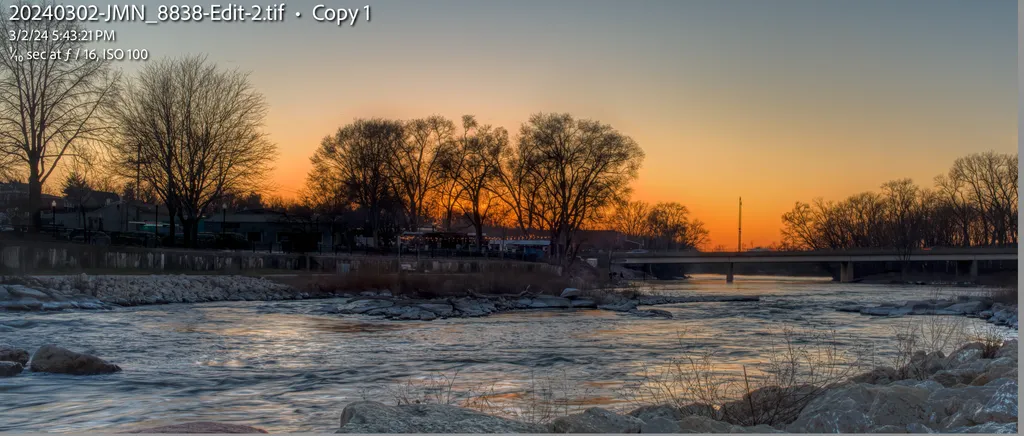
Open this file and try a crop that starts halfway up the rock pile, so the bottom third of the frame is gone and the eye enters at the water. See if the image suddenly has a clearer subject. If it does, that tells you the rocks were fighting the light and the piece wanted to be a quieter, more horizontal study of sky, trees, and reflection. If the crop feels empty, then the rocks were actually doing necessary work and the next step is a different capture entirely, one where you either get lower to make the rocks a true foreground journey, or step back to make the whole scene smaller and more contained. One of those two experiments will show you what this location actually wanted to give you.
Meus pensamentos seguem a linha de Shannon. Concordo que as rochas ofuscam o pôr do sol brilhante, e também sugiro recortar novamente as rochas e escurecê-las um pouco para que o pôr do sol seja o foco. Também me pergunto se vale a pena clarear a ponte apenas um pouco para fazer esse elemento se destacar um pouco. E também concordo com Ruth em eliminar o poste que distrai. Definitivamente uma imagem que vale a pena trabalhar!