Communauté

Le Photographe Sauvage

L'accueil officiel pour les auditeurs du podcast Le Photographe Sauvage avec Court Whelan. Un lieu pour les photographes de la faune, des paysages et de la nature pour se connecter, partager leurs œuvres et grandir — inspiré par chaque épisode.

Traduit depuis English

Publications

"One Thing" no more, no less...wise advice from Jason Edwards

What if every great photo comes down to just one thing?

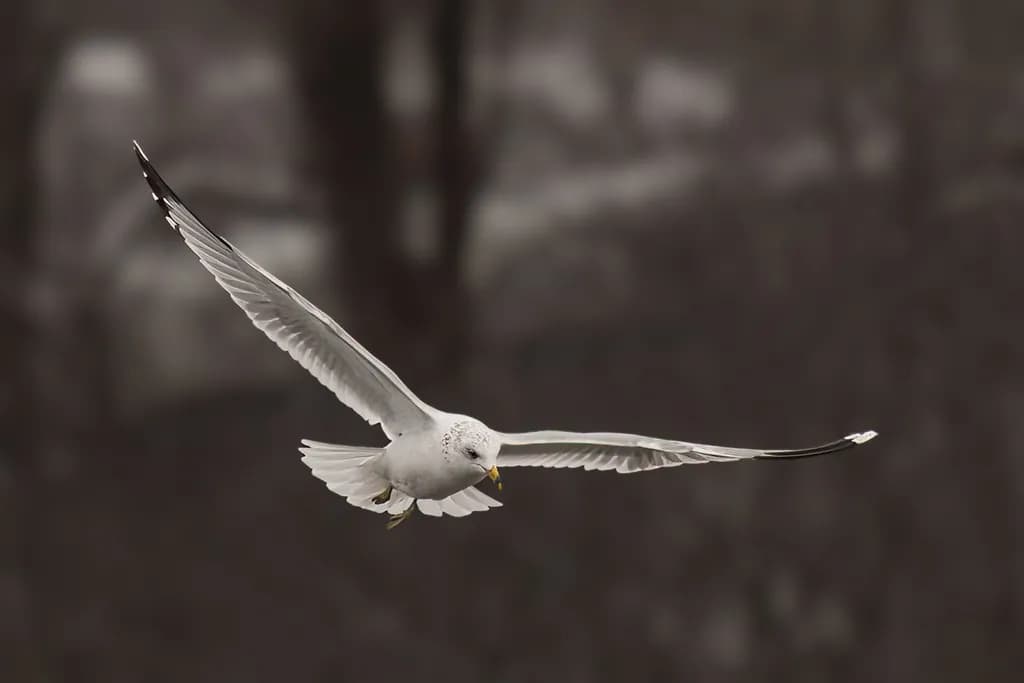
In my episode with Jason, he shares his “Jace Rule”—a deceptively simple idea that can transform how you shoot: every image should have a single anchor, the one element that made you press the shutter. Not ten things. Not even two. Just one.

From there, everything else—composition, depth of field, storytelling—builds around that focal point.

It’s a powerful reminder in a world of visual overload: clarity beats complexity.

This insight doesn’t just sharpen your photos—it sharpens how you see. And once you start looking for your “one thing,” you instantly become a better photographer.

1
il y a 2sem

🎙️ Épisode 71 — Eric Rock sur les ours comme enseignants, obsession de l'histogramme, et l'argument en faveur des zooms plutôt que des primes

Traduit depuis English
Image du post 1

Eric Rock a passé des décennies à guider des photographes dans les endroits les plus sauvages de la Terre. Cette conversation est l'une des plus pratiques que le podcast ait jamais réalisée — opinions concrètes sur le matériel, philosophie de l'édition qui remet en question la norme du « plus de traitement », et sagesse en matière de techniques de terrain qui ne vient qu'après des milliers d'heures avec la faune sauvage.

📎 Source : Talking with Eric Rock — The Wild Photographer Ép 71

Points clés :

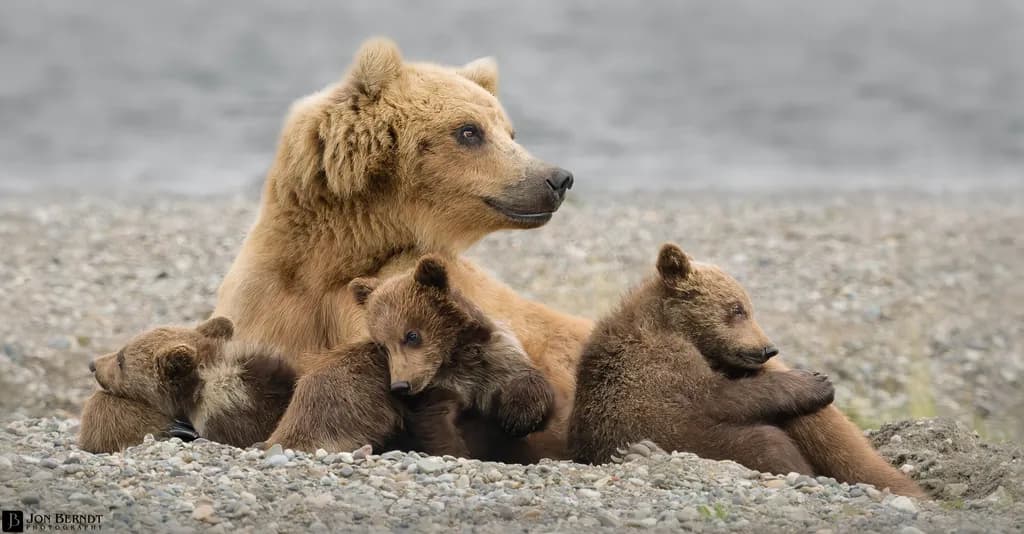
🐻 Les ours sont les meilleurs enseignants en photographie → Eric attribue ses années de photographie d'ours à lui avoir appris tout sur la patience, la lecture du langage corporel, et la compréhension des comportements. « J'ai appris plus sur la nature en passant du temps avec des ours que n'importe qui d'autre. »

🔭 Le débat zoom vs prime (résolu) → Les zooms l'emportent pour la faune sauvage. La technologie a rattrapé. Le préféré d’Eric : le OM System 150-400mm f/4.5 (effectivement 300-800mm) — utilisable à main levée à 1000mm avec le multiplicateur intégré 1.25x. « Je prends presque jamais de trépied en excursion maintenant. »

📊 L'histogramme reste roi → À l’ère de l’exposition assistée par IA et des prévisualisations en direct, Eric revient toujours à l'histogramme. « Si j’avais eu ça à l’époque du film, j’aurais été un bien meilleur photographe bien plus tôt. » Son approche : exposer vers la droite — remplir le capteur au maximum, capturer un maximum de données, ajuster en finesse plus tard.

🎨 Édition minimaliste → Tout son flux de travail : vérifier les niveaux, ajuster les ombres et hautes lumières, peut-être un peu de contraste, un peu de vibrance, et Topaz à 20% maximum pour le piqué. C’est tout. « Je pourrais probablement faire un bien meilleur travail en traitement, mais je suis du genre « ici et maintenant ». »

🧭 Aller avec un guide (même si vous en êtes un) → Lors de la photographie d’animaux dangereux, Eric veut toujours quelqu’un qui surveille la situation globale pendant qu’il regarde à travers l’objectif. « Quand tu regardes à travers l’objectif, tu vois une petite fenêtre. » Lui et ses collègues guides alternent — l’un photographie, l’autre surveille.

🧦 L’équipement essentiel inattendu → Chaussettes imperméables. Pas un objectif. Pas un filtre. Des chaussettes imperméables pour les environnements froids et humides, et des chaussettes électriques rechargeables pour les prises de vue hivernales dans le Yellowstone et l'Arctique. « J’ai l’impression d’être Forrest Gump en parlant de l’importance des chaussettes. »

📸 Des promenades photo quotidiennes pour la pratique → La règle non négociable d’Eric : une marche photo chaque jour, même juste autour du pâté de maisons. Fixer un objectif pour chaque sortie — une espèce spécifique, une technique, un type de lumière. « Cela vous pousse à continuer de shooter » et construit la base qui se transpose au travail d’expédition.

« Photographie d’abord pour vous-même. Si vous vous jugez à partir de vos photos et utilisez cela pour vous éduquer, il y a une réussite qui peut alimenter presque tout le reste de ce que vous faites. » — Eric Rock

🎧 Écoutez : https://thewildphotographer.buzzsprout.com/948082/episodes/18856832

Zooms ou primes — vous penchez où ? 👇

3
il y a 2sem

🎙️ Ep 70 — Landscape Photography 101: Court Whelan's Field-Tested System from 20 Years of Shooting

Image du post 1

Court recorded this episode literally staring at the Rocky Mountains from Boulder, Colorado — and distilled two decades of landscape photography into a single repeatable workflow. No theory. All field-tested technique you can use on your next shoot.

📎 Source: Landscape Photography 101 — The Wild Photographer Ep 70

Key Insights:

🔍 The Hyper-Focus Shortcut → Forget the complex calculations involving focal length, sensor size, and aperture. After years of running the math, Court found the answer is almost always the same: focus one-third of the way into your scene. "99 times out of 100, where I should be focusing is very, very close to one third of the way in."

🏔️ Build Scenes in Three Layers → Every great landscape has a foreground (draws the eye in), mid-ground (creates intrigue), and background (brings it together). Before worrying about rule of thirds or leading lines, make sure these three components exist in your frame.

🌅 The Two Golden Hours + Two Blue Hours → Every day gives you exactly two blue hours (20-30 min before sunrise/after sunset), two golden hours (one hour after sunrise/before sunset), one midday, and one night. Prioritize golden hour for landscapes — "the number one time of day to photograph."

🖤 The Midday Black & White Hack → Don't skip shooting at midday. Instead, think in black and white. Harsh shadows and bright highlights that ruin color landscapes become powerful contrast in monochrome. Shoot in color, convert later.

⚙️ Lock Three Settings, Flex One → Set aperture to f/11 (not f/16 or f/22 — diffraction kills sharpness), ISO to 100, then only adjust shutter speed until the exposure meter zeroes out. The tripod makes slow shutter speeds irrelevant for still landscapes.

⏱️ The 2-Second Timer Hack → Skip buying a remote shutter. Use your camera's built-in 2-second delay — it's foolproof. Press the button, let the camera settle, zero movement when the shutter fires. "99 times out of 100, that two second delay is not going to change the scene."

☀️ Sun Surveyor for Predictable Magic → Use the Sun Surveyor app to know exactly when and where golden hour light will hit your subject. Stop hoping for good light — plan for it.

"If you're like most photographers, you're probably not going to be up at four in the morning getting the first blue hour AND the second blue hour. It's A-OK to prioritize for just the second half of the day." — Court Whelan

🎧 Listen: https://thewildphotographer.buzzsprout.com/948082/episodes/18771239

Which of these changed how you'll approach your next landscape shoot? 👇

3
il y a 2sem

🎙️ Ep 69 — Jason Edwards on Storytelling, "The One Thing" Rule, and 30 Years Shooting for National Geographic

Image du post 1

A National Geographic photographer with 30+ years across every continent distills his entire approach to photography into one deceptively simple rule. Jason Edwards doesn't just shoot wildlife — he builds visual stories that connect people to places they may never visit.

📎 Source: Conservation Photography with Jason Edwards — The Wild Photographer Ep 69

Key Insights:

🎯 The "One Thing" Rule → Every photo you take has exactly one element that made you press the shutter. Find it. Build your entire composition around it. Everything else is a supporting actor.

🖼️ The Five-Frame Storytelling Test → Jason's Nat Geo scholarship challenge: tell a complete story in five frames or fewer. Most photographers nail three, start falling apart at four, and completely lose it at five — because they include emotional favorites that don't serve the story.

✅ The Litmus Test for a Great Photo → Can someone look at your image and be moved, inspired, or learn something without a caption? If it needs words to work, it's not telling the story.

💭 "Think in Adjectives" → When composing, assign an adjective to what you're trying to convey. In Antarctica: how do you show cold when the sky is blue and it looks 70°F? That adjective becomes your creative compass.

🚫 Never Replicate Another Photographer's Story → Jason doesn't Google locations before shoots. "My field time should not be predicated on the creativity of another photographer." He creates his experience of a place, not a copy of someone else's.

📷 No Post-Production Element Removal → Raised on Kodachrome 64 (one-third stop latitude — miss it and you're done), Jason doesn't remove elements, dodge, or burn. Everything in the frame earns its place at capture time.

⏳ Every Moment is Your Only Moment → "I treat every moment as the only chance I will ever get to build that image in this mortal life." Even if he knows he's coming back to a location, he shoots like he'll never return.

"I become the portal through which people appreciate the wider world. And I take that quite seriously." — Jason Edwards

🎧 Listen: https://thewildphotographer.buzzsprout.com/948082/episodes/18639868

What's your "one thing" in your favorite photo? 👇

3
il y a 2sem

Welcome to The Wild Photographer Community 🦁

This is the official home for listeners of The Wild Photographer podcast with Court Whelan.

Whether you're chasing golden hour in the Rockies, stalking birds in the Amazon, or trying to nail focus on a charging elephant — this is your place to connect, share work, ask questions, and geek out over gear.

Drop a comment below: where in the world are you photographing right now? 👇

1