Demande de critique6j restants pour les critiquesCritiques earn 20X points
Hommage à Jules César
Traduit depuis Português
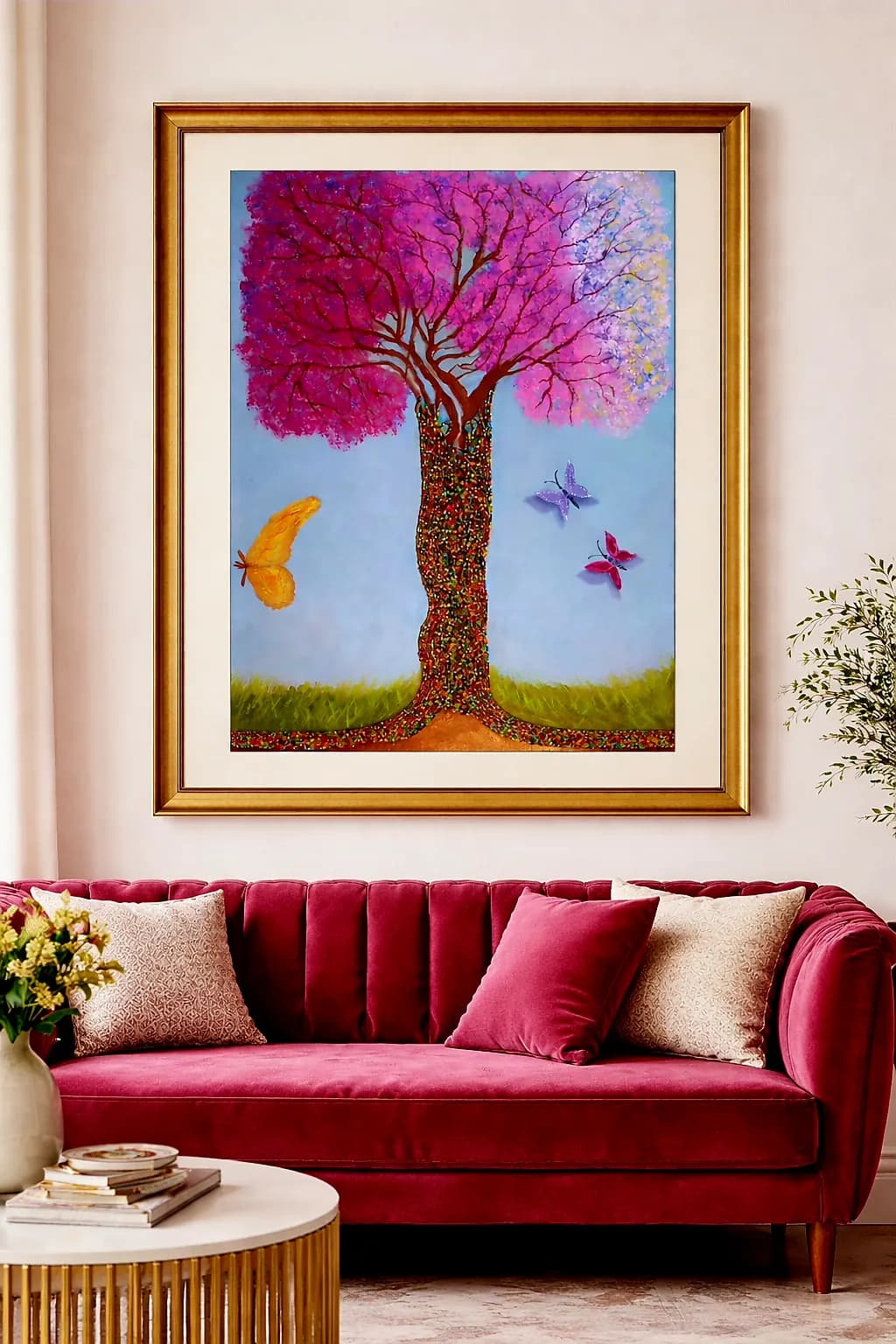
Óleo sobre tela/miçangas de vidro · 70x50Œuvre achevée
Ce que je cherchais
Além de mostrar a necessidade de se preservar a natureza , habitat de varias espécies, uma homenagem à meu sobrinho Julio César (deficiente visual total), responsável por produzir as tiras dessas minúsculas miçangas de vidro que colei no tronco da árvore
Souhaite des retours surMarketabilityPricing
3 critiques
Publié dans General
0
Marketability
The textured trunk catches the eye immediately, those glass beads creating real dimension that photographs cannot quite capture but that a gallery visitor would notice from across the room. That tactile element paired with the story behind it, Julio César's hands threading those beads while unable to see the color they would become, gives this piece exactly the kind of narrative hook that exhibition curators look for. The challenge is that the market for mixed-media work with a strong environmental message tends to split: conservation-focused venues want documentation-style realism, while galleries that show joyful color often shy away from explicit messaging. This sits between those two, which means you need to find the specific spaces that want both at once, smaller regional galleries with an activist bent or group shows with an environmental theme. The framing in this photo is gallery-ready, which suggests you already know it needs that presentation, and that investment will matter because this is not an easy casual browser piece. It asks for a sustained look and a willingness to read the wall text, which limits impulse purchases but can land properly with the right collector.
Pricing
At 70x50 with the bead application, you have material cost and hours that add up, but as someone beginning you cannot price on time invested yet because the market does not know your name. I see work of this size and complexity at regional exhibitions in the UK priced anywhere from £180 to £450 depending on the artist's exhibition history and the venue's location. You are headed for an exhibition, which means someone else is setting context around your work, and that helps. If this is a group show in a community arts space, price toward the lower end of that range, maybe £200–250. If it is a curated gallery show where other artists have solo exhibition histories, you can ask £350–400 because the room itself is doing some of the credibility work. The beadwork is labour-intensive and unusual, which justifies a higher price than a flat painted tree of the same size, but the composition reads as illustrative rather than fine art in its color choices and symmetry, which will cap what the market will pay. Do not price this as if the story of Julio César's involvement adds monetary value, even though it adds meaning. Buyers pay for what they see first, and discover the story after they have already decided to consider it.
What's working
The beaded trunk is the heart of the piece and it does exactly what you wanted, drawing the eye and creating a focal point that has genuine presence. I keep looking at how the beads pool at the base, spilling into the grass line, because that detail tells me you were thinking about gravity and accumulation, not just decoration. The canopy gradient from deep magenta on the left to that softer lavender-pink on the right gives the tree movement, as if light or wind is working through it, and that keeps it from being static. The butterflies and what I think is a bird, all in motion around the tree, reinforce the habitat idea you named without turning the piece into a diagram. This is clearly about celebration and preservation together, life in color, and that comes through before anyone reads a word of text.
What to push
The sky needs more variation in value or temperature to support how much color the tree is throwing. Right now it reads as one flat blue, which makes the tree feel pasted onto it rather than existing in the same atmosphere, and that flattening fights against the dimension you worked so hard to build in the trunk. I have this exact problem when I put a detailed foreground object against a barely-worked background and it always looks like two drawings happening in the same frame. The grass line is similarly even, that single stripe of yellow-green, and it leaves the tree without a ground plane to anchor it. If the environmental message is core to what you are going for, the habitat around the tree has to feel as alive as the tree itself, because right now the tree is the only thing with texture and the rest is backdrop. Adding variation in the sky, even just lighter and darker passes of the same blue, or warming it near the horizon, would help the whole image breathe together.
One next step
Photograph this piece in consistent indoor light, or outdoors in open shade, and take three shots: one straight-on, one detail of the beaded trunk showing the texture, and one angled slightly to catch the dimensionality. Then write the story you told me about Julio César as a 50-word caption that starts with what someone sees, not what it means, because galleries and buyers need both the visual and the narrative in that order. Bring both when you submit to the exhibition, because the beadwork needs to be described in words or it will photograph as flat pattern and miss the entire point of what you built.