Demande de critique4j restants pour les critiquesCritiques earn 20X points
Papillon
Traduit depuis English
PhotographyTravail en cours
Ce que je cherchais
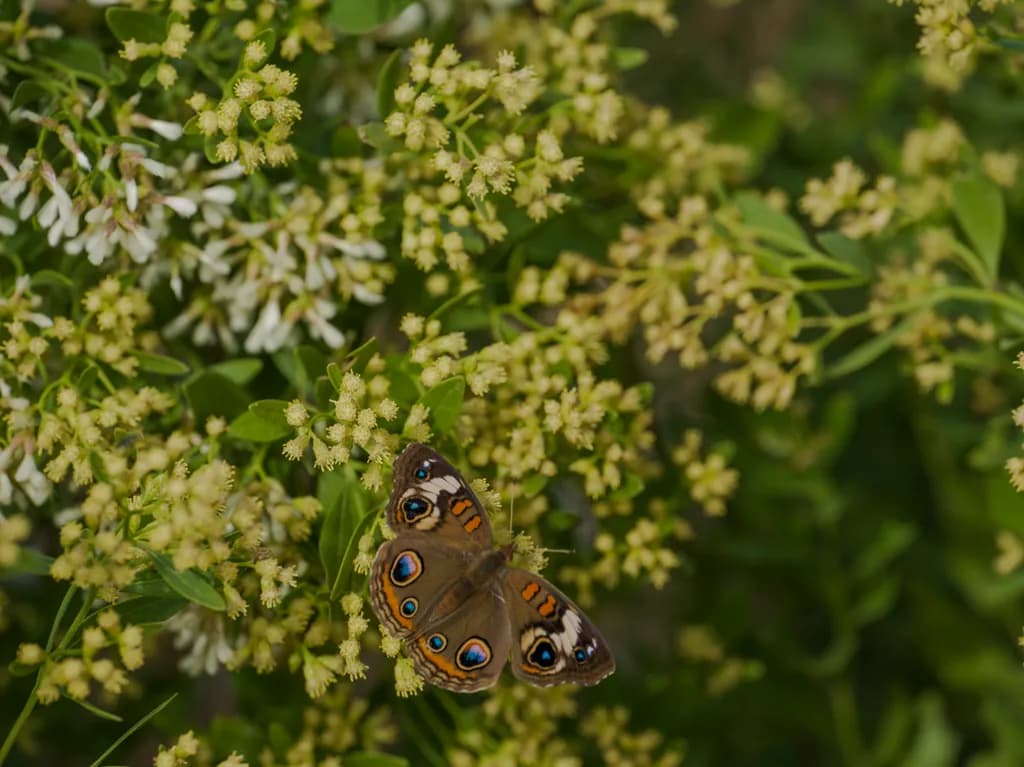
I usually photograph Landscapes but this little beauty landed in front of me and could not resist. tell me what you think please. I like the shallow depth of field because it makes the butterfly stand out. Should it be cropped more. Thanks for taking a look.
Souhaite des retours surConceptColor & valueComposition
3 critiques
Publié dans General
4
Composition
The butterfly is dead center, wings open symmetrically, which is the most obvious choice but not always the strongest one. Your eye enters at those eyespots and stays there because the surrounding blooms blur into sameness. The depth of field is doing what you wanted, separating subject from background, but it's also erasing all the structure in the plant. I can't tell where one stem ends and another begins. The white flowers in the upper left offer a tiny bit of visual relief from all that green, but they're not sharp enough to read as a deliberate counterpoint and not soft enough to vanish entirely, so they just sit there. You mentioned cropping: the question is not whether to crop tighter, but what you'd be cropping toward. A tighter crop on the butterfly alone would make this a specimen shot. Pulling back and keeping more of the plant structure sharp would make it an environmental portrait. Right now it's neither.
Color & value
The palette is almost entirely yellow-green and mid-value, which flattens the space more than the shallow depth does on its own. The butterfly's eyespots carry the only real contrast, those blue and orange rings against the brown wings. Everything else sits in the same tonal range: the sharp blooms, the soft background, the stems. I kept waiting for a darker shadow or a brighter highlight to give my eye a second landing point, but the whole frame hovers in that late-morning green-yellow glow. That uniformity makes the butterfly pop, yes, but it also means there's nowhere else for the eye to rest or travel. In my own work I've learned that even when I want one subject to dominate, a small anchor of different value somewhere in the frame gives the composition breath.
Concept
You spotted an opportunity mid-landscape shoot and changed gears, which is exactly the instinct that keeps photography alive. The concept reads clearly: isolate a single butterfly on neutral-toned blooms, let shallow depth carry the focus. That part landed. What I'm less certain about is whether you committed fully to the close-up or stayed in landscape mode. The framing includes a lot of surrounding context, more than the depth of field can hold sharp, so the piece sits between two ideas: intimate portrait of an insect or butterfly-in-habitat. When I shoot flowers, I have to decide before I press the shutter whether I'm making a portrait or a scene, because the aperture and distance required are completely different. You have the butterfly centered and the background blown out, which says portrait, but the focal length and amount of visible plant matter say scene.
What's working
The butterfly is genuinely sharp where it needs to be, wings and eyespots and body, which means you nailed focus under what I assume was shifting light and a moving subject. That's harder than it looks. The shallow depth is doing its job of separation, and the insect reads immediately as the subject. The color on those eyespots, particularly the blue rings, has enough saturation to hold attention without looking artificial. You also caught the butterfly with both wings visible and reasonably symmetrical, which doesn't happen in every frame when you're shooting something that might fly off in three seconds. The light is soft and even, no harsh shadows cutting across the wings, which keeps the whole piece gentle.
What to push
The biggest opportunity here is deciding what kind of photograph this wants to be and then committing to that with your framing and depth of field together. If it's a butterfly portrait, get closer or crop tighter, and let everything else dissolve into pure color. If it's butterfly-in-habitat, stop down to hold more of the plant structure sharp so the viewer understands what they're looking at. Right now the amount of visible but unreadable plant matter is working against you. The second thing to push is value range. The whole frame sits in mid-tones, which makes it feel flat even though the depth of field is extreme. A darker shadow somewhere, even just in the far background, or a brighter highlight on a petal, would give the piece dimension. When I was shooting only flowers I used to think shallow depth was enough to create space, but I learned the hard way that value contrast does more of that work than blur ever will.
One next step
Crop this image to just the butterfly and the blooms it's resting on, eliminating most of the soft green mass in the background and the unsharp white flowers at top left. That will tell you immediately whether the butterfly alone carries the frame or whether you actually needed the context. If the tight crop feels too empty, that's your answer: next time you photograph an insect, stop down to f/8 or f/11 and hold more of the plant structure, so the habitat becomes part of the story instead of just a wash of color. Make one version of the tight crop today, look at it tomorrow, and you'll know which direction to take the next frame.