
MODELS & MUSES
O, for a Muse of Fire, that would ascend
The brightest heaven of invention...
(William Shakespeare, from Henry V)
One of the things I appreciate most about my late husband David Delamare's paintings (and what holds my interest in them over time) is that almost every face suggests a complex inner life.
There may or may not be a visible narrative, but the expressions suggest psychological depth and tension. Even if the image is of a single figure standing in a garden, one feels that something is afoot.
This wasn’t accidental. David and I were always scouting for painting models on our street, typically spotting them waiting tables in pubs or reading in the coffee shops along Portland, Oregon's bohemian Hawthorne Blvd.
We weren't just seeking a pretty face, which in itself wasn’t difficult or compelling. We were looking for something ineffable—a sense of inner complexity, an authenticity, and sometimes a quirkiness or uniqueness.
David generally disliked working with professional models, who often relied on stereotypical looks and poses designed to please the male gaze. None of this interested him.
I remember one instance in particular when a lovely model appeared for a session with preconceived notions about her “sexiest” angles and an insistence on posing in high heels. As soon as she left, David threw the film out without even bothering to process it.
(Incidentally, I’ve catalogued more than 900 Delamare paintings, and off the top of my head, I can recall only one that included a pair of “high heels”. There are a few antique shoes and boots to be found. But the vast majority of David’s figures wear no shoes at all.)
David’s greatest muse was Cameron, who posed as Alice for our illustrated version of Alice's Adventures in Wonderland. She appeared in 56 paintings and 56 drawings.
Cameron, whom we found by running an ad on Craigslist, looked like a maiden who had stepped out of a fairy tale. Had she arrived with a unicorn, it would have seemed fitting. But that, alone, wouldn’t have held David’s attention for long.
She was also brilliant, funny, and highly imaginative. (We were charmed by the fact that, as a child, she had long kept her window open at night, awaiting an owl from Hogwartz.)
Cameron was a natural actress. (I recall David saying that when he asked her to pretend to be on a tightrope, she seemed genuinely intimidated by the imagined heights.)
Cameron was endlessly interesting to paint because she was endlessly interesting as a person. At the time of his death, David was still sketching new ideas for paintings of her.
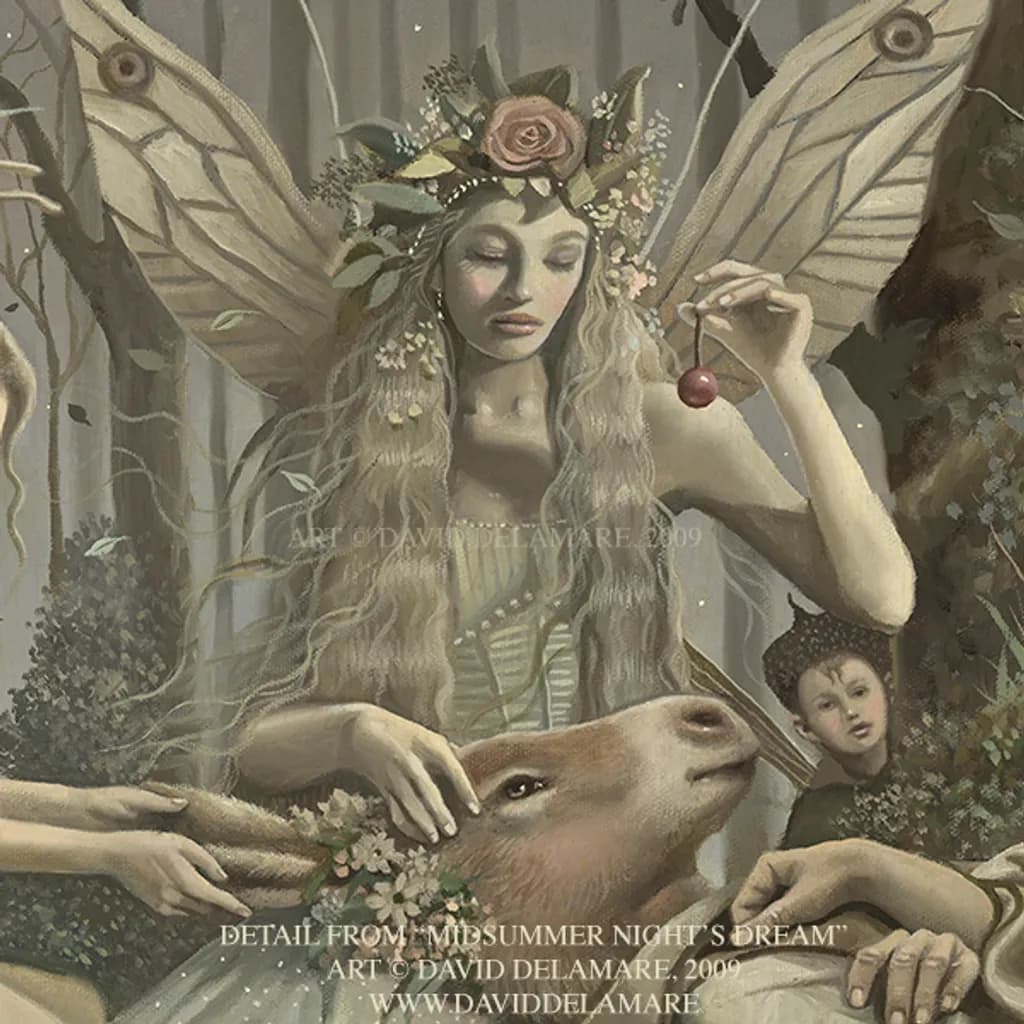
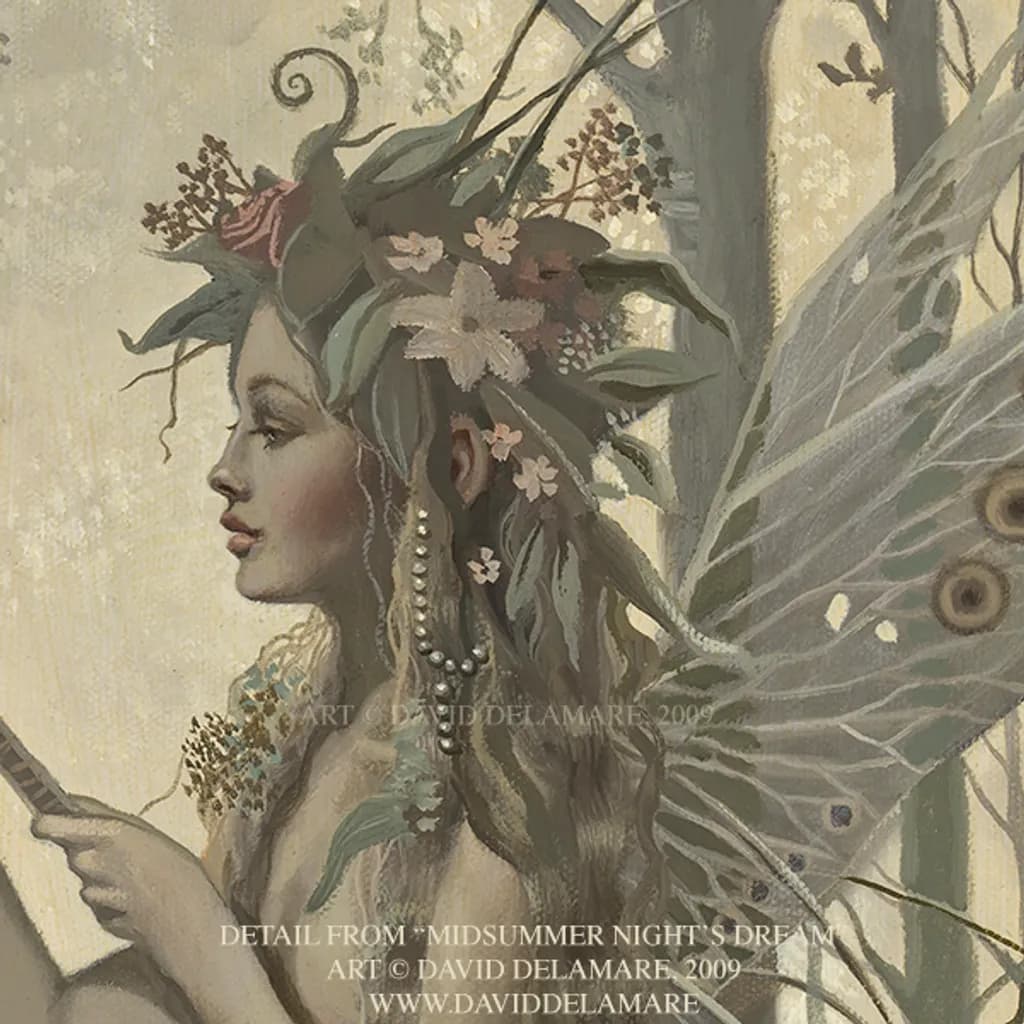
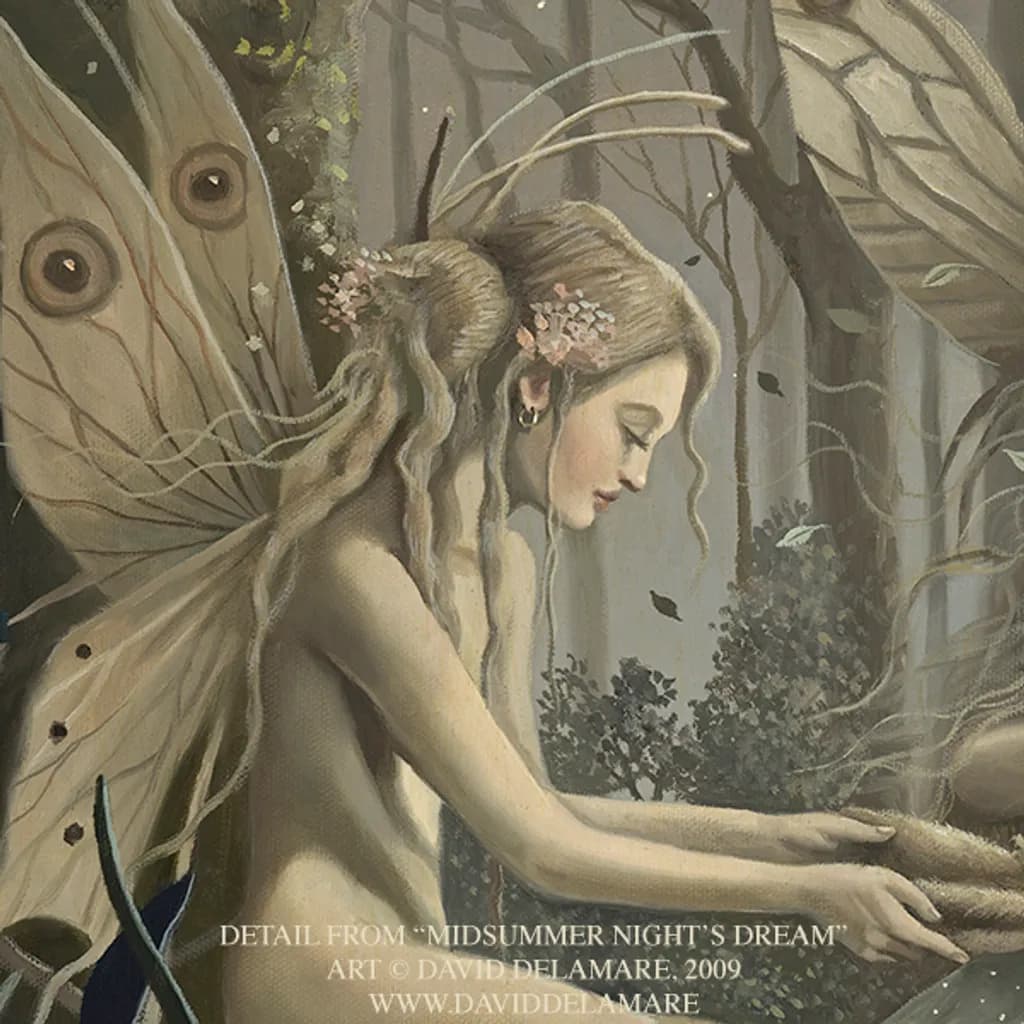
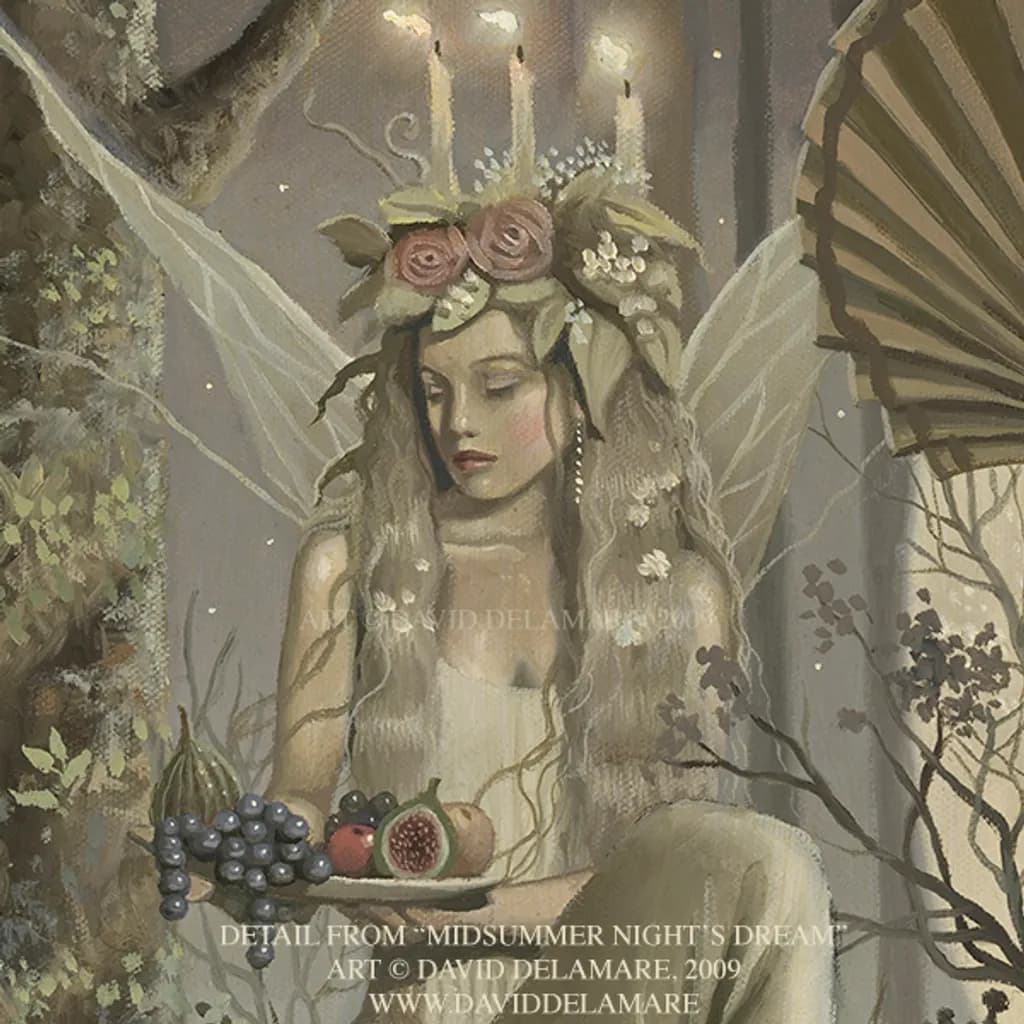
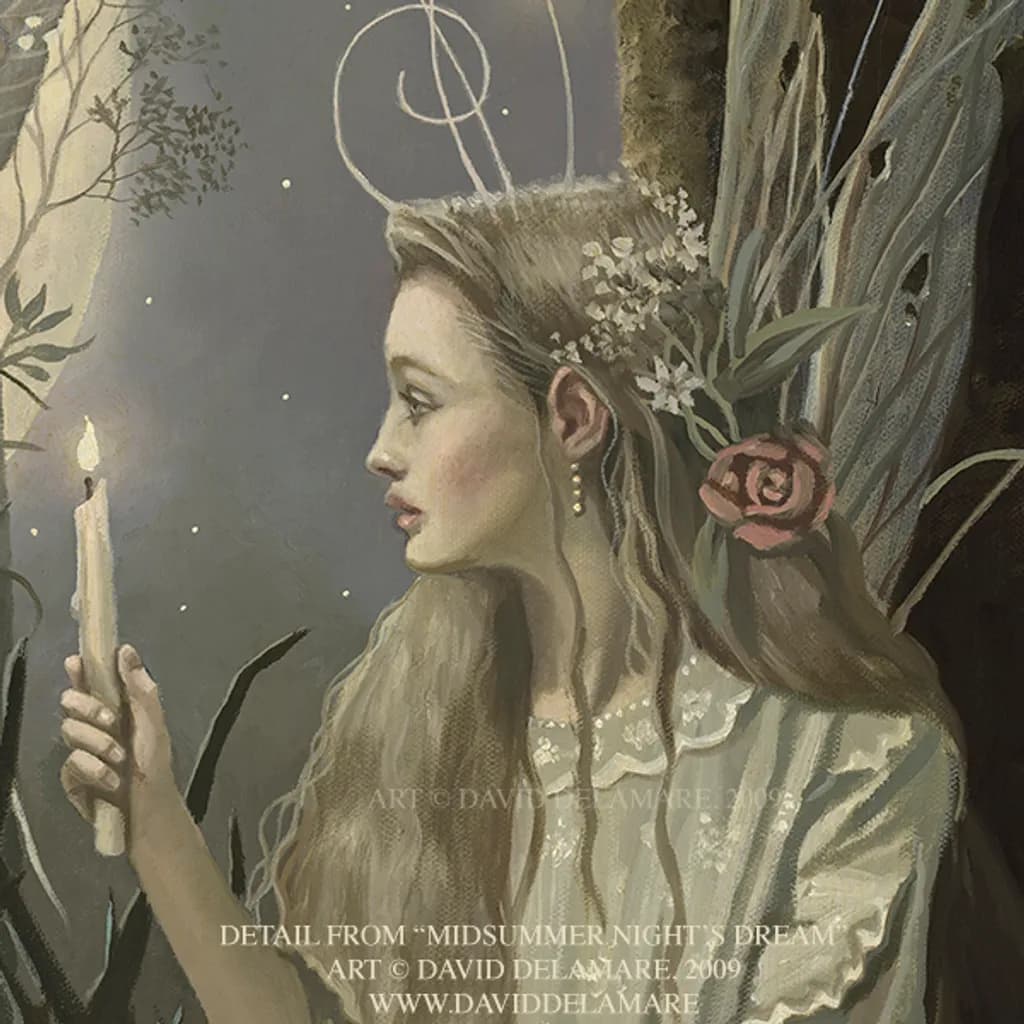
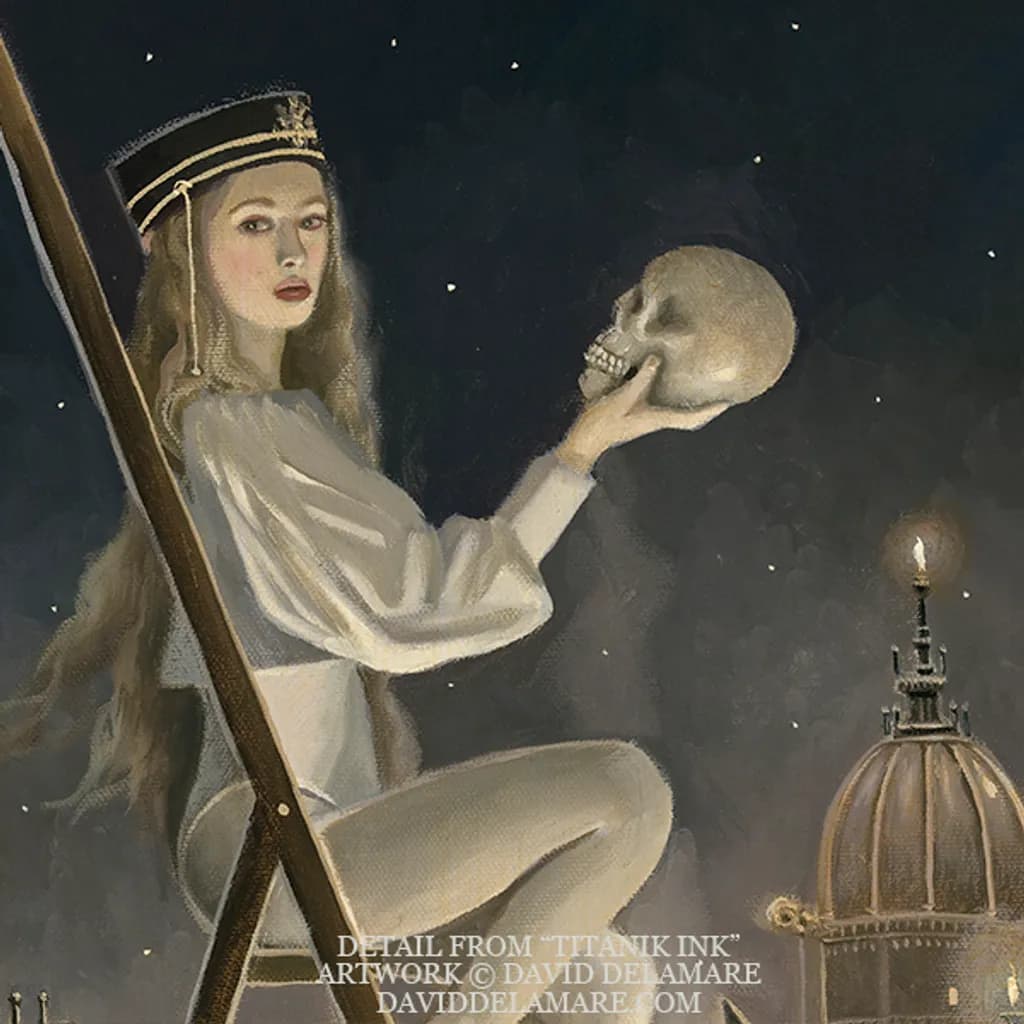
Sometimes David painted Cameron multiple times in one composition; she played all five characters in “Titanik Ink” and all five fairies in the Shakespeare-inspired “Midsummer Night’s Dream," and all eight mermaids in "The Mermaid Tavern." (Full images may be found on his website: www.daviddelamare.com.)
David wrote of "Midsummer Night's Dream":
"This is certainly one of Shakespeare’s more iconic images. I’ve seen at least eight versions and never cease to be amazed by its interpretive elasticity. Mine is the traditional sort. Cameron posed for everything but the boy, who was borrowed from a Victorian photograph, and the ass’s hands, which were borrowed from me.”
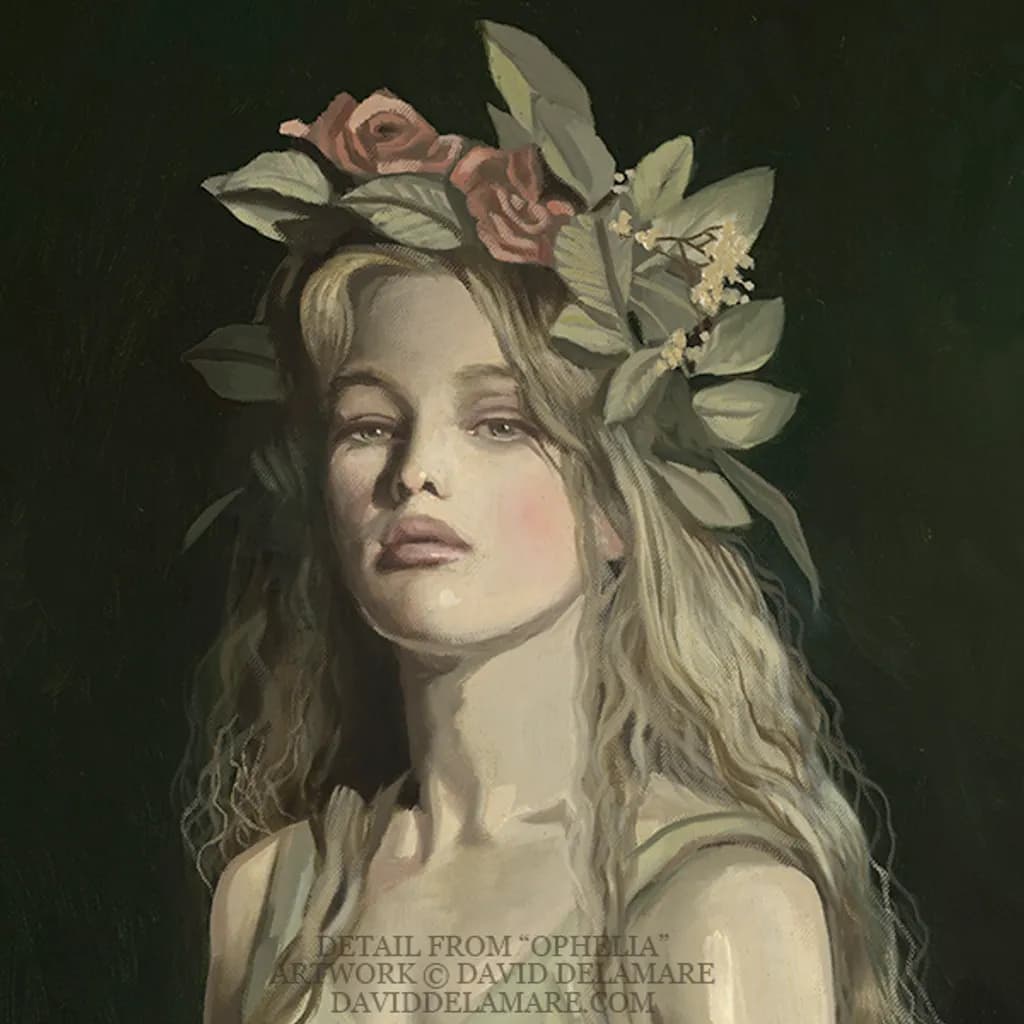
I’ve provided close-up images here because smaller ones don’t capture how each of these faces feels like a genuine character study.
Cameron was a muse to me as well. I insisted on purchasing my favorite painting of her. “Ophelia,” (inspired by Hamlet) hangs in my writing studio, looking over my shoulder, a literal and figurative representation of the Muse. Her expression is uncharacteristically bold and enigmatic. Should she speak, she might remind me to resist the easy allure of my prettier thoughts and seek those that are stranger, complicated, and just slightly out of reach.