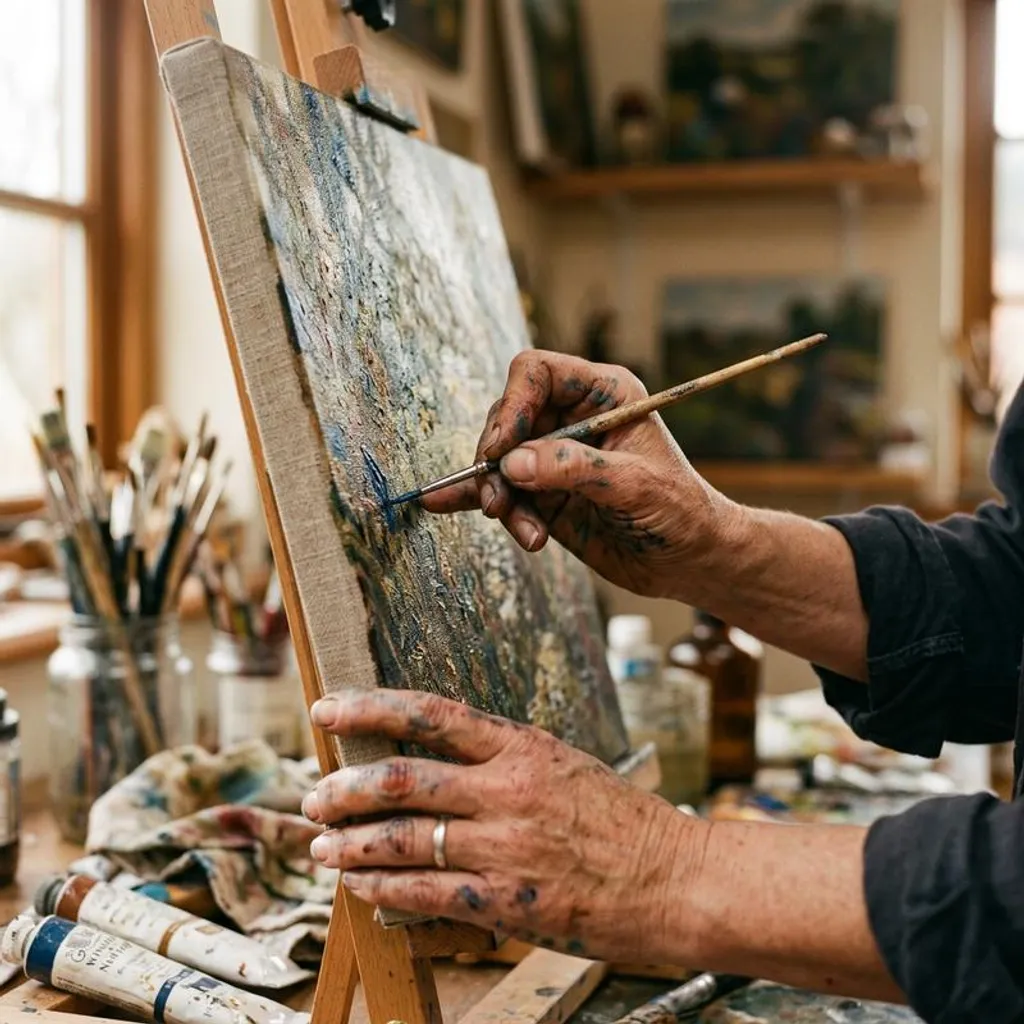
Why Human-Made Art Matters More Than Ever
There's a moment in every handmade piece that no algorithm can replicate.
It's the hesitation before a brushstroke. The decision to leave something unfinished. The happy accident that becomes the whole painting. The muscle memory built over years of practice.
AI can generate images. It can analyze thousands of artworks, predict what's aesthetically pleasing, and produce something that looks polished in seconds.
But it has never felt the resistance of a canvas. It has never second-guessed itself at 2am. It has never made something ugly, hated it, and then found the courage to show it anyway.
What human-made actually means
It means the work carries risk. You put something of yourself into it — your time, your vulnerability, your specific way of seeing the world. That's not a small thing. That's everything.
When someone buys a piece of human-made art, they're not just buying an image. They're buying a relationship with another human being's inner life. They're saying: your way of seeing matters to me.
No AI can offer that exchange.
The market is starting to understand this
Collectors are paying premiums for provenance. Galleries are requiring human-made declarations. Platforms like this one exist specifically because people are hungry to connect with art that has a real person behind it.
The conversation around AI has, ironically, made human-made more valuable — not less.
What you can do right now
Be loud about your process. Share the messy studio photos. Show the failed attempts. Talk about why you made the choices you made. Let people see the human behind the work.
Your hands, your hours, your hard-won skills — these are not just selling points. They are the art.
The world doesn't need more generated images. It needs more of you.