The Wild Photographer
The official home for listeners of The Wild Photographer podcast with Court Whelan. A place for wildlife, landscape, and nature photographers to connect, share work, and grow — inspired by every episode.
Posts
Bull Moose and Cow - A Gentle Moment

So much about wildlife photography is about patience and learning to stay invisible long enough to let the story unfold. These two moose were together in a meadow, and I was lucky enough to be witness to this show of (what appears to be) "affection." Moose are some of my favorite subjects and I was able to observe these for some 30 minutes before they trotted off.
Nosy Eared Grebe

On a recent trip to Oregon and the Malheur NWR a pair of Eared Grebes (Podiceps nigricollis) followed us around the shoreline of the Krumbo Reservoir. We don't see these too often in Idaho, so it was a treat! Learn more about these little birds on the Audubon website: audubon.org/field-guide/bird/eared-grebe.
A yellow warbler with a colorful snack

In the spring we hear and see yellow warblers flitting through the trees. They are busy looking for food, and this one has a small green caterpillar. This male posed for just a fleeting moment, framed by the bare tree branches. A small subject, but never a small moment.
Mountain Meadow

I titled this one "Mountain Meadow", I wanted to portray the quiet of cows feeding on fall pasture with the rugged Sneffles range and a cloud-filled sky hold the background.
"Shades of Blue"

This fine art photograph was captured on 2/22/26 where Barnegat Bay meets Toms River in New Jersey that froze over for the first time in years.
My Last Chipmunk


I tend to take photos of the less spectacular wildlife - mostly because it's more relatable and it's there. I've moved to the UK to be with family so this is my last Chipmunk (for a while). I'll have to settle for the seacoast.
Diana's Baths - Early Spring in the White Mountains of NewHampshire


A spring visit to Diana’s Baths always feels like stepping into a moment of calm. The water, stone, and new greenery create a scene that feels fresh, alive, and deeply rooted in the White Mountains. I love how a vertical composition like this lets the falls rise through the frame, almost like the season itself is unfolding upward.
Great Blue Heron on the Oregon Coast

Came across this beauty exploring on the Northern Oregon Coast. The beautiful Great Blue Heron.
Jaguar in Shallow Waters

This striking image reveals a jaguar poised gracefully in shallow water, embodying the essence of nature's wild beauty. The intricate patterns of its coat blend harmoniously with the lush greenery surrounding it. Her eyes invite a sense of wonder and connection to the natural world. Each detail captures a moment of serenity and strength, encouraging viewers to reflect on the sacredness of life.
Image captured in August 2025 from my trip to the Pantanal wetlands of Brazil.
🎙️ Ep 74 — Rich de Gouveia on Safari Photography: Low Light, Better Guides, and Photos That Mean Something


Court sits down with pro safari photographer and guide Richard de Gouveia to get practical about what actually improves wildlife and landscape images in the field — from low-light decisions to vehicle positioning to reviewing your images while you can still fix the problem.
📎 Source: Pro Safari Photographer Rich de Gouveia: Low-light Techniques, Best Lenses, “Making” Photographs to Represent Something, and Much More — The Wild Photographer Ep 74
Key Insights
• Start with the photograph, not the destination → Plan a safari around what you want to make, not just where you want to go. Build the itinerary backward from the images you’re chasing.
• A great guide is your secret weapon → The best results come when your guide understands both wildlife behavior and photography. Positioning matters. Timing matters. Knowing what an animal is likely to do next matters.
• Low light is where safari photos are won or lost → The best moments happen at dawn and dusk, which means technique matters more than wishful thinking. Motion, shutter speed, ISO, and lens choice all start fighting at once.
• Gear matters — but only at the margins → You don’t need the most expensive kit on earth. You do need gear that can handle motion, distance, and low light without making every good moment technically unusable.
• Background is half the photograph → A great wildlife image is not just the animal. It’s what’s behind it, around it, and implied by the frame. Subject plus environment is where story starts.
• Think in sequences, not trophies → As an animal approaches, shoot wide, then mid, then tight. That gives you a visual story instead of one isolated “look what I saw” frame.
• Review your images daily → Waiting until you get home is too late. Field review lets you catch mistakes while you still have another dawn, another drive, another chance.
The thread running through the whole episode is intention: making photographs that represent something, not just collecting sightings.
🎧 Listen: Buzzsprout | Apple Podcasts | Spotify
What’s the hardest part for you in the field — low light, backgrounds, timing, or turning a sighting into an actual story? 👇
"One Thing" no more, no less...wise advice from Jason Edwards
What if every great photo comes down to just one thing?
In my episode with Jason, he shares his “Jace Rule”—a deceptively simple idea that can transform how you shoot: every image should have a single anchor, the one element that made you press the shutter. Not ten things. Not even two. Just one.
From there, everything else—composition, depth of field, storytelling—builds around that focal point.
It’s a powerful reminder in a world of visual overload: clarity beats complexity.
This insight doesn’t just sharpen your photos—it sharpens how you see. And once you start looking for your “one thing,” you instantly become a better photographer.
🎙️ Ep 71 — Eric Rock on Bears as Teachers, Histogram Obsession, and the Case for Zooms Over Primes


Eric Rock has spent decades guiding photographers through the wildest places on Earth. This conversation is one of the most practical the podcast has ever produced — real gear opinions, editing philosophy that challenges the "more processing" default, and fieldcraft wisdom that only comes from thousands of hours with wildlife.
📎 Source: Talking with Eric Rock — The Wild Photographer Ep 71
Key Insights:
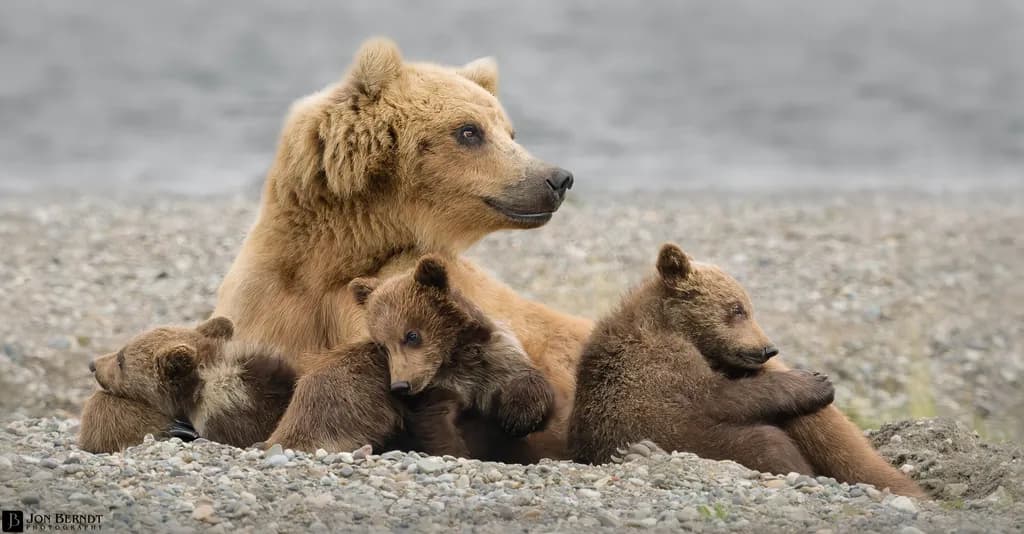
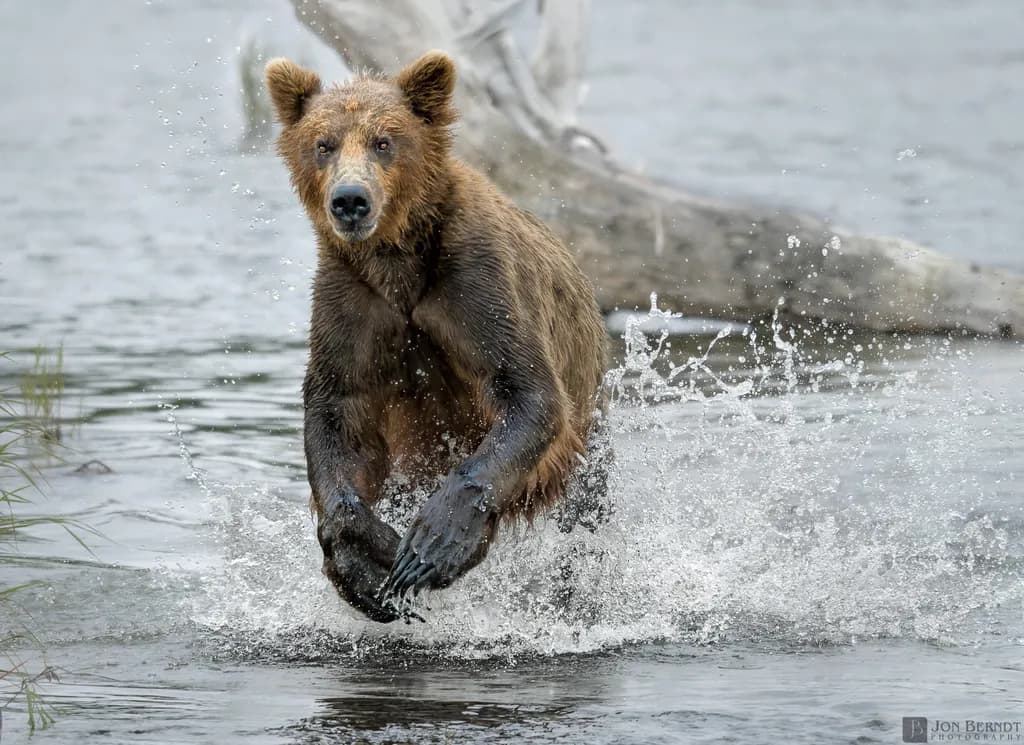
🐻 Bears Are the Best Photography Teachers → Eric credits years of bear photography with teaching him everything about patience, reading body language, and understanding behavior. "I learned more about nature from spending time with bears than anybody else."
🔭 The Zoom vs. Prime Debate (Settled) → Zooms win for wildlife. The technology has caught up. Eric's go-to: the OM System 150-400mm f/4.5 (effectively 300-800mm) — handholdable at 1000mm with the built-in 1.25x converter. "I hardly ever take a tripod on a tour now."
📊 The Histogram Is Still King → In an era of AI-assisted exposure and live previews, Eric keeps coming back to the histogram. "If I'd had that in the film days, I'd been a much better photographer much earlier on." His approach: expose to the right — fill the cup to the brim, capture maximum data, finesse later.
🎨 Minimalist Editing → Eric's entire workflow: check levels, adjust shadows/highlights, maybe a touch of contrast, a bit of vibrance, and Topaz at 20% max for sharpening. That's it. "I could probably do a lot better job processing, but I'm a here and now kind of guy."
🧭 Go With a Guide (Even If You Are One) → When photographing dangerous wildlife, Eric always wants someone watching the bigger picture while he's looking through the lens. "When you're looking through the lens, you're seeing a small little window." He and fellow guides take turns — one shoots, one watches.
🧦 The Unexpected Essential Gear → Waterproof socks. Not a lens. Not a filter. Waterproof socks for cold wet environments, and electric rechargeable socks for winter shoots in Yellowstone and the Arctic. "I feel like I'm Forrest Gump talking about the importance of socks."
📸 Daily Photo Walks as Practice → Eric's non-negotiable: a photo walk every single day, even if it's just around the block. Set a goal for each walk — a specific species, a technique, a type of light. "It keeps you shooting" and builds the foundation that translates to expedition work.
"Shoot for yourself first. If you're judging yourself from your photography and using that to educate yourself, there's a success in there that can fuel almost everything else you do." — Eric Rock
🎧 Listen: https://thewildphotographer.buzzsprout.com/948082/episodes/18856832
Zooms or primes — where do you land? 👇