General
Imagen del post 1

Hörbare Bilder – wenn Kunst zum Klang wird

https://www.instagram.com/reel/DdJFoNfsoA3/?stkn=MXNlZWE2MmM1dm82bQ==

Ich male seit über 30 Jahren – Porträts, Natur, Geschichten auf Leinwand, Fantasie. Vor 13 Jahren habe ich diese eigene Technik entwickelt - seitdem arbeite ich in dem Stil. Ich habe ein eigenes Merkmal gefunden.

Meine hörbaren Bilder mit denen uch vor kurzem angefangen habe sind auf deutsch. Immoment schaffe ich nur diese Version. Aber ich arbeite daran ea auch in Spanisch und Englisch eines Tages zu schaffen. Erstmal muss ich sehen wie sehr es angenommen wird. An alle deutsch sprachigen hier in der Community. Ich wäre sehr sehr sehr dankbar wenn ihr mal reinhören würdet und mir ein Feedback da lasst. Natürlich alle anderen auch. Vielleicht habt ihr eine Meinung zu dem Projekt generell.

Die Idee: Farbe und Form erreichen nicht jeden. Deshalb entsteht mit "Hörbare Bilder" eine neue Reihe: Ich vertone meine Gemälde als gesprochene Bildbeschreibungen, damit auch Menschen, die nicht sehen können, einen Weg hineinfinden.

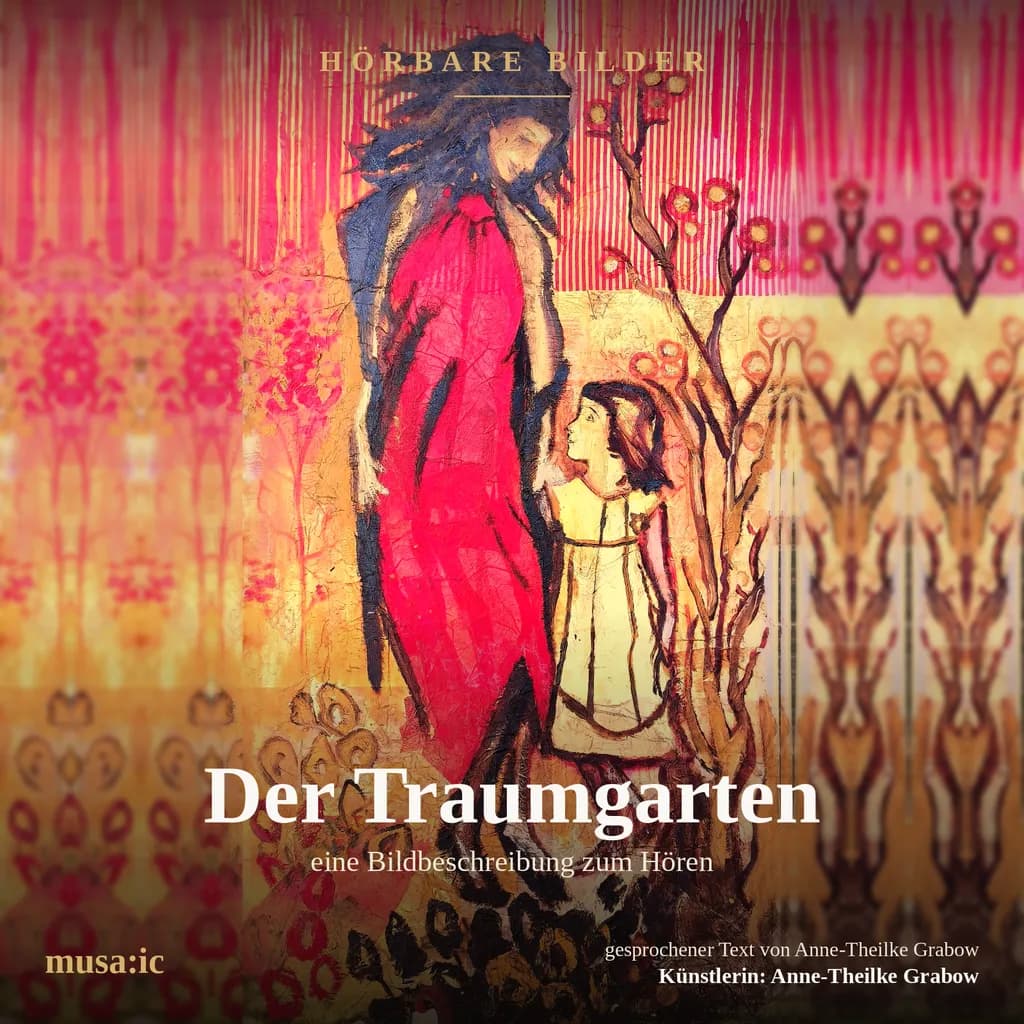
Diesmal ist es besonders persönlich: "Der Traumgarten" zeigt mich und meine Tochter, gemalt in Erinnerung an einen Moment auf Teneriffa, als sie drei Jahre alt war. Eines meiner ersten Bilder in meiner eigenen Technik – ursprünglich nur für mich gemalt, jetzt zum ersten Mal geteilt. ❤

Volle Version zum Hören: Link in Bio 🔗

#HörbareBilder #musaic #InklusiveKunst #AudioDescription #ArtForEveryone MixedMediaArt KunstAusLaPalma AccessibleArt

Publicado en General
2

4 comentarios

Ordenar por:
Nora BeckettSep 11, 2026
Traducido de English

Qué proyecto tan hermoso. He estado dibujando durante años y nunca pensé en cómo alguien que no puede ver experimentaría la obra, y ahora no puedo dejar de pensar en ello. La idea de traducir una pintura en una descripción hablada, especialmente una tan personal, que requiere un verdadero cuidado. No hablo alemán, pero me encantaría saber cómo decides qué describir primero, qué detalles importan más cuando estás construyendo la imagen en la mente de alguien en lugar de sus ojos.

1
Anne-Theilke GrabowSep 11, 2026

So, my idea was also that, of course, I can’t be present at every exhibition. And when you write a description, it tends to be more factual, even though people can see the work when they go to the exhibition.

But when I look at my own paintings and am asked to describe them, I tend to become emotional and more poetic. So I thought: if someone couldn’t see the painting and I had to explain it to them, I would do so in my own words—talking about the shapes, actions, energy, and backgrounds, as well as the technique and its effect. It would be a mixture of poetry, feeling, and a genuinely technical description.

Ultimately, I think it could be interesting for everyone to hear about the painting in the artist’s own words, since most people probably won’t meet or get to know the artist personally.

0
Devon RuizSep 11, 2026
Traducido de English

Esa idea de hacer que las pinturas sean accesibles a través de descripciones habladas es algo que nunca había visto ejecutado así. El concepto de llegar a personas que experimentan el arte de manera diferente a la mía no me había pasado por la mente de forma práctica hasta ahora. Tengo curiosidad por saber cómo abordaste la narración en sí, si describes las formas y colores literales o también incorporas la intención detrás de la composición. La conexión personal con esta pieza la convierte en una excelente primera obra para compartir públicamente.

0
Anne-Theilke GrabowSep 11, 2026

Thanks for..... @Nora Beckett I can share the text for you can read it. I am also musician so i put some music soft behind it from our own performances.

The Dream Garden

Imagine two figures standing close together, surrounded by a garden that seems to be woven more from memory than from earth and leaves.

On the right side of the painting, slender and upright, a bare tree sways gently. Its branches carry round, golden-brown blossoms or berries, like small moons suspended among the limbs. Behind it, the sky stretches upward in fine red streaks, almost like plucked threads of silk—a light that seems to come not from this world, but from a remembered one.

On the left stands the woman. Her hair is dark and wild, blowing to the side as if a warm breeze has just swept through the garden. She wears a deep-red dress that falls in heavy, soft folds to her feet—red like a heartbeat, red like something that cannot be concealed. Her face is lowered, turned toward the ground and toward the child.

For in front of her, facing her and looking up at her, stands a little girl. Her dress is light, a warm yellow like buttercups, and her reddish-brown hair falls over her shoulders. She looks up at the woman—a gaze full of trust, the only gaze in the painting that is open and direct.

This woman is me. This little girl is my daughter. At the time, we were in Tenerife. She was about three years old, and we were standing in a garden that has remained in my memory like a dream. The dresses we are wearing in the painting are made of silk—I sewed them myself, back when I was still working as a designer and designing my own clothes.

It is one of the first paintings I created using this technique, and I never painted it for anyone else—only for myself, to preserve that moment: the magic of my red dress, the steady gaze of my little daughter, and the garden that enclosed us both for a brief breath of time.

At the bottom, on the ground, dark, blooming forms gather into a carpet of gold and black—as if the garden itself were carrying us both, just as mothers carry their children, for a lifetime.

0