General

👋 Ask a gallery expert anything!

Hey ArtHelper community! I'm Reilly Thomson, the newest member of the Art Storefronts team. I've spent years working at art galleries, most recently at David Zwirner, one of the most influential galleries in the world.

Today, I'm celebrating my arrival with this Ask Me Anything thread – your opportunity to hit me with all of your most burning questions about the art world.

What's keeping you up at night? Drop your questions below and I'll get to all of them!

Want a 1-on-1 deep dive into your art business? A few spots are still available for my Professional Portfolio Review service – a private consultation where I evaluate your entire art business at gallery standard. Click here to save your spot!

50
184 Comments

Sort by:
Yuliia NaumenkoMay 11, 2026

I’ve got a few questions I’d really like your honest take on:

  • What are the red flags in an artist application that make a gallery lose interest, even if the work is strong?

  • If an artist has no gallery representation yet, what actually works in 2026 — open calls, fairs, Instagram, or direct outreach?

  • For artists working with nature-based narrative series (not fully conceptual work), what helps them avoid being dismissed as “decorative”?

10
Reilly ThomsonMay 11, 2026

Hi Yuliia! One major red flag for galleries is a lack of cohesion. Even strong individual works can lose impact if the portfolio feels stylistically scattered or trend-driven rather than rooted in a distinct visual language. Poor presentation also matters more than artists realize: weak documentation, generic outreach, or an unclear artist statement can quickly weaken confidence.

In 2026, I honestly think it’s a combination of things rather than one single path. Instagram and video content are still incredibly important for visibility, but direct outreach, open calls, exhibitions, and real-world relationships all matter too. The artists I see gaining traction are usually the ones consistently showing up both online and in their local art community.

As for nature-based narrative work, I don’t think those themes are inherently “decorative” at all. What separates memorable work from merely decorative work is depth of perspective and authorship. Artists like Walter Ford, for example, have a highly recognizable visual language and atmosphere within nature-based work. Nature and landscape are still very relevant subjects in contemporary art when the work feels emotionally distinctive and genuinely personal to the artist.

7
Yuliia NaumenkoMay 12, 2026

Thank you, I really appreciated your answer. As an emerging artist, it was important for me to hear that nature-based work can still feel relevant and personal when there’s a strong voice and atmosphere behind it.

2
Stavra KalinaMay 11, 2026

Hi my name is Stavra. I love that this just came up and I welcome you to this platform. As I haven't sold much online, I converted my portrait studio to a gallery twice now and I would love some guidance on how a gallery is really operated, how to get the right buyers. This is my dream. I had a taste of a true art collector this weekend and it felt amazing. They came in and looked for a few minutes and then asked me to tell them about a particular piece, as I did. We talked alittle and that was it. He loved it from the moment he saw it. I realized at that moment that this is the kind of buyers I would like to see in my gallery. Is there any help you can give me? I am very interested in what you have to share. Thank you so much and good luck!

4
Reilly ThomsonMay 11, 2026

Hi Stavra, first off, that interaction you described with the collector is exactly what makes galleries so special when they work well. The best collectors usually are not looking to be “sold to” aggressively. They want to feel a genuine emotional connection to the work, hear the story behind it, and spend time in a space that feels thoughtful and welcoming.

Building the “right” audience for a gallery usually happens slowly through consistent community-building and consistent participation in art fairs, rather than immediate sales tactics. I’d focus on creating a space people genuinely want to return to: thoughtful exhibitions, strong presentation, openings/events, personal relationships, email newsletters, and consistent social media content that brings people into your world over time. The collectors most likely to support you long-term are usually the ones who begin by feeling personally connected to both the work and the artist behind it.

3
Malcolm TurcotteMay 15, 2026

Converting your own studio to a gallery twice is a bold move. That moment you described with the real collector walking in and just looking, that quiet intensity, I know exactly what that feels like on the other side too. The first time someone stood in front of one of my prints for more than a few seconds without saying anything, I knew something had shifted.

1

[comment deleted]

Alina VladyMay 11, 2026

Hello Riley!
I am an oil painter from Ukraine working in emotional hyperrealism inspired by flowers, light, and quiet moments of beauty. My work often combines detailed realism with soft atmosphere and subtle texture. I am currently trying to build a long-term artistic career and better understand the contemporary gallery world.

I would love to ask:

  1. What separates technically skilled artists from artists who become truly memorable and collectible in the eyes of galleries and collectors?

  2. Is it more important for an emerging artist to show versatility or to build one recognizable visual world?

  3. Do you see demand in today’s art market for emotional hyperrealism focused on flowers, light, atmosphere, and quiet beauty?

Thank you for sharing your experience with artists here!

3
Reilly ThomsonMay 11, 2026

Hello Alina! These are great questions, and honestly, I think the answer to all three is connected. In my experience, what separates technically skilled artists from artists who become truly memorable is not just execution, but the development of a distinct visual language and point of view. Many artists can paint well, but the artists who stay with collectors and galleries over time are the ones whose work feels emotionally recognizable and uniquely their own.

Because of that, I generally think it’s more valuable for an emerging artist to build one cohesive and recognizable visual world rather than trying to demonstrate too much versatility early on. That doesn’t mean repeating yourself endlessly, but rather going deeper into the themes, atmosphere, and imagery that feel most authentic to you.

And yes, I absolutely think there is still demand for emotionally resonant hyperrealism centered around flowers, light, atmosphere, and quiet beauty. In a very noisy and overstimulated world, work that creates a sense of stillness, sensitivity, and emotional presence can resonate deeply with collectors. The key is making sure the work feels personal and distinctive rather than only technically impressive.

4
Alina VladyMay 12, 2026

Thank you so much for your reply! It means a lot to me

1
TiszaMay 12, 2026

Hello Reilly,

I’d like to ask for your advice. I’m not young anymore, and I can’t participate in paid art fairs or any paid platforms. How can I still make a name for myself?

2

Tisza, I am in the same position. I have been a watercolorist for years very 50 years but am now just reaching out to sell my art. I worked as an accomplished professional Graphic Artist/Designer for many years until retiring a few years ago. I guess we’re better late than never to join the parade! Due to early onslaught of two aggressive arthritis’ I am no longer able to do the art fairs either. I had developed a Cottage Craft business in my late 20’s into my early 40’s that was quite successful where I sold my hand parts need fine porcelain jewelry & ornaments at shows & wholesale until I physically could no longer do it. So, now I’m am concentrating on my watercolors. I’m leaning heavy on internet sales. Hope it works for us!!! Blessings to you, Teresa

1
KBPetrilloMay 14, 2026

I have been slow to recover from hip, knee replacements. I am fortunate to have helpers - family members who are also artists that help with the heavy stuff. i took 10 years off from showing my work. So its hard to the momentum to get back in the saddle again. However, if I am going to create in the future, its essential to sell, to replenish paints, surfaces etc. ASF seems to be helping me even though I am not yet selling on line. I have made sales locally due to my online presence.

I am getting prepared to sell on line. Its not easy for this old doggie to learn new tricks. But I am open to change. Adapt or die, this is key. I hope that you find some help. Offering classes sometimes helps you find students who benefit from helping you, as you can help them by mentoring them in showing their work with you. Theres always a way. you can do it!

1
Deborah FryerMay 11, 2026

I'm a new artist (have been full time for 9 months). Have sold 23 giclees and 41 original pieces, all under $600. I'll be participating in 10 fine art festivals this summer. How many pieces should I bring, in what sizes and what % originals and framed prints? My hero piece will be 30x40 or 36x48. I've heard that lots of artists get seen by gallery reps at art fairs. What's your advice for a new artist like me?

2
Reilly ThomsonMay 11, 2026

Hi Deborah! First off, those numbers are incredibly encouraging for only being full-time for 9 months, so I’d take that as a strong sign that people are already responding to the work. For the festivals, I’d bring as many works as you can safely manage, simply because you never know how much you’re going to sell, especially if it’s your first time participating. I’ve worked at art fairs where galleries sold more than 50 works from a booth over the course of a fair (not to say you should bring 50 works!). Having one strong “hero” piece at 30x40 or 36x48 is also a great idea because large works help establish presence and visibility from a distance.

In terms of inventory, I’d aim for a mix of originals in a range of sizes along with framed prints at more accessible price points, since festivals tend to attract both serious collectors and impulse buyers. You want enough work that the booth feels abundant, but not so much that it becomes visually crowded. And yes, galleries absolutely do scout artists through fairs and festivals. What they usually respond to is not just strong work, but artists who have a cohesive visual identity, engage well with collectors, and already show signs of momentum and consistent sales.

0
Wild Western ArtMay 17, 2026

I have an important question. This is important to me and I will appreciate your knowledge on this subject.

I am mainly a photographer, but enjoy digital art using my own photography. All of my work is landscape/western lifestyle. With the surge of AI, which I don't use, what is the best way to defend my digital painting work. Even this platform has tagged some of my non AI work as potentially AI.

At this point I have just deleted those images because I don't want anyone distrusting all of my work. I have had good success with digital paintings with brush enhancements in galleries. I consider those works mixed media.

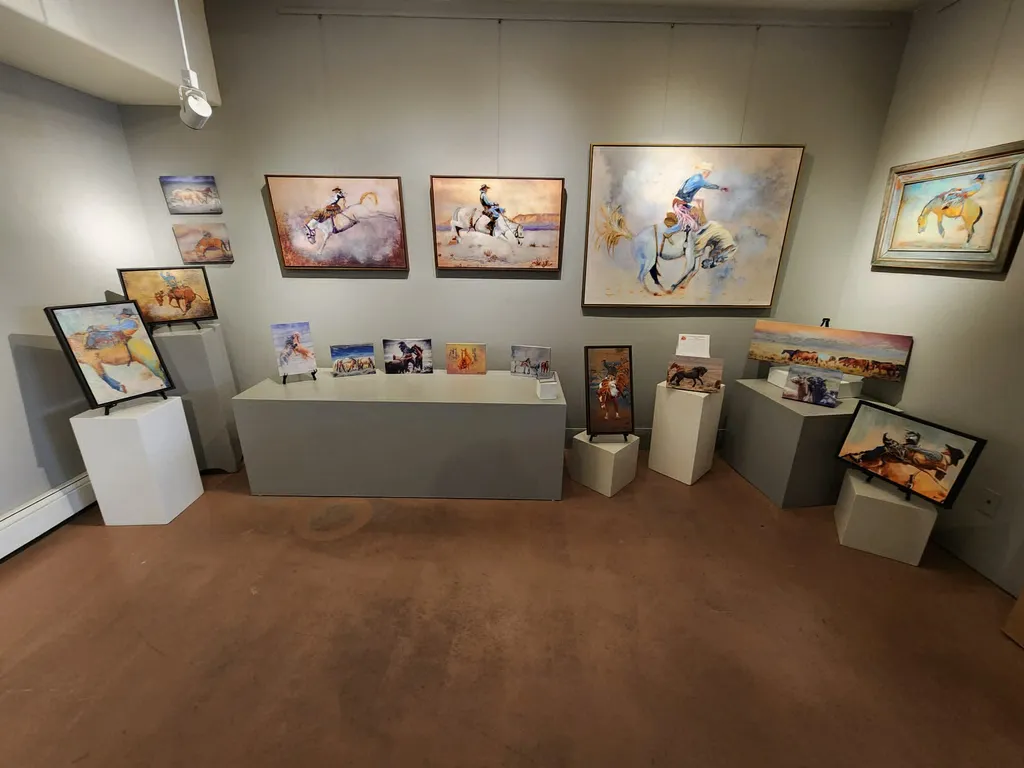
Any suggestions will help me know how to explain to customers and address these issues. I am attaching an image from one of the galleries that represents me. This is a featured show for me with the "Year of Horse" in mind.

Thanks,

Susan Humphrey

1

Need wild life galleries interested in the above—original oil on canvas approx 16 x14 or 13x13. Thanks.

1

Hi Reilly! I am struggling to find my market and live in a rural area. There are no art galleries near me that have artists that are just permanently represented. All require fees and there are very few sales. I paint palette knife oil paintings of nature - primarily landscapes. I have cohesive collections, but I have been unable to break into galleries in larger cities that have an art market. I’m wondering if my work is not contemporary enough? You can see more of my work at www.refugefineart.com. I’d be interested in your thoughts because I’m not sure what I’m doing wrong. @Reilly Thomson

1

Welcome to the community, Reilly. Your experience at David Zwirner definitely brings a valuable perspective to artists trying to understand both the creative and business side of the art world.

As an emerging artist building a presence in abstract and contemporary art, one thing I’d genuinely love insight on is this:

What separates artists who successfully build long-term collector relationships from those who only gain short-term attention online?

Would love to hear your thoughts on how upcoming artists can position themselves professionally while still staying authentic to their creative voice.

1

I'd like to hear what Reilly has to say about this too. One thing that I would expect a gallerist to red flag is someone using the term "emerging artist" which has a very specific definition in the art industry, to mean the same as "early career artist." They are not the same thing when you're talking to the professional art world.

0

Hi Reilly, Nice to see you! In your opinion, what is the best sales portal to sell artwork? I have acrylic and oil paintings and I want to sell my prints. I already have a support back office portal with Printumo.com. Now I'm looking for the sales channel. Thanks for any advice! Beatrice

1

Good question, Beatrice. I’m in the same boat right now, trying to figure out where to actually sell prints. Having the back office sorted with Printumo already puts you ahead of where I am. Curious what Reilly suggests here because I’ll be taking notes too.

0
LittleroundmanMay 12, 2026

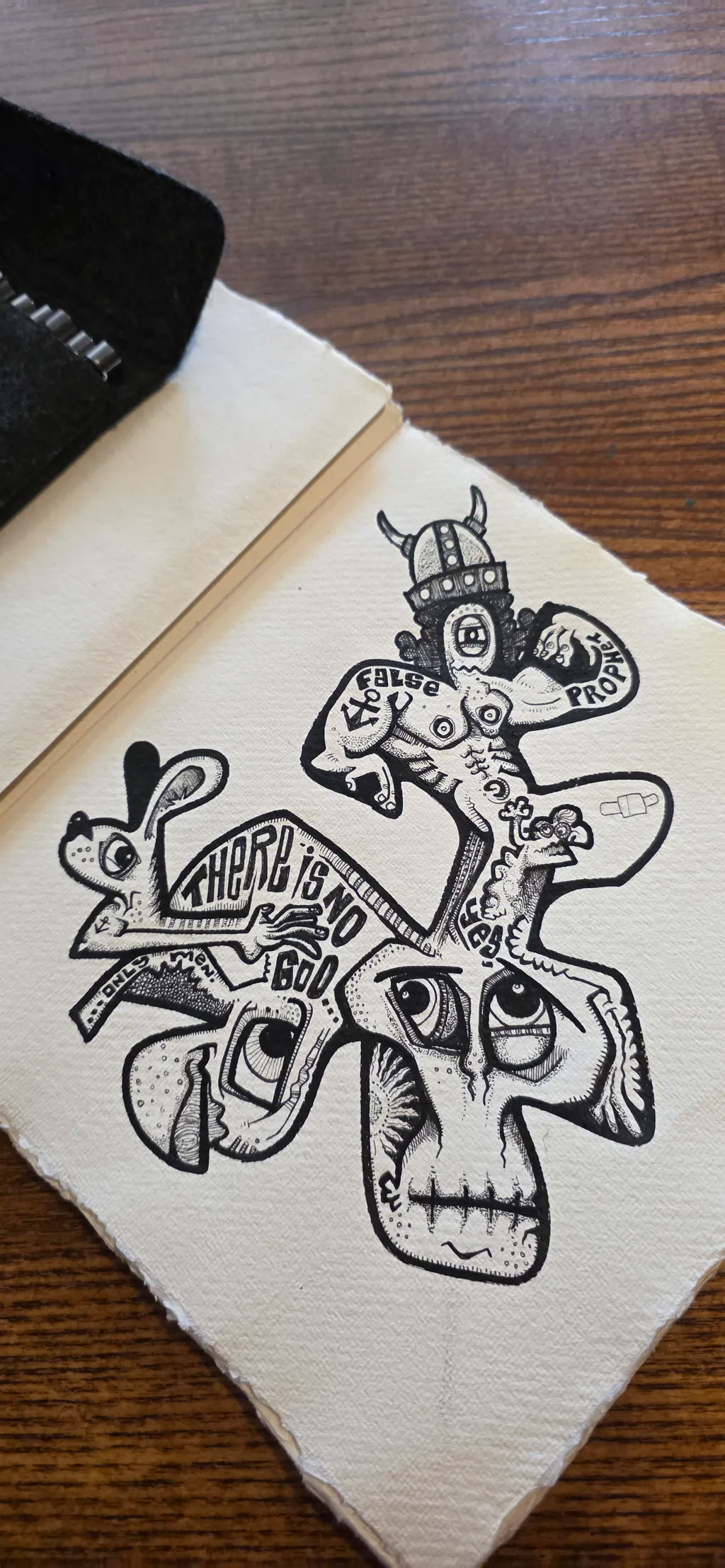
Does anything like this stand a chance of getting some sort of gallery exposure? Ive got nearly 40 of these surreal, grotesque pieces and i wanted to see where i could take it. Ive just been churning them out. What would i have to change for my style to have any chance of being accepted anywhere? Cheers!

1
Debby AlphinMay 12, 2026

I paint both exacting and loose. How much leeway do galleries allow for changing consistency?

1

Such a good question. I went back and forth between tight and loose for years before I realized the loose stuff was actually what felt most like me. I think galleries care less about consistency of technique and more about whether the work feels like it comes from the same voice. At least that's been my sense from the ones I've talked to.

0
Debby AlphinMay 19, 2026

"I love that perspective, Sadie. Did you find that transitioning into your looser style changed the actual subject matter you were drawn to, or just the way you approached it? It definitely feels like a journey to figure out what feels most like 'me'."

0

Hi on an artist's website, would you know if room mockups are better than the paintings for generating interest and sales. Especially for a homepage?

1
Malcolm TurcotteMay 15, 2026

Good question. When I finally put my landscape portfolio online, I went back and forth on this exact thing. Ended up using mockups on the homepage and it made a noticeable difference in how long people stayed on the page. Something about seeing the work in a room helps folks picture it in their own space.

0
Alex WilsonMay 12, 2026

Reilly Thomson, are you a real person or AI?

I haven't been able to find too much about you in the searches that I've done. There's an ambiguous LinkedIn profile that could maybe be you, but no profile pic like the one you have here. I couldn't find you on Instagram and your FaceBook profile isn't much.

You are also prolific in the amount of responses that you're able to do today. I'm impressed with the volume of your responses, not only in number but also the amount of content you give each comment. Funny though, it seems very similar to the AI created content that Art Helper offers individual artists that submit their work.

Taylor Sinople, perhaps you could join the conversation? Are you monitoring an AI chatbot? Are you also qualified to respond to artist's inquiries?

Are the artists that are submitting comments humans, AI, or perhaps a combo of both? How are humans who are submitting comments able to be assured of who they are interacting with?

Reilly, I'm not sure if you have ever been questioned whether you are human or AI, maybe both?

I'm a little confused by all of this and unsure of what this is...


1

Hi Alex, Reilly is the newest member of our team and yes he is human. This volume of interaction is exactly why we brought him on board! 🙂

0
Alex WilsonMay 12, 2026

Thanks for the reply. It can be tough these days to know who (or what) you're interacting with. 😊

0

During the the 2.25 hour "big announcement" webinar on ASF earlier this month, you would have seen Reilly on camera where he talked about his background, took questions, etc. It is available for replay if you'd like to hear him in his own words.

1
artbyjudigMay 12, 2026

Reilly. I joined artstorefronts 3 weeks ago. I paid AU$4300+ to join at Gold Level which I was led to believe was a "one-off" lifetime payment. If I wish to take the opportunity to take part in this offer do I have to pay even more money?

1

That feeling of putting real money down and then wondering what you've signed up for, I remember it so well. I hope you get a clear answer here.

0
Colton NeumeierMay 11, 2026

For I am visually impaired so is the gallery setting for me in that it is hard for me to do like pshycial things like take the art work to places and other things if that make any sense at all

1

Makes total sense. Selling online can actually be a huge advantage when the physical side of galleries feels out of reach. You get to let the work speak for itself without hauling canvases around.

0
IviMay 11, 2026

Hi!

​I’m a beginner artist working with abstract art on paper and canvas using acrylics and markers. I’m not quite sure how to present myself online—specifically which social media platforms to use. Regarding Facebook, I’m debating whether it’s better to showcase my work on a personal profile or create a dedicated business page.

​I also wonder if there’s a market for this style of art and how to gauge what people actually prefer. I’ve been considering cutting my paper paintings into bookmarks—perhaps they would be easier to sell that way?

I’ve had an Etsy shop for five years now, but I haven't made a single sale there yet. I’ve been painting for about 4–5 years. Last August, I participated in a small exhibition where I made one sale, and last month I was part of a group show with 10 professional artists, where I also sold one piece.

​When it comes to framing, I’m torn on whether canvases look better with or without frames. For my works on paper, I’ve heard that skipping the mat (passe-partout) might be the better choice. Lastly, I’m unsure about signing my work—should I sign the bottom right corner, and if so, should I use a pseudonym or my real name?

Honestly, I’m feeling quite uncertain and I’m not even sure if my work is any good. How do you actually determine if a painting is high quality and 'marketable'? I can't help but wonder—could it be that my work simply isn't up to standard?

In short, most of my questions revolve around presentation and sales, as I’m quite new to both. I would truly appreciate any guidance or tips you can share!

​Best regards,

Iva

1
Reilly ThomsonMay 11, 2026

Hi Iva, first off, I would not be discouraged at all by where you currently are. Selling work in both of the exhibitions you participated in is actually a very positive sign, especially this early on. Most artists take years before they begin finding any consistent audience at all.

On the social media side, I’d focus primarily on Instagram rather than spreading yourself too thin across every platform. I'd post video reels of your process, and talk about the work directly to camera, letting people connect with you as the artist behind the paintings.

As for presentation, canvases can work both framed and unframed depending on the style, though floating frames often help abstract works feel more refined. That said, framing can increase shipping costs significantly, so at this stage I’d probably keep them unframed and avoid unnecessary expenses. For works on paper, a clean contemporary presentation without a heavy mat can absolutely work well. I’d also sign your real name consistently rather than using a pseudonym unless there’s a very intentional reason behind it.

And finally, regarding whether the work is “good enough”: just know that every artist goes through this uncertainty. Try to think less about “what people prefer” and more about developing a body of work that feels visually cohesive and genuinely personal to you. The more time you spend in the studio and leaning into what interests you most, the stronger and more distinct the work will become. The fact that people have already responded enough to purchase your work tells me there is already something connecting. The most important thing right now is continuing to refine your visual language, staying consistent, and giving the work time to mature.

2
Malcolm TurcotteMay 15, 2026

I went through the same debate with Facebook early on. Started with my personal profile, then moved to a business page later, and honestly I wish I had just done the business page from the start. It keeps everything separate and the insights tools alone are worth it. As for whether there is a market for abstract, absolutely. I photograph landscapes, which is about as different from abstract as you can get, but some of the most consistent sellers I know work in abstract acrylics.

1
IviMay 16, 2026

I started painting recently. I never planned to become an artist or sell my work. It happened completely by accident. I began painting without really intending to, and at first I shared the pieces only on my personal Facebook profile.

At some point, I decided to make it more official and started posting them on my business page. But I noticed they don’t get enough visibility or reactions there. People seem to respond much more on my personal profile. At the same time, I don’t want my personal account to turn into a shop.

As for sales, I’ve only sold two paintings so far, both during exhibitions. But I do want to sell them because I honestly don’t know what else to do with them. They take up space, and eventually I either have to sell them, throw them away, or paint over them.

I just don’t know what to do with Facebook. Instagram feels easier because there are no separate pages, so there’s no real choice to make.

0
Tracy AndrewsMay 11, 2026

I have been with art storefronts for 8 months and still haven’t sold one picture on the website they created!!! Why is this. wwwtracyandrewsfineart.com

1
Reilly ThomsonMay 11, 2026

Hi Tracy! I took a look through your website and Instagram, and I don’t think the issue is the quality of the work. More often, artists assume that once the website is built, collectors will somehow automatically discover it, but in reality the website is only one part of the larger ecosystem. The artists I see succeeding online are consistently building visibility and trust through social media, newsletters, networking, and audience engagement over time. @colleenbarryart does a great job of this on Instagram.

I’d especially encourage you to post more video content showing your process, talking about the work directly to camera, and letting people connect with you as the artist behind the paintings. Collectors are often buying into the person and story as much as the final object itself (especially online). Think of your website like a physical gallery space: social media is what gets people to walk past the window and step inside. The more consistently you show up and build genuine engagement, the more traffic and sales opportunities your website will start to receive.

0

Eight months with no sales is so frustrating. I went through something similar early on and it made me question everything. Glad you asked here though, sometimes just one outside perspective can shift things.

0
RichLee ArtMay 11, 2026

How do I go about finding a gallery that’s a good fit for me?

1
Reilly ThomsonMay 11, 2026

I’d start by looking at regional galleries and the artists they represent. Do you genuinely like the work they show? Can you realistically imagine your work in their program? I’d also encourage you to attend openings before ever reaching out. Pay attention to who attends, how the gallery speaks about artists, and whether the environment feels genuinely supportive.

2
Malcolm TurcotteMay 15, 2026

This took me a long time to figure out. What finally worked was visiting galleries in person, just as a visitor, and paying attention to which ones were showing work that felt like it belonged next to mine. Not identical, but in the same conversation.

0

[comment deleted]

AnonymousMay 11, 2026

Hi Reilly, I have an extensive photographic library spanning 50+ years and pretty much all genres. I have a BFA ‘Photographic Illustration’ from RIT, 1982. Have been a very successful Art Director, Producer and Motion Picture Developer of recent.

I’m signed up with ASF and in development stage of my platform design, production and marketing strategy. I kinda have this 3-tier idea ( Consumer, Prosumer and Collector/ Gallery-Museum’s ) towards my archive reach. I am looking forward some potential advice and feedback on such an approach.

Thank you, John Trifiro

1
Reilly ThomsonMay 11, 2026

Hi John, I actually think your idea of separating things into consumer, prosumer, and collector/gallery tiers is smart, especially with an archive that large. Different audiences collect photography very differently, and not every image necessarily needs to be positioned the same way.

The main thing I’d be careful about is making sure the tiers feel clearly differentiated rather than activating the entire archive all at once. The collector/gallery side especially will probably benefit from a much tighter edit centered around your strongest and most distinctive series, with clearer scarcity, presentation, and curation. The archive itself is a huge asset, but the way you organize and sequence the work becomes just as important as the photographs themselves.

0

50 years of photographic work is incredible. A 3-tier approach sounds smart, especially with that range of genres to draw from. Would love to hear how the strategy shapes up.

0
Dana RodneyMay 11, 2026

I am a watercolor artist, and have just completed my website (danarodney.com), and am a member of a local co-op gallery. I'm selling some, but want to raise the bar and start approaching some fine art galleries. How do I go about that?

1
Reilly ThomsonMay 11, 2026

Hi Dana, I love light on the horizon and laguna on your website!

This is a question I get a lot. Emailing galleries is almost always the right first move for sharing your portfolio. Walk-ins are rarely welcomed, and cold calls usually don’t reach the right person. A thoughtful email gives the gallery director time to review your work on their own terms, which is generally how galleries prefer it.

I’d start by researching local galleries and studying their programs closely to make sure your work genuinely fits alongside the artists they represent. Since you’re working in watercolor, I’d also pay special attention to galleries already showing strong works on paper or artists working in similar mediums. Your initial email should be short and confident: a brief introduction, two to three sentences about your practice, a link to your website, and 3–5 strong images embedded directly into the email body. I’d also include a polished PDF portfolio and your CV as attachments. From my experience at David Zwirner, a well-prepared submission packet signals professionalism and makes it easy for the gallery director to share your work internally. If the gallery publishes submission guidelines, follow them precisely. And whenever possible, try to build relationships organically first by attending openings and becoming part of their community. A warm introduction through a mutual contact is always the strongest approach.

2
Malcolm TurcotteMay 15, 2026

Watercolor in a co-op gallery is a great foundation. The jump to fine art galleries felt enormous to me too, but honestly the hardest part was just walking in and starting the conversation. Having a website ready puts you ahead of where most people are when they start reaching out.

0

Hello Reilly, I’m sure my question is not unusual, but here it is. First my chosen medium is not easily understood or appreciated here in the US, especially in the age of AI. It’s photo based but my final images are derived from anpplying analog techniques using digital tools. I receive be universally positive reactions to my works (enthusiastically from Europe and Japan) yet my sales are abysmal. How can I leverage that positivity to representation and sales, Instagram Jefferylbrown and ASF Jefferylbrownart.net Your thoughts and input will be greatly appreciated— Jeffery L Brown

1
Reilly ThomsonMay 11, 2026

Hi Jeffery, I actually think the process behind your work is one of its strengths, not a weakness. In the age of AI, audiences are increasingly interested in work that feels intentional and deeply authored by the artist. Your images have a distinct identity, but I think the process behind them needs to be much more at the forefront of how you present the work so viewers don’t immediately conflate it with fully AI-generated imagery. I’d lean into showing your process across your website and social media. I also think there’s an opportunity to openly discuss your relationship with AI as a tool rather than the creator itself and invite your audience into that conversation. If you’re consistent, that kind of transparency could create genuinely interesting discourse, deeper engagement with your followers, and eventually lead to stronger sales and opportunities.

0

Analog techniques through digital tools is such a fascinating space. The gap between how people react to the work and whether they buy it can be maddening. Europe and Japan getting it while the US lags behind sounds like a positioning puzzle more than a quality one.

0
Nicky CalverMay 11, 2026

Hi there My name is Nicky. I am an acrylic artist. This year I have contacted 31 galleries (in London and within an hour’s drive of me) and although I am getting responses and have followed up with the ones who did not reply. I got interest from only three interested galleries. Two tentatively interested (One in London and one local to me) and one gallery (local to me) who is exhibiting two of my works in a group show in June. Is it my work or is it something I am doing wrong in my approach?

1
Reilly ThomsonMay 11, 2026

Hi Nicky, first off, I would not view this as failure at all. Getting responses from galleries, receiving tentative interest from a few, and being included in a group exhibition already tells me your outreach is being taken seriously. Most artists underestimate how relationship-driven and slow-moving the gallery world can be.

One thing I would encourage you to think about is cohesion within the portfolio itself. Galleries generally respond strongest when an artist’s work feels immediately recognizable and focused around a clear visual language or subject matter. If your portfolio currently moves between landscapes, pet portraits, florals, still lifes, and other subjects, it may be harder for a gallery to immediately understand how to position the work within their program. For outreach purposes, it can help tremendously to lead with the body of work that feels most distinctive and cohesive.

I’d also encourage you to attend openings at the galleries that showed interest and stay a familiar face within their community. Gallery relationships often build gradually over time. Invite people to studio visits whenever you can, stay active in your local art scene, and continue building genuine relationships. In many cases, galleries begin working with artists they’ve seen consistently engaged over a longer period of time.

0
Nicky CalverMay 16, 2026

Thank you for answering my question in such depth. You make some great points.

0

31 galleries contacted is real effort, Nicky. Three showing interest out of that is honestly not bad. The persistence alone says a lot.

0
Nicky CalverMay 16, 2026

Thank you so much Sadie. I appreciate your comment.

0
Ralph PattersonMay 11, 2026

Hello Reilly, what, in your opinion is the best way to make my initial contact with a gallery?

1
Reilly ThomsonMay 11, 2026

Hi Ralph, email is almost always the right first move. Walk-ins are rarely welcomed, and cold calls usually don’t reach the right person. A thoughtful email gives the gallery director time to review your work on their own terms, which is generally how galleries prefer it.

Before reaching out, study the gallery’s program closely and make sure your work genuinely fits alongside the artists they represent. Your initial email should be short and confident: a brief introduction, two to three sentences about your practice, a link to your website, and 3–5 strong images embedded directly into the email body. I’d also include a polished PDF portfolio and your CV as attachments. From my experience at David Zwirner, a well-prepared submission packet signals professionalism and makes it easy for the gallery director to share your work internally. If the gallery publishes submission guidelines, follow them precisely. And whenever possible, try to build a relationship organically first by attending openings and becoming part of their community. A warm introduction through a mutual contact is always the strongest approach.

0
Malcolm TurcotteMay 15, 2026

Great question, Ralph. I fumbled this so many times before I figured out that a short, specific email beats a long introduction every time. Three sentences about your work, a link to your portfolio, and one line about why that particular gallery caught your eye.

0
Zalman BerkowitzMay 11, 2026

Good morning, Reilly- thanks for the AMA… I’m curious what your take on what used to be a standard commission structure where the Gallerist and Artist split the sale 50/50- this used to make sense to me as the Gallery was doing all of the marketing, promotion and sales and sometimes warehousing as well as hanging the exhibition, and paying the caterer… (a full-time job in itself)- is this structure still common? Or popular? How does the Gallery get paid if the artist is doing the marketing, and what value does a Gallery context provide? Thanks! -Zalman

1
Reilly ThomsonMay 11, 2026

Morning Zalman! The traditional 50/50 split is still very common, especially among established brick and mortar galleries, and in the right situations it can absolutely make sense. As you mentioned, galleries historically handled nearly everything for the artist: the exhibition space, staffing, installation, collector relationships, marketing, art fairs, events, storage, and sales. Today, one of a strong gallery’s biggest assets is still access to their network of serious collectors, curators, institutions, press, and broader market credibility. Depending on the gallery, that access can meaningfully impact an artist’s long-term career trajectory.

The relationship between artists and galleries has definitely evolved. Artists now have the ability to build their own collector base through social media, email lists, and their websites, which is why some artists question whether the traditional split is fair. Where artists tend to become frustrated is when a gallery expects a 50% commission but contributes very little beyond wall space. If you're deciding whether to pursue a particular gallery, I’d recommend attending their openings, becoming familiar with their represented artists, doing studio visits, and, if possible, speaking directly with artists in their program about their experience.

0

Really curious about this too. The 50/50 split made sense when the gallery was doing everything, but now that so many of us handle our own marketing and social media, it feels like the balance has shifted. Interested to hear Reilly's take.

0

As a new artist who haven't sold artwork in an online space before but want to do so , what is your advice in terms of pricing, packaging and delivery for an international order shipping from NIGERIA.

0

What are the criteria that gallery are looking for in an artist before working with them directly.

0
LemireartMay 31, 2026
Translated from Français

Is it possible to sell digital art in a gallery? If yes, what would be the best way to present the artwork?
- As a unique and exclusive print
- As a small edition to have a more attractive price (Fewer than 10 copies)

0
pas4artMay 20, 2026

Hi I am realising.that I'm not suing art helper to its full potential and wondered if there was any tutorials to help.me understand more of what art helper can do to help.me on my online presence with my art

Thanks paul

0

Hi Reilly, not sure if you can view my website but if so, would really love and appreciate any advice you can offer. deirdre-p-malcolm-art.com

Thank you

0
TOM ANGMay 18, 2026

This is brilliant! Thank you Reilly! Already enough for a book. Or a pinned FAQ.

0
anna hendersonMay 18, 2026

Hi, trying to up date my profile, there is nowhere to save the changes?

0
Courtney LangmoreMay 18, 2026

Having someone from David Zwirner drop into a community thread and just say "hit me with your questions" is wild. The answers in here are already gold. Reilly, the point about cohesion over individual pieces being the real portfolio test? That one landed.

0
Translated from Português

I want to ask a question.

Is it legal for the gallery to charge in advance for the artist to exhibit?

0
Bass and pixelsMay 16, 2026

Congratulations on Art Storefronts! they look amazing. I have been thru the zoom and get the emails, something I def want to try ... one day lol.

0

My dragon on roses as you walk the streets on a parachute was there anything. Ann hats made with the streets of the sunset on top and a purple force.

0
KBPetrilloMay 15, 2026

I just found a cache of paintings from 1979 and after. My question is, does these earlier paintings have more value if I was to hold on to them and wait to see if I can start selling more consistantly?

Galleries and jutied shows always want to see your most recent work. My most resent work is very small. I like to piant larger, but that requires money. I see a pattern in my life, of getting to a particular productivity, not connecting with galleries or juried shows much and then falling into financial insecuriity. Sometimes I think, well if i was a bette artist, i would sell better.

but Iam a good artist.

I know every successful person says they found success by perspiration, tenacity and just when the chips were down, they were in the right place at the right time. Luck was part of the equation.

How much does luck, have to do with success for an artist in your opinion.

0

I have been selling prints successfully for many years, the last six being with Art Storefronts. If I signed with a gallery, would they allow me to continue selling prints on my website? (Years ago, that would not be okay. Have things changed?)

0

Hi Reilly,

I am new to this platform and still not 100% sure that it is the right one for an artist like me. My practice explores themes of exile, erasure, visibility and fractured identity through painting and mixed media processes. I am particularly interested in individuals and communities who exist at the margins of historical and contemporary narratives, including refugees, displaced peoples and those whose identities have been obscured through persecution, censorship or social invisibility. Through processes of layering, abrasion, concealment and partial recovery, I investigate how painting can function as both image and unstable archive.

I have had to cancel most of the marketing because it hardly seems appropriate for instance to be sending out a Mother's Day message with a piece that is about modern-day slavery? Also I feel that offering immediate discounts on my work is very reductionist. I did talk about this to the team before signing up but now... I wonder?

Can you opine?

Thanks

Sue

0
David NeelMay 15, 2026

It hit me once walking homeless...

"The greatest artists whoever lived died unknown."

Agree or disagree?

0

[comment deleted]

what kind of approach is best for a presentation? how do you get an appointment with a gallery?

0

Hi Riley. I have quite a few questions to talk to you about if you wouldn’t mind giving me a call. I’m at 858-395-8466 and I’ve been a part of this wonderful organization for probably five years maybe more without any success so to speak, but I have learned a lot and now I want to use Art helper and many of the AI opportunities with guidance from you and a professional sense with art galleries as well as interior designers. Thx Susan fielder.

0
della rae createsMay 15, 2026

Hello Reilly and welcome.

I've been painting for over 20 years, but in the last 3 or so years I have taken on building myself as a full time artist.

My subject has been mainly still life and I've developed a recognisable style, as people tell me. However, I don't sell much work. I live in a small country town and have my work in a local gallery/lifestyle store and a small amount in a local Cafe. I enter art shows as often as I can and also post regularly on instagram, added to what Artstorefronts do.

I've now got a business Instagram account and am starting anew on that account.

Is still life still relevant? I've been really drawn to abstract art for some time and am considering exploring this. I love colour and love the idea of big,expansive paintings - feels like they would give me the freedom I crave. Still Life can be a bit tight.

As a way forward, I would really appreciate your suggestions.

I would love to run workshops in the future, with a particular audience I have in mind. I'm 73 and absolutely want to make the most of my life.

0

Hi Reilly! I don't have any questions for you, but I just wanted to say "Welcome!" and I'm looking forward to your being part of the ASF team.

I've been here three years already. Don't know where the time has gone.

0

[comment deleted]

Antonio FuertesMay 14, 2026
Translated from Español

I'm getting back into photography after many years. I don't have my own style, I just search for and photograph what I find beautiful. Is that coherence of style that you mention so important? Thanks

0

Dear Riley, I am an artist who started painting after dreaming 10 years of sunset(lucid Dream). I dont have a artist background. but i paint. all that happened 4 years ago when i started to fall severely ill. So my practice is 4 years old. intially i painted all bits and bobs, but my research of Quran started to emerge out of my painting as the meaning of the verse. a lot of painting are the mapping of my innerterrain and i allow the brush to flow. some call it expressionist symbolism, other with other names. I have been told at a gallery that some of my paintings are similar to william blake. Varios people say various things. How do i present myself to a serious gallery. All this years i never put my art to serious sales until recently as 6 months. Cause i felt like selling a part of me. I was given a finalist award at an international juried competition. How do i best present to a gallery. I am ADHD, so you will find mistakes in my writing. Thanks for your Help. God bless you.

0