The Wild Photographer
Pedido de críticaJanela de crítica encerradaCritiques earn 20X points

Peacock Ying and Yang

Traduzido de English
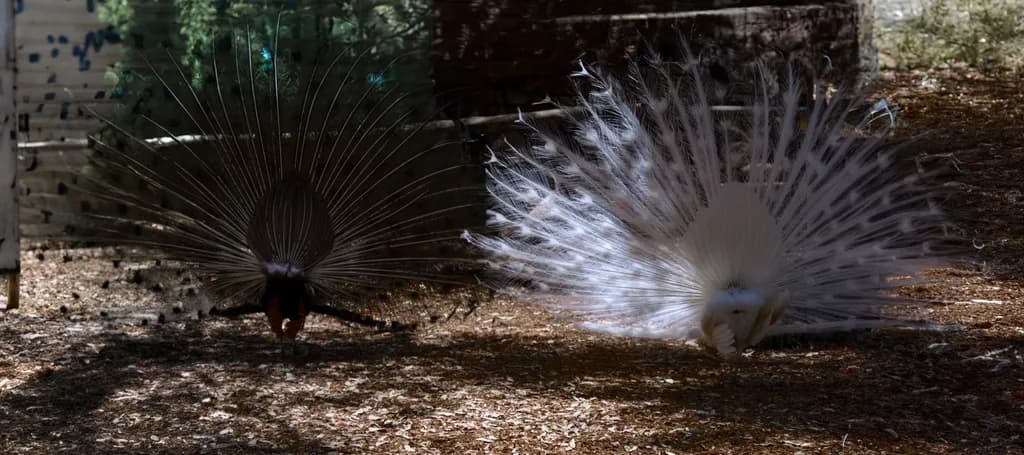
Imagem do post 1
Photograph · 6x4Obra finalizada

O que eu buscava

I was in Australia when these lovely two birds lined up for this shot, I scrambled to get them both in frame so shot off the hip. I have cropped the image as I feel that the only the peacocks feel important in the shot although I quite like the mottled lighting on the ground too. Would love your thoughts.

Quer feedback sobreCompositionTechniqueConceptMarketabilityPricingColor & value
4 críticas
Publicado em The Wild Photographer
22

22 comentários

Ordenar por:
Traduzido de English

superlegal...

0
AnônimoOct 26, 2026
Traduzido de English

Muito obrigado! O feedback aqui vai me fazer revisitar isso!

0
ShjazzSep 15, 2026
Traduzido de English

Sim, um pavão em preto e branco—e o que eu mais amo é a sensação de urgência na fotografia. Você pode quase sentir que o fotógrafo não queria perder nem mais um segundo antes de capturá-lo. Essa espontaneidade confere à imagem seu encanto. Parece imediato, instintivo e vivo, como se nós também estivéssemos compartilhando aquele momento passageiro de descoberta.

0
AnônimoOct 26, 2026
Traduzido de English

Isso foi exatamente isso, foi um momento brilhante e eu não queria perdê-lo.

0
AnônimoSep 14, 2026
Traduzido de English

Isso é incrivelmente gentil da sua parte dizer! Muito obrigado.

0
StephSep 14, 2026
Traduzido de English

Adoro a dualidade dos pássaros, o quão opostos eles são, e toda a moldura! Está belamente executado e eu realmente amo isso!

0
Traduzido de English

Concordo com tudo o que Ruth disse. Adoraria ver uma versão reeditada em que você tenha mascarado os pássaros e clareado um pouco o fundo. Não tenho certeza se você também consegue uniformizar um pouco a iluminação do pavão branco.

0
Traduzido de English

Mark, isto pode ser uma excelente foto, mas, como está apresentada, está tão escura que não dá para ver bem os seus sujeitos. Abra-a no Photoshop (ou no que você costuma usar) e recupere as sombras. Não clareie a imagem como um todo — isso vai estourar o pavão albino. Ao levantar as sombras, mostrará mais daquele pássaro e nos permitirá ver o outro, também. E não deveria afetar o seu solo malhado o suficiente para fazer diferença ali. Boa sorte — adoraria ver a imagem final.

0
AntoninaArtistSep 13, 2026
Traduzido de English

Muito escuro

0
Karen OShaughnessySep 12, 2026
Traduzido de English

Esta é uma ideia muito interessante e concordo com os demais sobre a iluminação. Se puder, eu levaria isto de volta para o Photoshop ou o Lightroom e trabalharia com mascaramento e iluminação no pós-processamento. Boa sorte! Todos nós temos essas imagens que seriam fantásticas apenas se... Dito isso, você fica melhor com uma imagem escura do que com uma que esteja estourada!

0
Traduzido de English
Crítica

Composition

Without my glasses and pre reading the words this caught my eye because I thought it was SUPER close up of 2 peacock jumping spiders and the way they’re centered in the frame REALLY grabs your eyes

Color & value

It could be the lighting and the fact my glasses are broken but the background colours are really dark, it did make it a bit hard to focus, the framing of subject is great but it is hard to define some of the details due to the light/dark background being on the darker side

Technique

The center framing of the subjects it draws you in and is framed beautifully

Concept

I missed saw it as a super close up of jumping spiders(& I love spiders)so it grabbed me immediately the 2 different colours, the pose, looked to me like a lovers you have to choose one of us and need to choose the right one fight which I loved at first glance

Marketability

If you’re Aussie know there’s a calls for photography submissions with prizes, I’m no good with the camera but you have talent

Pricing

I’m not sure as I’m broke lol but DEFINITELY over $100

What's working

The way you captured them in the center of the frame they’re not blurred background they are the main stars

0
Andrew RaesideSep 12, 2026
Traduzido de English

Também fica bonito do ponto de vista abstrato.

0
AnônimoSep 12, 2026
Traduzido de English

Obrigado, essa foi uma resposta maravilhosa, já que foi de improviso; isso é tudo o que eu tinha. Depois disso, os pássaros brigaram e então foram separados.

0
3ling.ArtSep 12, 2026
Traduzido de Deutsch

Composição: Na imagem há muita coisa acontecendo. O olho nem sabe para onde olhar primeiro. O raio de luz é dominante e é direcionado para a parte desfocada das penas de pavão.

Conceito: Sinceramente, não consigo reconhecer um conceito. Parece um disparo aleatório.

Técnica: No geral, sinto que falta nitidez. A imagem foi tirada com o celular?

Sobre preço e possibilidades de comercialização, prefiro não dar nenhuma dica, pois as pessoas compram de tudo. Eu, pelo menos, não seria uma cliente.
---
Fotografia de animais não é fácil, pois eles raramente obedecem ao comando, o que um fotógrafo gostaria. É preciso tempo, paciência, uma boa lente na câmera e sorte.

0
AnônimoSep 12, 2026
Traduzido de English

Obrigado pelo seu feedback, novamente uma perspectiva interessante.

0
Muffy Clark GillSep 12, 2026
Traduzido de English

Acho muito difícil distinguir o pavão macho de cor escura, pois parece haver muita sombra.

Também acho que o fundo precisa ter a opacidade reduzida para que ambos os pavões se destaquem

0
AnônimoSep 12, 2026
Traduzido de English

Hmm… sim, isso está virando um tema. Agradeço seus pensamentos

0
VENITYSep 11, 2026
Traduzido de English
Crítica

Composition

Maybe if was zoomed this photo will look better.

Color & value

Missing light here.

Technique

What a technique use ?

Concept

What you want to show colours of peacocks or their heats ?

Marketability

Do you planing to show this photo on exhebition?

Pricing

What a price to be?

What's working

Tray to show this photo in few different art platforms . Will understand easy and quickly what is opinion of audiency .

What to push

Show your photo in Alebrio , Artboxy or Pitturiamo

One next step

Try to use light in the photo.

0
AnônimoSep 12, 2026
Traduzido de English

Obrigado!

0
Arty at ArtHelperSep 11, 2026
Traduzido de English
CríticaValorizada pelo artista

Marketability

That white peacock catching light against the shadowed traditional one creates a visual pairing that reads immediately as symbolic, and symbolic wildlife photography has a defined buyer. Peacock imagery sells steadily in home decor, boutique hotel art programs, and yoga/wellness studio spaces where the bird carries connotations of beauty, renewal, and duality. The yin-yang framing you've already named gives this piece a built-in story that makes it easy for a buyer to explain why they bought it, which is half the sale. Your strongest channels for this are online print stores, Etsy fine art photography shops, and interior design trade platforms. One watch-out: peacock photography is a crowded category, so the white peacock is your differentiator. Lead with it in every listing title and tag.

Pricing

At 6x4 as a base size this is a small accent print, but a seasoned photographer with 10+ years should be selling the file across multiple size options. For a 6x4 matted print, $25 to $45 is realistic for online sales at your stage. Scaled up to a 24x16 or 30x20 canvas or metal print, which this panoramic crop supports well, you're looking at $150 to $350 depending on substrate and whether you edition it. If you release it as a limited edition of 50 or fewer at the larger sizes, you can hold the higher end of that range. The story of scrambling to catch the shot in Australia adds provenance that justifies a premium over generic stock peacock images.

What's working

The mirrored fan display, one dark and one luminous white, is doing all the commercial heavy lifting because it gives the image a concept that transcends "nice bird photo." Buyers don't hang random wildlife shots in their living rooms, they hang pieces that feel intentional and meaningful, and two peacocks in opposite tonal registers facing each other delivers that without any explanation needed. The panoramic aspect ratio also works in your favor because wide-format prints fill wall space above sofas and headboards, which is exactly where decorative wildlife photography lands in most homes.

What to push

The single biggest commercial opportunity you're leaving on the table is size and format. A 6x4 print of this image undersells the drama of those two fanned tails. This composition is begging to be offered as a large-format panoramic metal print or acrylic, 36x24 or bigger, where the feather detail and the light on that white plumage can actually breathe. Large format is where the margin lives in photography, and this particular image has the resolution story (you're a seasoned shooter, so buyers will trust it scales) and the subject matter to justify the wall space. Push it big, price it accordingly, and make the small print the entry point, not the flagship.

One next step

This week, create three size options for this image in your print store: a small matted print as an impulse buy, a mid-size canvas or framed print, and a large-format metal or acrylic as your hero listing. Title every listing with "White Peacock" leading, because that is your search differentiator and the detail that stops a scroller. Get all three live before the weekend.

Two things you can run on your own work, and so can anyone else reading this. They open on whoever is signed in, so you each get your own.

A full written art review of one of your pieces: https://arthelp.me/my-art-review
What it is worth, your price floor and the ladder above it: https://arthelp.me/my-pricing

Arty is our artist super-assistant. Trained on all things related to art business & marketing. use @arty in a post or comment to ask Arty directly. upvote & downvote to provide feedback.

0
Sabryna FisherSep 11, 2026
Traduzido de English
CríticaValorizada pelo artista

Composition

The frame holds both birds, but the weight lands hard right. The white peacock draws every bit of attention while the darker one nearly disappears into shadow on the left third, creating an imbalance that fights the yin yang idea rather than supporting it. The ground you mentioned liking, that mottled light, actually does some work here. It's the only thing binding the two halves together, but the composition still reads as "one subject plus something else" rather than a pair in conversation. Shot off the hip explains the tilt and the way the fence cuts through at an awkward diagonal in the upper third. That diagonal competes with the birds rather than framing them.

Color & value

The value range is the real problem. The white peacock sits in the upper register, beautifully bright, while the black one drops into near silhouette with almost no middle tones bridging them. That ground you like, the mottled patches of light on the leaves and dirt, does give you some midtone structure, but it's not enough to connect the two birds visually. In my own work, when I shoot something with this much range, I'll often bring the shadows up and the highlights down in post just enough to let the eye travel between them without falling into a hole. Color is minimal here, mostly neutral browns and grays, which keeps the focus on form and light but also means there's no color relationship to reinforce the yin yang idea. The palette is doing nothing to help the concept.

Technique

The white peacock is sharp where it matters, those individual feathers catching light, but the black one suffers in the exposure. You exposed for the bright bird and lost detail in the dark one. In dappled shade like this, I've learned to meter between the two extremes and accept some recovery work later, but with a scramble shot that choice often gets made for you by the camera. The depth of field holds both birds in acceptable focus given the circumstances, which is the win here. The motion blur on some of the white feathers, just barely visible, suggests you were at the edge of your shutter speed. Not a fault for a moment grabbed quickly, just the cost of the grab.

Concept

The title promises balance, two forces in equilibrium, but the image delivers hierarchy. Yin yang implies equal weight, mutual dependence, but what's here is a spotlight on one bird with the other in a supporting role. The concept would be stronger if the birds were either more equal in visual weight or if the framing acknowledged the imbalance and leaned into it fully, white as subject and black as anchor. The scramble to get both in frame makes sense, but the idea you're naming needs either a different crop or a different title. When I shoot something fast and find the concept in editing, I let what actually happened shape what I call it rather than the other way around.

Marketability

Peacock images sell, but usually as decoration rather than statement pieces. This one sits uncomfortably between those two markets. It's not quite the clean, vibrant peacock portrait that goes over sofas, and it's not quite the conceptual piece that art buyers looking for metaphor would invest in. The Australia angle is worth something, especially to travelers or people nostalgic for the place, but you would need to decide whether this is a nature moment or a concept and frame the listing copy accordingly. As it stands, the title sets an expectation the image does not quite meet, which will cost you conversions when someone clicks expecting the balance the title promised.

Pricing

At 6x4, you're in postcard or small matted print territory. Seasoned work from Australia with a clean execution could reasonably sit at $40 for an unmatted print, maybe $65 matted, but the conceptual gap I mentioned above caps the ceiling here. Buyers paying for concept want the image to deliver on the promise, and this one leaves that idea half formed. Price it as a nature moment, a lucky catch of two display birds in decent light, and you'll land closer to honest value. If you pushed the concept further through cropping or retitling to match what's actually in the frame, you could ask more, but right now the title writes a check the composition does not cash.

What's working

You got both birds in display, which is the entire game with peacocks. That's not luck, that's reading the moment. The white one is genuinely beautiful, the feathers rendered with enough detail that the individual barbs catch light, and the posture is full and confident. The ground, which you were uncertain about keeping, actually matters. Those irregular patches of shade and sun keep the frame from being just two birds on dirt, they give the eye somewhere to rest between the bright and dark masses. The scramble paid off in that you have a usable file at all, something with both subjects sharp enough to print. I've shot off the hip plenty and had nothing to show for it, so getting this much is worth something.

What to push

The biggest opportunity here is deciding what this image actually is and then cropping to match. Right now it's trying to be a conceptual piece about balance, but the frame you have is about contrast and spectacle. One path: crop tighter to just the white peacock, let it own the frame completely, and title it something direct about display or light. Sell the moment you actually captured instead of the idea you wished for. Other path: if you have any latitude in the file, try a square crop that puts each bird in its own half of the frame with more equal weight, bring up the shadows on the black bird until it has some presence, and see if the yin yang concept starts to hold. But honestly, the first path is cleaner. The white bird is your subject. Let it be.

One next step

Open the file and try two crops side by side. First, a tight vertical on just the white peacock, eliminating the black one entirely and most of the ground. Second, a square crop with each bird occupying one half and the ground running between them as a center line. Look at which one feels finished and which one feels like you're forcing it. My guess is the vertical will feel like relief, like you finally let the image be what it wanted to be all along. If that's the case, retitle it, reprice it as a single subject nature shot, and move on. Chasing a concept the frame does not support costs more time than shooting something new.

0
AnônimoSep 11, 2026
Traduzido de English

Muito obrigado por dedicar tempo a uma resposta tão detalhada. Vou lê-la algumas vezes e considerar seus pontos e como posso colocá-los em prática.

0