
Pourquoi la peinture traditionnelle connaît un vrai regain dans un monde numérique
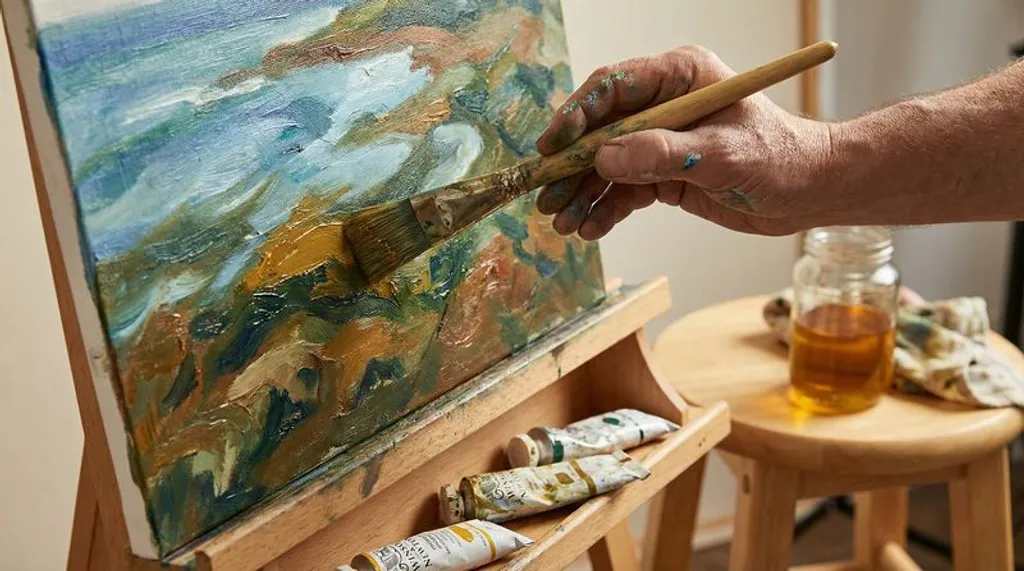
Something interesting is happening in the art world right now. At the same moment that AI image generation has become widely accessible, there's been a measurable increase in interest in traditional painting — oils, watercolors, pastels, printmaking, ceramics.
This isn't a coincidence.
**The Reaction to Digital Saturation**
We are living through a period of unprecedented image abundance. AI tools can generate thousands of images in the time it takes a painter to mix a palette. The result, paradoxically, has been a renewed appreciation for the evidence of human time and effort in a physical object.
Collectors are increasingly asking not just "what does this look like?" but "how was this made?" and "how long did it take?" The handmade mark has become a form of authenticity in a way it hasn't been since the Arts and Crafts movement reacted against industrialization in the 19th century.
**Auction Data Supports the Trend**
The 2026 Art Basel/UBS report noted that works with visible process — textured surfaces, gestural marks, evidence of revision — are outperforming their smooth, finish-forward counterparts at auction. This isn't universal, but it's consistent enough to be a trend rather than an anomaly.
**What This Means for Working Painters**
If you work in traditional media, this is a moment to lean into what makes your work irreducibly physical. Document your process. Show the materials. Let people see the time.
The artists who are benefiting most from this shift aren't the ones who are competing with digital tools on their own terms — they're the ones who are making the physicality of their work central to how they present and sell it.
**The Hybrid Approach**
It's also worth noting that the most interesting work being made right now often sits at the intersection of traditional and digital — painters who use digital tools for planning and composition, then execute in oil or watercolor; printmakers who design digitally and print by hand; ceramicists who use 3D modeling to prototype forms they then throw or hand-build.
The binary of "traditional vs. digital" is less useful than it used to be. The more interesting question is: what does your specific combination of tools and processes make possible that neither approach could achieve alone?
What's your experience been? Are you seeing more interest in traditional work in your own market?