
Assistent
© 2026 Art Storefronts
v4.5.18© 2026 Art Storefronts
v4.5.18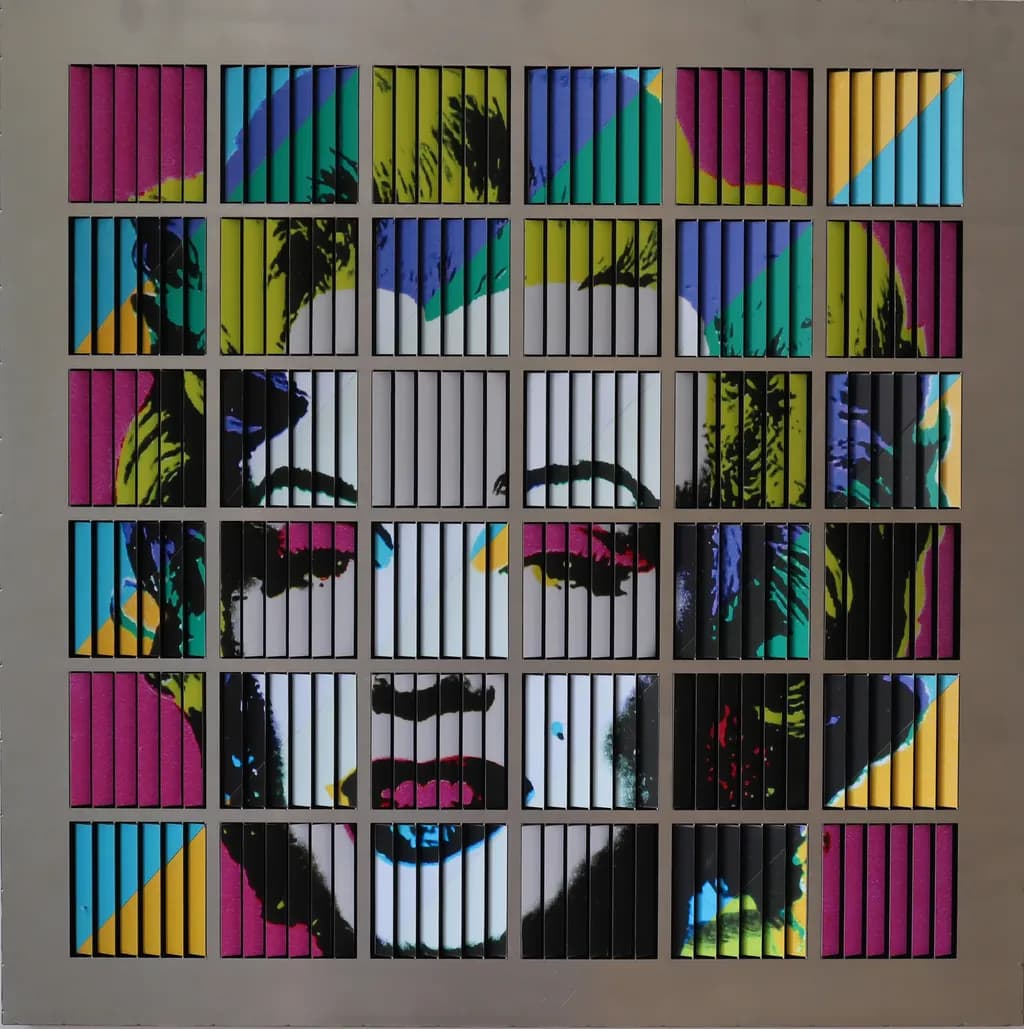
This striking piece presents a visually dynamic portrait rendered through a contemporary, segmented design that draws the eye across its divided panels. The work uses vibrant colors—deep magenta, teal, lime green, and mustard yellow—juxtaposed against stark black and white elements, creating bold contrasts that energize the composition. Each panel acts as a window, revealing fragments of the face with careful placement that forms a cohesive image only when viewed as a whole. The interplay of geometric shapes with expressive facial features invites a thoughtful engagement, encouraging viewers to piece together the narrative embedded within. The monochromatic base of the face grounds the vivid palette, allowing the painted details to highlight the subject's expression and hair with an almost graphic novel quality. The segmented layout adds a rhythm and movement, as if the portrait is experiencing subtle shifts or shifts in perspective. Lines of varying thickness and direction emphasize contours and shadows, lending depth that balances the flatness of the color blocks. The deliberate fragmentation suggests themes of identity and perception, prompting reflection on how individual elements contribute to the complete picture. This artwork merges abstract and figurative elements to present a modern reinterpretation of portraiture. Its sharp edges and modular construction provide a tactile, almost architectural dimension that enriches any environment. The bold use of color offers a refreshing contrast to minimalist or monochrome interiors, serving as a vivid anchor point within a space. This piece will resonate with those who appreciate both pop art sensibilities and conceptual design. Integrating this artwork into your collection would bring a nuanced yet impactful statement, inviting conversation and contemplation. It offers a unique blend of structure and spontaneity, making it a thought-provoking addition that complements contemporary decor. This artwork stands out not just for its visual appeal but also for its ability to engage viewers in an active visual dialogue.
Lubomír Hruška (1954) In the seventies, he studied at the Faculty of Civil Engineering in Brno. In 1978, he transferred to study architecture at the Academy of Fine Arts in Prague.